Key Points
- QatarEnergy halts Liquified Natural Gas (LNG) output after Iranian strikes on Ras Laffan and Mesaieed facilities.
- Benchmark Brent crude rises by roughly 12 per cent since last Friday, with analysts warning prices could approach $200 if conflict continues.
- UK gas prices surge 93 per cent amid supply concerns and LNG export disruptions.
- European natural gas prices spike amid supply disruption and Strait of Hormuz tensions.
- Comparison drawn with last year’s 12-day Iran-Israel conflict, which caused brief but sharp energy price surges.
ISLAMABAD: International energy markets are in turmoil following the escalating and expanding Iran-US/Israeli military conflict, which triggered immediate supply shocks and caused global crude and gas prices to surge.
The crisis has also led to unprecedented spikes in UK gas prices, which climbed nearly 93 per cent on the wholesale market over the past week, according to the BBC.
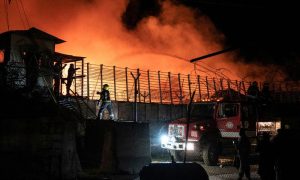
QatarEnergy, one of the world’s largest LNG exporters, confirmed a halt to liquefied natural gas production at its Ras Laffan and Mesaieed facilities following Iranian retaliatory attacks.
The official statement cited security and safety concerns, noting that operations would resume only after the situation is stabilised. (dohanews.co)
“This sudden suspension of Qatar’s LNG exports is a significant shock to the global energy supply chain,” said Dr. Elaine Richards, senior energy analyst at the International Energy Forum.
“Markets are reacting strongly to the risk of prolonged supply shortages, particularly in Europe and the UK.”
The surge in UK gas prices is the steepest seen in over a decade, exacerbating already high household energy costs and prompting fears of an energy crunch ahead of the summer.
European natural gas futures have also jumped sharply as traders scramble to secure supply, reflecting the broader impact of Middle East tensions on global energy security.
Benchmark Brent crude has risen by nearly 12 per cent since last Friday, trading above $82 per barrel, with some analysts warning prices could climb to $200 per barrel if the conflict escalates or continues for an extended period.
The rise reflects both the direct threat to Gulf energy infrastructure and heightened risk premiums on oil flows through the Strait of Hormuz, a critical chokepoint that handles about 20 per cent of global oil and gas shipments.
The current situation is drawing comparisons to last year’s brief 12-day Iran-Israel conflict, which similarly led to sharp, but short-lived, surges in oil and gas prices.
Analysts caution that the present crisis is more complex, affecting multiple LNG hubs and potentially creating longer-term disruptions to global energy supply.
John Matthews, energy market strategist at Global Commodities Group, said, “The combination of geopolitical escalation and direct attacks on production facilities is creating a perfect storm for energy markets.
Unlike last year, the current disruption involves the world’s largest LNG exporter, which makes the implications much more severe for both Europe and Asia.”
Market watchers continue to monitor developments closely, as any further escalation in the Middle East could compound price spikes and pose risks to global economic stability.
Governments across Europe and Asia are reportedly discussing emergency measures to secure alternative supplies and stabilise markets.
India, being one of the largest importers of gas from Qatar, has resorted to costly spot buying and is actively considering rationing the energy supplies within the country.
Indian energy supply companies have already reduced LNG supply to the industries by 10 to 30 per cent.
Likewise, Pakistan’s government has appointed a high-powered committee headed by Finance Minister Muhammad Aurangzeb, involving Minister of State for Finance Bilal Azhar Kiani and Federal Power Minister Awais Ahmed Leghari, to monitor the evolving energy situation.
The committee will meet daily and recommend contingency measures should the need arise.