
Key Points
- The decision follows an earlier refusal that reportedly strained ties with Washington
- Reports suggest the dispute had implications for wider diplomatic issues, including the Chagos Islands
- With this, Britain moves more directly within the widening Iran–US-Israel confrontation
- Tehran warns foreign bases used for attacks could be treated as legitimate targets
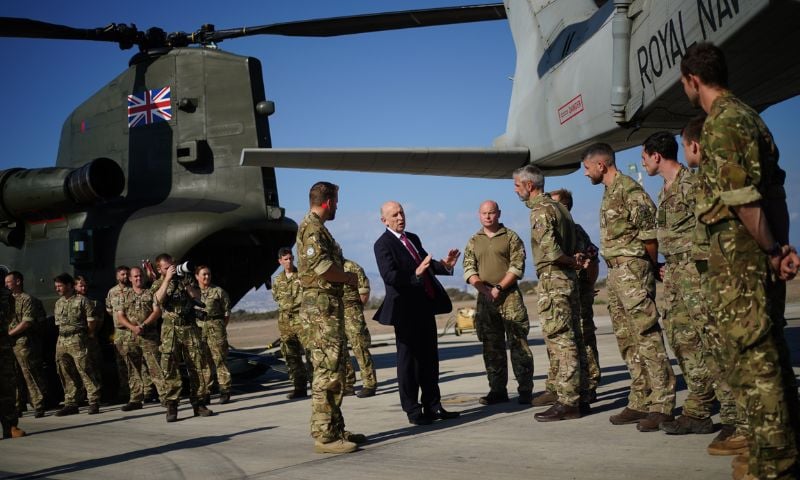
ISLAMABAD: Britain has authorised the United States to use UK military bases for operations targeting Iranian missile sites, marking a significant shift in policy as tensions between Tehran and the US-Israel alliance escalate into open military confrontation.
The decision, reported by leading British newspapers, represents a change in position by Prime Minister Keir Starmer, whose government had earlier declined to grant Washington permission to operate from British territory in strikes against Iran. The initial refusal reportedly generated friction between London and Washington at a sensitive moment in the rapidly evolving conflict.
According to media reports in London, the earlier denial angered President Donald Trump, drawing criticism from some within Starmer’s own Labour Party, who argued that Britain risked weakening its strategic alliance with the United States. The latest move has been described by commentators as a U-turn, reflecting the mounting diplomatic and security pressures facing Downing Street.
The conflict between Iran and the US-Israel alliance has intensified sharply in recent weeks. Coordinated air strikes have targeted Iranian missile depots, launch facilities and command centres.
Tehran has responded with missile and drone attacks aimed at US interests and Israeli targets in the region, raising fears of a broader regional war.
Britain’s involvement, though indirect, is strategically significant. The UK hosts several military installations used by American forces, including bases in Cyprus and joint facilities in the Indian Ocean. Access to these sites enhances the operational reach and logistical capacity of US forces engaged in strikes on Iranian missile infrastructure.
Reports also suggest that the earlier disagreement between London and Washington had implications beyond the immediate military context.
The Daily Telegraph claimed that tensions over base access contributed to President Trump withdrawing support for a proposed agreement to transfer sovereignty of the Chagos Islands to Mauritius. The archipelago, home to a key US military facility at Diego Garcia, remains strategically important for operations across the Middle East and Indo-Pacific.
Although neither government has formally confirmed a direct link between the Chagos issue and the base access decision, the episode underscores how wider geopolitical negotiations are intersecting with the escalating conflict with Iran.
For Starmer’s government, the shift reflects the delicate balance between domestic political considerations and Britain’s longstanding defence relationship with the US. The United Kingdom remains one of America’s closest military and intelligence partners, and divergence on a major security crisis carries diplomatic consequences.
Tehran has repeatedly warned that foreign bases facilitating attacks on its territory would be regarded as legitimate targets.
Iranian officials have accused Western governments of complicity in Israeli and American operations and have pledged proportionate responses. Such statements heighten the risk that British facilities could be drawn more directly into the conflict if hostilities expand.
Across Europe, governments have urged restraint even as they reaffirm concerns about Iran’s missile capabilities and regional activities. Diplomatic efforts to de-escalate have so far struggled to gain traction amid the pace of military developments.
The broader confrontation has implications far beyond the immediate theatre of war. Energy markets, shipping routes through the Gulf and wider regional stability are all vulnerable to disruption. With global powers closely monitoring developments, the potential for miscalculation remains high.
Britain’s decision to grant the United States access to its bases signals closer alignment with Washington’s operational approach at a moment of profound instability. As military exchanges continue and diplomatic channels remain strained, London’s role in the unfolding crisis is likely to face increasing scrutiny at home and abroad.