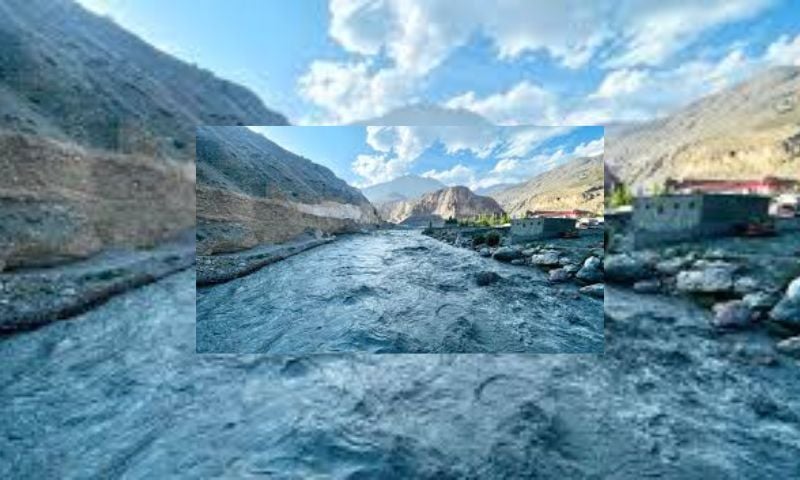
ISLAMABAD: Northern Pakistan is experiencing unusually high winter temperatures, raising concerns over accelerated glacier melt and potential Glacial Lake Outburst Floods (GLOFs), the Pakistan Meteorological Department (PMD) warned on Monday.
Data from the first three weeks of February show daytime temperatures 3–5°C above normal and nighttime temperatures 1–3.5°C higher than the 1981–2010 average.
Gilgit and Bunji recorded the strongest warming, while Chilas and Bunji showed reduced overnight cooling, a factor that intensifies snow and glacier melt.
“Reduced precipitation and prolonged clear skies have stabilized the atmosphere, resulting in sustained above-normal temperatures,” said a PMD spokesperson. “This is increasing meltwater runoff into glacial and moraine-dammed lakes, raising the risk of GLOF events in downstream valleys.”
Areas most vulnerable include Gilgit, Ghizar, Hunza, Bunji, Chilas, and Astore. The PMD forecasts above-normal temperatures from February through April 2026 and continues to monitor glacier melt and hydrometeorological trends closely, issuing timely advisories to authorities and communities.
Temperature anomalies (1–22 February 2026):
- Gilgit: Max +4.7°C, Min +2°C
- Bunji: Max +4.5°C, Min +2.6°C
- Chilas: Max +4.1°C, Min +3.4°C
- Astore: Max +4.3°C, Min +1.3°C
- Skardu: Max +3.1°C, Min +1.8°C