
Key points
- New Zealand lead tournament in fast starts
- India match New Zealand’s scoring pace
ISLAMABAD: In T20 cricket, the first six overs are where games are most often tilted — not always won, but frequently set up. With only two fielders allowed outside the circle, captains gamble on swing, pace, and match-ups, while batters decide whether to go full-throttle or prioritise wickets in hand.
At the ICC Men’s T20 World Cup 2026, the powerplay has already become a defining battleground — and the numbers show a clear split between teams that attack with structure and those that either lose too many early wickets or fail to keep the scoreboard moving.
New Zealand: the tournament’s fastest starters (so far)
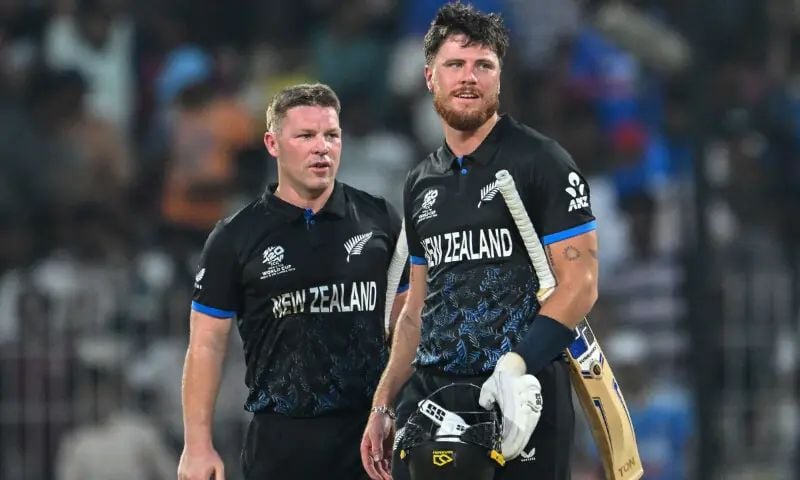
Across three innings in the group stage, New Zealand have been the most consistently explosive in the powerplay. They made 52/2 in the first six overs against Afghanistan, 78/0 against UAE, and 58/3 against South Africa.
That adds up to 188 runs in 18 powerplay overs — a run rate of 10.44 per over — despite one wobble against South Africa. Their standout moment was the 78 without loss versus UAE, the kind of start that compresses the chase and forces opponents into defensive bowling plans immediately.
New Zealand’s powerplay success is also role-based: the top order commits early, and the tempo is set before the middle overs become a spin-and-match-up contest.
India: nearly as rapid — but with sharper swings
India’s powerplay story has been more volatile, but almost as productive overall. Against USA, they reached 46/4 inside six overs — a reminder that aggression without stability can quickly become damage control.
But India have also shown how quickly they can dominate when early wickets are preserved: they posted 86/1 in the first six overs against Namibia, and 52/1 against Pakistan.
Total it up and India have 184 runs in 18 powerplay overs — 10.22 per over — essentially neck-and-neck with New Zealand on scoring speed, but with a bigger spread between their best and worst starts.
Where India have arguably been more decisive is with the ball: their powerplay against Pakistan (Pakistan 38/4 after six overs) was a textbook example of using early wickets to win the game before the middle overs even arrive.
Sri Lanka: strong, not frantic — and that may travel best
Sri Lanka’s powerplay numbers are less extreme, but they point to a more “percentage cricket” approach: 50/1 vs Ireland, 58/2 vs Oman, and 61/1 in the chase vs Australia.
That’s 169 runs in 18 overs — 9.39 per over — not as blistering as New Zealand or India, but with fewer collapses.
In tournaments where pitches can vary sharply across venues, Sri Lanka’s slightly steadier model can be valuable: it reduces the risk of being 3-down early, and keeps them flexible for spin-heavy middle overs.
The counter-punch: when powerplays decide games instantly
While team averages matter, one brutal powerplay can end a contest. South Africa smashed 83/1 in the first six overs against New Zealand — a powerplay so dominant it effectively rewrote the target pressure.
Australia also delivered a statement start of 70/0 against Sri Lanka, showing how elite opening pairs can take control even before the bowlers settle.
So, who “dominates” the first six overs?
On pure scoring speed across multiple innings, New Zealand have been the sharpest powerplay side so far, with India right behind.
But if dominance includes powerplay impact with the ball, India’s early-strike ability — highlighted by Pakistan’s 38/4 — is already one of the tournament’s most decisive patterns.
What the group stage has reinforced is simple: at this World Cup, teams that win the powerplay battle are not just getting ahead — they are shrinking the match into a shorter, more controllable contest.