
DHAKA: Tarique Rahman, the acting chairman of the Bangladesh Nationalist Party (BNP), has re-emerged as one of the most consequential figures in Bangladesh’s political landscape following his party’s claimed victory in the first elections held after the 2024 uprising.
Born on November 20, 1967, Rahman is the elder son of former prime minister Khaleda Zia. After 17 years in exile in Britain, he returned to Bangladesh in December 2025, months before the polls that have now propelled his party back to the forefront of national politics.
Early life and education
Rahman studied at Dhaka’s BAF Shaheen College before enrolling in the Department of International Relations at the University of Dhaka in the 1980s. During his university years, he immersed himself in political philosophy, reading thinkers such as Socrates, Plato, Aristotle, Hobbes, Locke, Rousseau, Voltaire, and Karl Marx.
His early political activism began during the final years of military ruler H. M. Ershad. In 1986, amid a controversial election under Ershad’s rule, Rahman evaded house arrest to address a press conference in Dhaka, accusing authorities of restricting opposition activities.
He formally joined the BNP as a general member in 1988 at the Gabtali upazila unit and became active in the anti-Ershad movement alongside his mother.
Rise within the BNP
Rahman campaigned extensively during the run-up to the 1991 elections, which brought Khaleda Zia to power as Bangladesh’s first female prime minister.
Throughout the 1990s and early 2000s, he focused on strengthening the party’s grassroots structures. In Bogura district, he promoted internal democracy by organising leadership conventions where officials were elected through secret ballots — a model later replicated in other district units.
Ahead of the 2001 elections, Rahman established a research and outreach office in Dhaka to examine local governance challenges and engage with intellectuals and civil society representatives. The BNP went on to secure a landslide victory in that vote.
In 2002, he was appointed Senior Joint Secretary of the party. By 2009, he had become Senior Vice-Chairman, playing a growing role in party reorganisation and strategy.
Years in exile
Rahman left Bangladesh in 2008 for medical treatment and remained in Britain for nearly two decades. During that period, Bangladesh’s politics underwent significant shifts, including the prolonged tenure of former prime minister Sheikh Hasina.
In 2018, after Khaleda Zia was imprisoned, Rahman was appointed Acting Chairman of the BNP. From abroad, he continued to direct party activities and position the BNP as the principal opposition force.
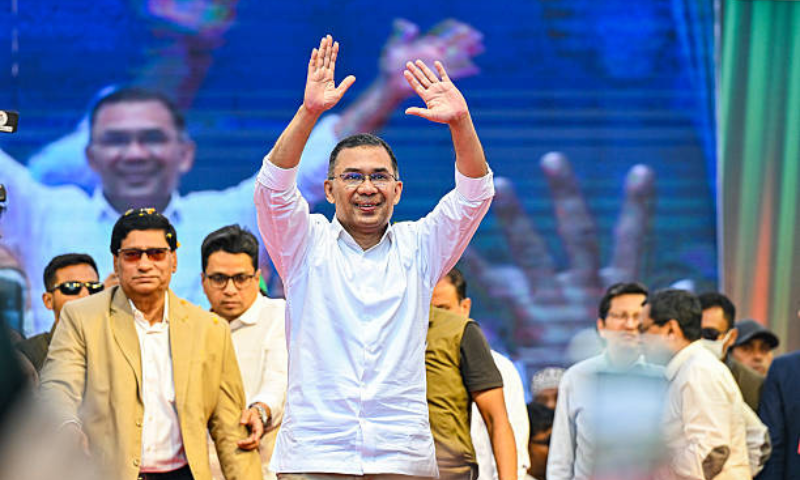
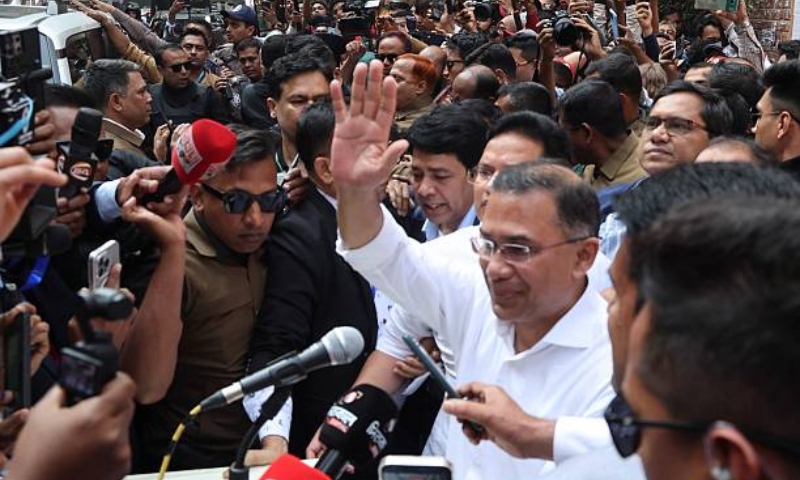
His return to Bangladesh in December 2025 marked a symbolic and strategic turning point for the party, energising supporters ahead of the 2026 elections.
In 1994, Rahman married Dr. Zubaida Rahman, a cardiologist trained at Dhaka Medical College and the daughter of the late Rear Admiral Mahbub Ali Khan, a former Bangladesh Navy chief and cabinet minister. The couple has one daughter, Zaima Zarnaz Rahman.
A pivotal moment
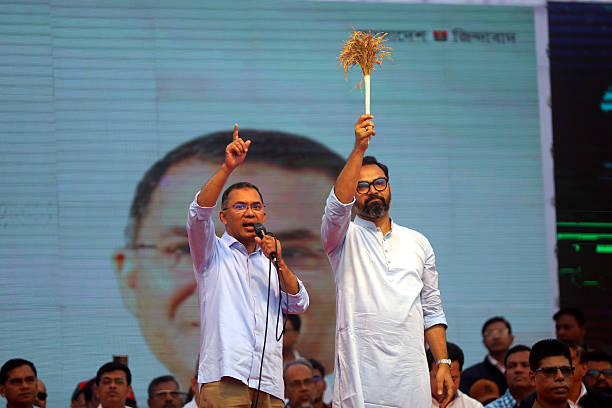
With votes still being counted in the post-uprising elections, projections suggest the BNP has secured a commanding parliamentary majority. Rahman is expected to assume the country’s top executive role, overseeing a political transition that follows a turbulent chapter in Bangladesh’s recent history.
For many supporters, his journey — from early activism and organisational work to exile and return — mirrors the party’s broader narrative of setback and resurgence. For critics and observers alike, his leadership will be closely watched as Bangladesh charts its next course.