
Key Points
- Prime Minister Sanae Takaichi led the ruling bloc to a sweeping victory in Japan’s snap general election.
- The vote was called to secure a fresh public mandate amid political fragmentation and economic uncertainty.
- The result gives the government strong legislative authority to pursue economic and security reforms.
- The outcome is being closely watched globally for its implications on regional security and alliances.
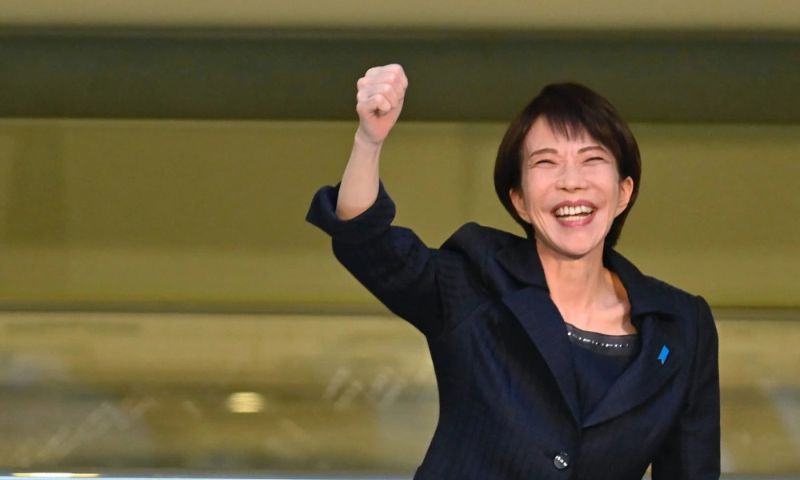
ISLAMABAD: Japan’s Prime Minister Sanae Takaichi secured a decisive landslide victory in the snap general election held on February 8, handing her ruling Liberal Democratic Party-led coalition an overwhelming majority in the lower house of parliament and consolidating her authority months after assuming office.
Early results and exit polls indicated that the ruling bloc comfortably crossed the majority threshold in the 465-member House of Representatives, with projections suggesting a commanding margin that would allow the government to advance key legislation with limited parliamentary resistance.
The snap election was called after Takaichi took office amid political volatility and internal party challenges, as Japan faced economic pressures, rising living costs, and an increasingly complex regional security environment. By dissolving the lower house, the prime minister sought a direct public mandate for her economic and national security agenda and to stabilise governance under her leadership.
During the campaign, Takaichi emphasised economic relief measures, fiscal reforms, and a more assertive defence posture, arguing that decisive leadership was required to address domestic challenges and safeguard Japan’s strategic interests. Analysts described the election as a high-risk gamble that ultimately paid off, strengthening her political standing.
The opposition, which attempted to rally around a fragmented reform platform, struggled to mobilise voters and suffered significant losses, underscoring the electorate’s preference for continuity and stability at a time of uncertainty.
Internationally, the election outcome is expected to have far-reaching implications. A strengthened government in Tokyo is likely to pursue closer security cooperation with key allies, including the United States, while adopting a firmer stance on regional security issues. The result has also reassured markets seeking policy stability, though questions remain over fiscal sustainability and defence spending.
With a strong parliamentary mandate now secured, Takaichi is well-positioned to push forward structural reforms and navigate complex geopolitical challenges. Still, analysts caution that delivering tangible economic gains will be critical to sustaining public support.