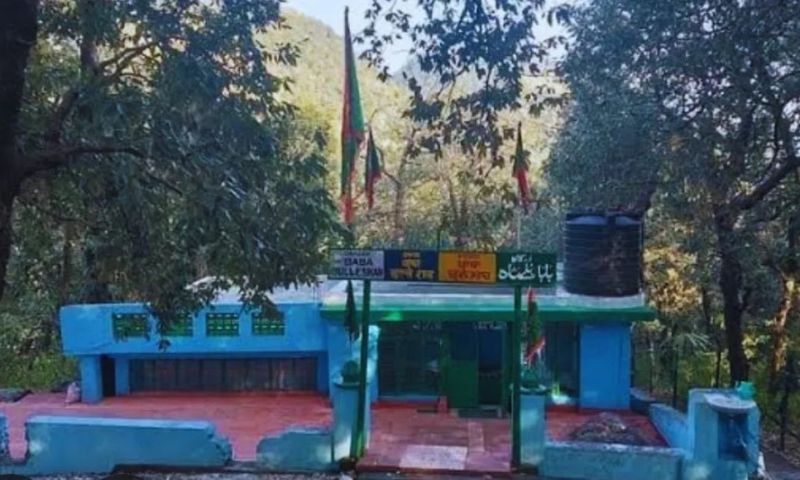
MUSSOORIE, India: Members of the Hindu extremist group Raksha Dal vandalised the centuries-old shrine of 18th-century Sufi poet Hazrat Baba Bulleh Shah in Mussoorie, Uttarakhand state of India, on 24 January 2026, local authorities said.
Witnesses said the attackers entered the “Baba Bulleh Shah Dargah” chanting “Jai Shri Ram” while damaging the interior and sacred structures, the Asian News International (ANI) news agency reported.
The incident followed a protest on 16 January by the Hindu groups Vishwa Hindu Parishad (VHP) and Bajrang Dal.
Dehradun Senior Superintendent of Police (SSP) Ajay Singh confirmed that a case was registered following a complaint by members of the Muslim community.
Circle Officer Manoj Aswal told ANI: “Yesterday, on the 24th, some individuals trespassed onto the property of the Baba Bulleh Shah shrine and vandalised it. A complaint has been received, and three individuals have been named in the FIR.” No arrests have been made so far.
In Dehradun, Uttarakhand, Sufi poet Baba Bulleh Shah’s shrine was vandalised by fringe elements associated with Hindu Raksha Dal. These goons were seen chanting Religious slogans while vandalising the interiors of the Shrine. pic.twitter.com/l46usWTbcJ
— Mohammed Zubair (@zoo_bear) January 25, 2026
Local residents and Muslim committees stated the shrine had been built with official permission and has long hosted peaceful Urs gatherings attended by devotees from various faiths.
Background on Baba Bulleh Shah
Baba Bulleh Shah, a revered Sufi poet and philosopher, lived in the 18th century in Punjab. His real name was Abdullah Shah. He was a Punjabi Muslim Sufi poet, a humanist and philosopher.
His poetry, including the famous line “Na main Hindu na Turk Peshawari, na main Arabi na Lahori, Bulla ki jaana main kaun,” is celebrated for its messages of love, tolerance, and resistance to religious orthodoxy. His grave is located in Kasur, Pakistan.
Rising Hindu extremism in India
The incident comes amid a rapid rise in religious intolerance in India.
On Christmas Eve 2025, Hindu nationalist groups linked to the ruling Bharatiya Janata Party (BJP) attacked Christians in Raipur, Chhattisgarh.
Protesters vandalised Christmas decorations and disrupted celebrations. Police registered cases against 30–40 individuals, but only six were arrested and later released on bail.
A 2026 report by India Hate Lab, a research initiative of the Washington-based Center for the Study of Organized Hate, documented 1,318 verified incidents of hate speech across India in 2025.
Religious minorities, particularly Muslims and Christians, were the main targets. Muslims faced 1,289 incidents, while Christians were targeted in 162 events.
The report highlighted the use of dehumanising language and direct calls for violence, including attacks on religious sites such as the Gyanvapi Mosque and Shahi Idgah Mosque.
The report noted that 88% of incidents occurred in BJP-governed states, including Uttar Pradesh, Maharashtra, Madhya Pradesh, Uttarakhand, and Delhi.
Political figures linked to the BJP, including Amit Shah, Yogi Adityanath, and Pushkar Singh Dhami, were identified as fuelling hate speech.
From hate speech to violence
India Hate Lab documented that hate speech by Hindu nationalist groups often led directly to violence. I
n Assam and neighbouring areas, more than 1,500 Bengali-origin Muslims were expelled in May–June 2025.
Lynching cases, mosque demolitions, church disruptions, forced evictions, and attacks on Muslim neighbourhoods were recorded.
A case in Telangana on 21 December 2025 saw around 60 Hindu nationalists attack a group of Christians celebrating Christmas in Nalthur village.
Pastor Simon and two others sustained serious injuries. Local Christians expressed fear and some house churches halted Christmas carol singing.
Institutional failures
Nearly 97% of hate incidents were recorded or live-streamed on social media platforms, including Facebook, YouTube, and Instagram.
Researchers noted repeated policy failures and the use of AI-generated content to evade moderation.
The report highlighted weak legal frameworks and institutional inaction.
India lacks a comprehensive national hate speech law, and police and courts rarely intervene proactively.
The US Holocaust Memorial Museum and other international organisations have warned of rising risks of mass violence in India, citing ongoing persecution of minorities.
Human rights organisations, including Genocide Watch and the South Asia Justice Campaign, have listed India at high risk of mass persecution against religious minorities if measures are not taken.