
DUBAI: Heavy rain and thunderstorms swept across the United Arab Emirates (UAE), triggering widespread flight disruptions and flooding roads in major cities.
Airport authorities cancelled or delayed dozens of flights as the rare storm lashed the desert nation overnight, waking residents with lightning flashes and loud thunder.
Dubai-based Emirates airline cancelled 13 flights on Friday, while several others were delayed, the airline said. Neighbouring Sharjah Airport also reported delays and cancellations due to adverse weather conditions.
The Dubai Airports website showed dozens of delayed flights and some cancellations throughout the day.
“Some flights are cancelled or delayed due to adverse weather,” a Dubai Airports spokesperson said.
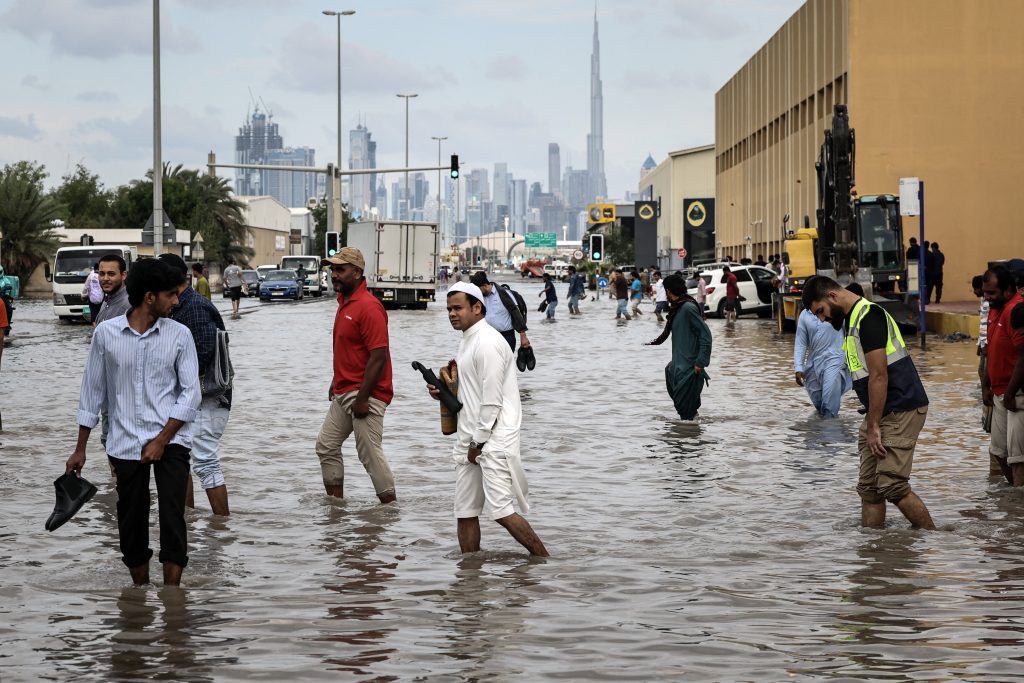
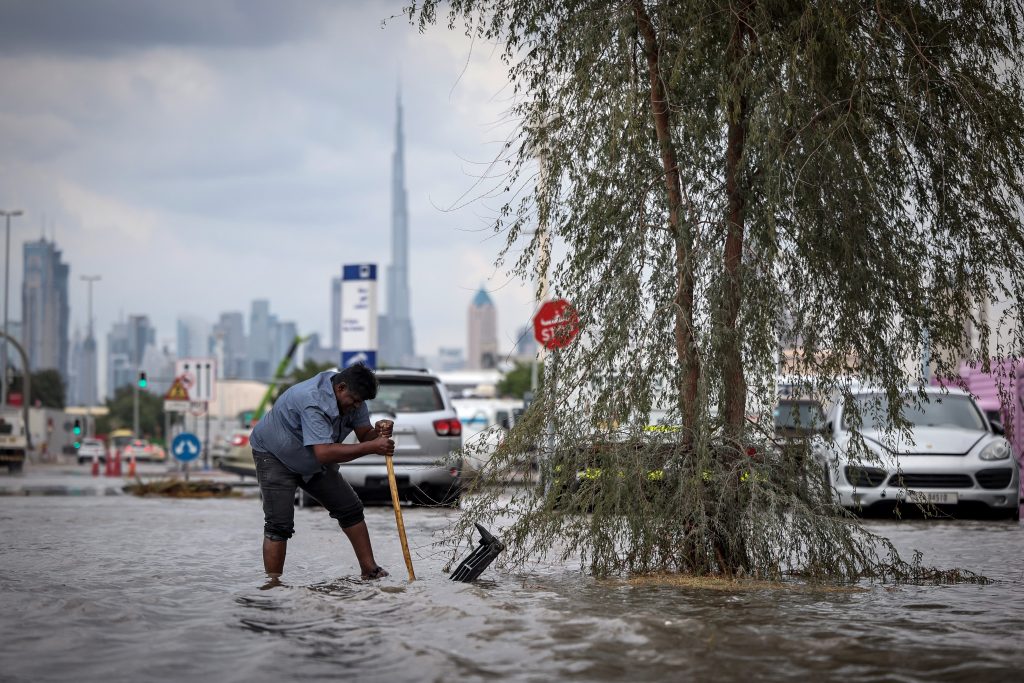
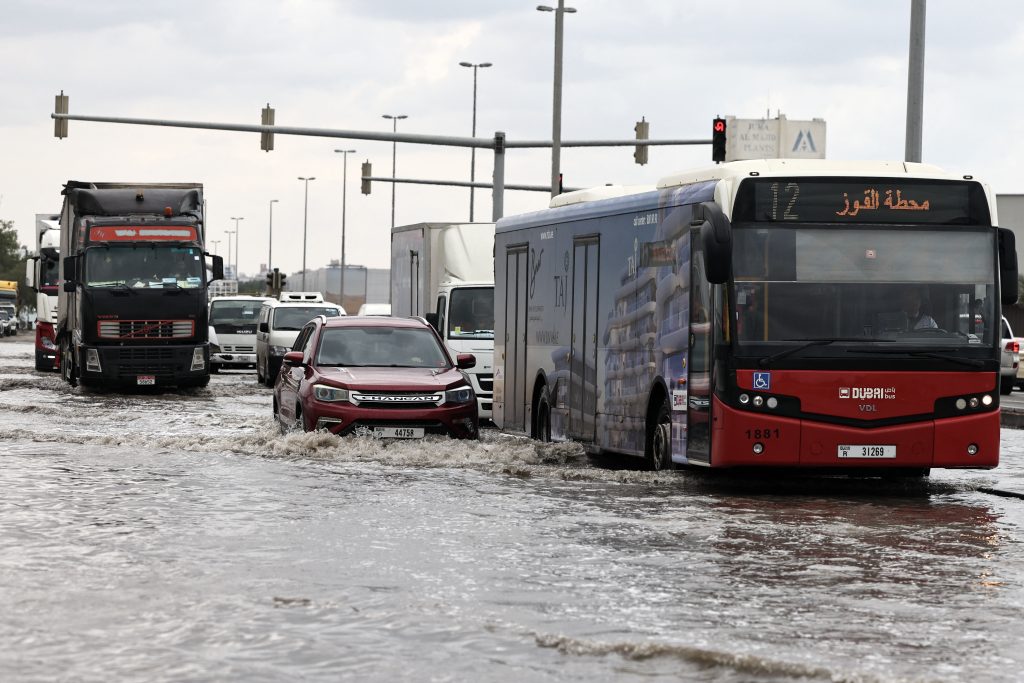
Authorities said water-pumping trucks were deployed across Dubai early on Friday to clear flooded roads and large puddles.
Flooded roads
Heavy rain caused severe waterlogging in several areas. Sharjah’s main street was completely flooded, with residents seen wading through water barefoot.
In some places, water levels reached the top of bicycle wheels.
Dubai police urged residents to remain indoors unless travel was “absolutely necessary” as the storm approached.
The National Centre of Meteorology had forecasted rainfall across the UAE from Thursday to Friday, including Dubai and the capital Abu Dhabi.
The forecast also included thunderstorms, occasional hail, strong winds, dusty conditions, reduced visibility, and rough seas.
Climate context
Authorities reported a fatal incident in the northern emirate of Ras Al Khaimah, where a 27-year-old Indian national, Salman Fariz, died after a wall collapsed during heavy rainfall.
Other Gulf states also experienced heavy rain. In Qatar, the Arab Cup football third-place play-off between Saudi Arabia and the UAE was cancelled on Thursday due to poor weather.
The scenes in the UAE revived memories of April 2024, when record rainfall — the heaviest since records began 76 years ago — caused severe flooding, killed at least four people, and forced the cancellation of more than 2,000 flights at Dubai’s main international airport.
A study by the World Weather Attribution group later found that global warming driven by fossil fuel emissions most likely intensified last year’s extreme rainfall in the UAE and Oman.
Dubai–Pakistan flights grounded
Severe rainfall also disrupted air travel between the UAE and Pakistan, causing widespread cancellations and delays, airport officials said.
A total of 18 flights operating between Pakistan and Dubai and Sharjah were cancelled.
Among the cancelled services were two foreign airline flights between Karachi and Dubai, two Faisalabad–Dubai flights, three Dubai-bound flights from Lahore, six flights from Peshawar to Dubai, and two Islamabad–Dubai flights.
Flight delays affected multiple airports across Pakistan. Lahore reported delays to 16 flights, Karachi to 12 flights, and Islamabad to 21 arrivals and departures.
Airport authorities advised passengers to stay in contact with airlines and check flight schedules before travelling, warning that unstable weather conditions may continue to affect operations.