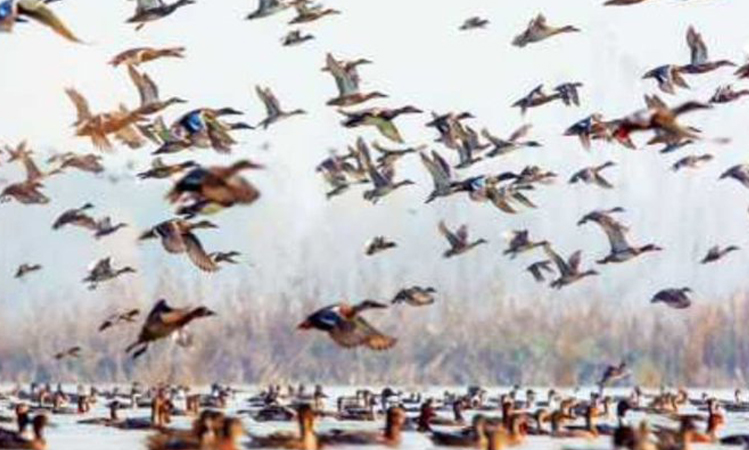
SHANXI, China: As winter blankets Pinglu County in north China’s Shanxi Province, the banks of the Yellow River witness the mesmerizing migration of whooper swans from Siberia.
Among the intrigued observers is Anees Ur Rahman, a passionate Pakistani student studying wildlife utilization protection at Beijing Forestry University in China.
Driven by his love for birds and nature, Rahman traveled thousands of miles to experience and study the rich birdlife and ecological environment in China. The Yellow River basin, a haven for migratory birds, particularly whooper swans, captivates tourists and photographers, offering a glimpse into the country’s diverse avian species.
China, boasting some of the world’s richest bird resources, is a crucial stop for migratory birds, with four major global bird migration flyways passing through the country. Monitoring efforts by the National Forestry and Grassland Administration reveal significant increases in the populations of over 20 rare and endangered bird species in China in recent years.
Rahman expresses admiration for China’s commitment to environmental conservation and its rich biodiversity, emphasizing that these factors influenced his decision to pursue studies in the country. Witnessing positive changes in China’s environmental practices over the years, Rahman acknowledges stricter regulations, increased investment in renewable energy, and a growing emphasis on sustainable development.
China’s proactive approach to protect migratory birds includes establishing a comprehensive network of breeding, wintering, and resting stations, as well as wetlands and natural reserves. These measures have contributed to the constant growth of migratory bird populations in the country.
Reflecting on his experiences, Rahman envisions contributing to global wildlife conservation efforts through his research and collaborative projects. He sees an opportunity to promote sustainable practices that benefit both wildlife and local communities, aligning with the positive shifts towards environmental consciousness in China. —APP