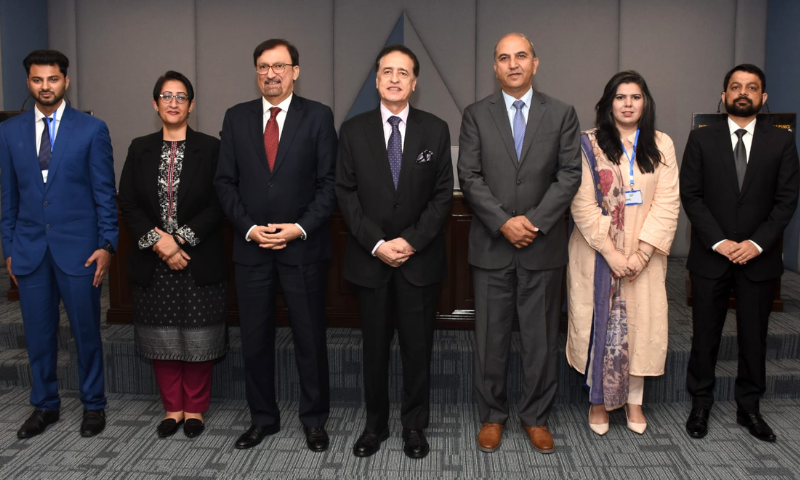
LAHORE: Lahore’s Centre for Aerospace & Security Studies (CASS) hosted a seminar on October 23, 2023, titled ‘India’s Emerging Global Significance: Reshaping Regional Dynamics and Strategic Equilibrium.’
The seminar explored the evolving global landscape, characterized by a shift from unipolarity to multipolarity, with a particular focus on India’s persistent struggles to establish a dominant global position.
The seminar commenced with Nidaa Shahid, a Senior Researcher at CASS Lahore, delivering the opening remarks, setting the stage for profound discussions. The event featured a keynote address by Air Commodore Khalid Banuri (Retd), former DG Arms Control and Disarmament Affairs (ACDA) at the Strategic Plans Division (SPD).
Banuri emphasized the intricate dynamics of global political transformation, stressing the vital importance of nuanced understanding and strategic adaptability on both global and regional fronts.
Dr. Rabia Akhtar, Director of the Centre for Security Strategy and Policy Research (CSSPR) at the University of Lahore, highlighted India’s growing influence through strategic partnerships and multilateral engagements and its regional implications.
Dr. Adil Sultan, Dean of the Faculty of Aerospace Strategic Studies (FASS) at Air University Islamabad, provided valuable insights into Pakistan’s strategic choices, addressing challenges and opportunities while offering effective policy responses.
Air Marshal Asim Suleiman (Retd), President of CASS Lahore, in his closing statement, underscored the significant roles middle powers like India, Germany, Japan, Canada, and Turkey play in the evolving landscape of global politics.
He highlighted India’s aspirations to become a regional and global leader, evident in its substantial investments in military capabilities and active engagements with international platforms like Quad and G20.
Suleiman also pointed out potential risks associated with India’s global ambitions, including military modernization efforts and an assertive anti-Pakistan stance by the BJP, cautioning Pakistan to remain vigilant.
Key Takeaways from Seminar
There is a need for middle powers like Pakistan to adapt to the global shift from unipolarity to multipolarity, emphasizing strategic flexibility and proactive policies.
Highlighting India’s involvement in hybrid warfare and aggressive nationalism, deepening the trust deficit between India and Pakistan, with an increased potential for unintended escalation.
Emphasizing Pakistan’s need to comprehensively reassess its national security priorities by creating a tailored security strategy, leveraging strengths while addressing vulnerabilities.
All speakers concurred on the significance of active participation in multilateral forums, strengthening global partnerships, and promoting diplomatic initiatives to underscore the consequences of India’s assertive stance.
The seminar served as a platform for insightful discussions, emphasizing the urgency for Pakistan to respond strategically to evolving global dynamics. The event concluded with a unanimous call for proactive policy decisions as Pakistan navigates its course in the challenging geo-economic and geo-political landscape.