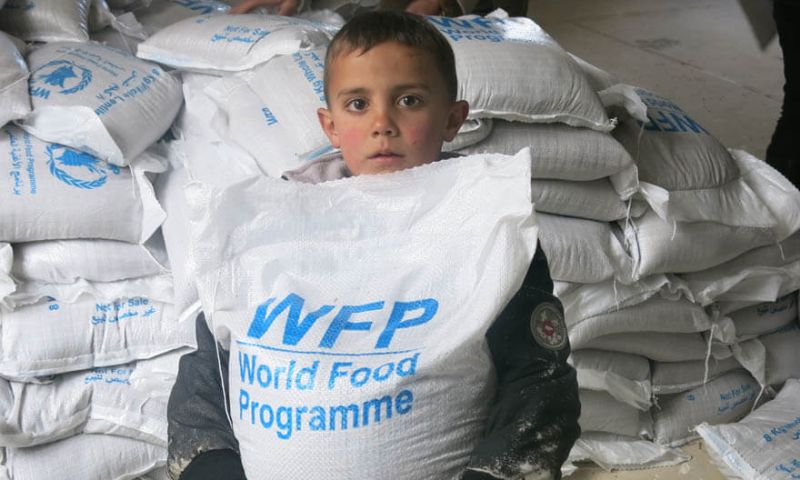
KABUL: The World Food Programme (WFP) in July revealed its significant outreach in Afghanistan, positively impacting the lives of over 5.6 million individuals.
Wahidullah Amani, the spokesperson for the WFP in Afghanistan, unveiled that this aid initiative encompassed the distribution of 35,000 tons of essential food supplies and a monetary infusion of $9 million. The concerted effort was aimed at providing critical sustenance and relief to the people of Afghanistan throughout the month.
Detailing the extent of their efforts, Wahidullah Amani shared, “During July, WFP diligently extended food assistance to a vast network of individuals spanning Afghanistan. Notably, approximately 3.8 million among them were recipients of imperative emergency humanitarian aid.”
This endeavour has not gone unnoticed by economic analysts who stress the importance of transparency in the allocation of aid. To ensure a fair and efficient distribution process, experts are urging the establishment of a supervisory committee. Additionally, with the impending winter season, the consensus is that Afghan citizens will require support more than ever.
Seyar Qurishi, an esteemed economist, highlighted the pressing need for a paradigm shift in aid strategy. He advocated for a transition towards methods that foster employment opportunities for impoverished households within the nation.
To combat the entrenched poverty in Afghanistan, it’s imperative to redefine the approach to aid allocation. This involves investing in avenues that can lay the groundwork for sustainable employment prospects for struggling families, Qurishi emphasized.
The Ministry of Economy lauded the involvement of aid organizations in Afghanistan. They voiced their belief that fortifying the nation’s infrastructure is pivotal for holistic economic progress. “The international community’s support is greatly appreciated. However, the efficacy of aid lies in its integration into infrastructure development. Concurrently, an emphasis on developmental initiatives can profoundly contribute to employment generation and poverty reduction,” the ministry asserted.
Adding depth to the narrative, a recent report by the International Organization for Migration underscored the severity of the situation, revealing that a staggering 70% of Afghan citizens presently languish below the poverty threshold. This statistic serves as a poignant reminder of the urgent need for sustained and well-targeted aid efforts.