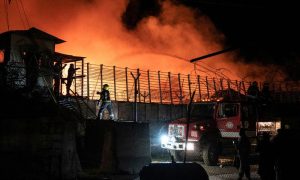
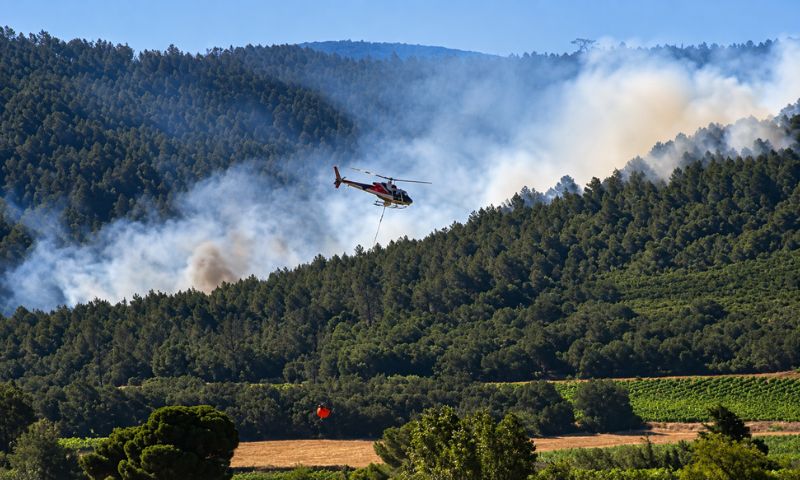
GENEVA: Wildfires and heatwaves are generating microscopic airborne pollutants that could undermine global efforts to improve air quality, protect public health and preserve ecosystems, the United Nations’ World Meteorological Organisation (WMO) said on Monday.
The UN weather and climate agency highlighted the close links between air pollution and climate change, noting that scientists have associated a warming climate with more frequent and intense heatwaves and wildfires.
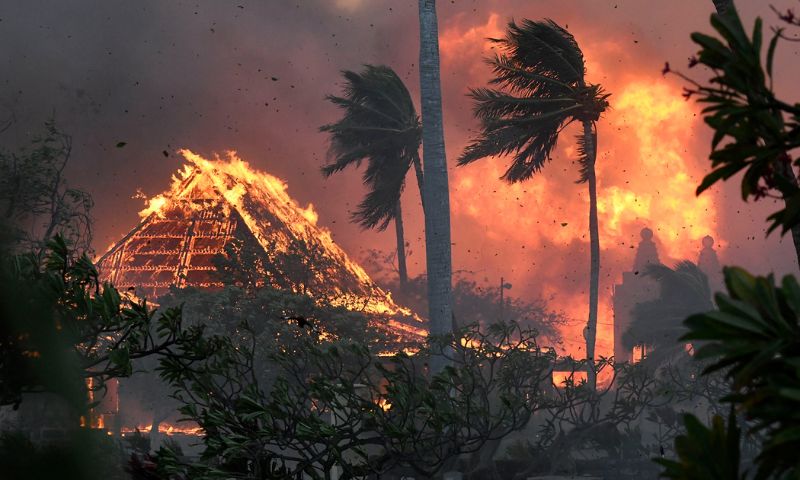
The WMO said increasingly severe wildfires were creating major health risks because of the highly toxic nature of the smoke. Although regulations in Europe and North America have helped reduce industrial and transport-related emissions of fine particulate matter, exposure to wildfire-related PM2.5 has risen.
PM2.5 consists of extremely small particles and droplets measuring less than 2.5 micrometres across. Because of their tiny size, they can penetrate deep into the lungs and enter the bloodstream, posing serious health risks.
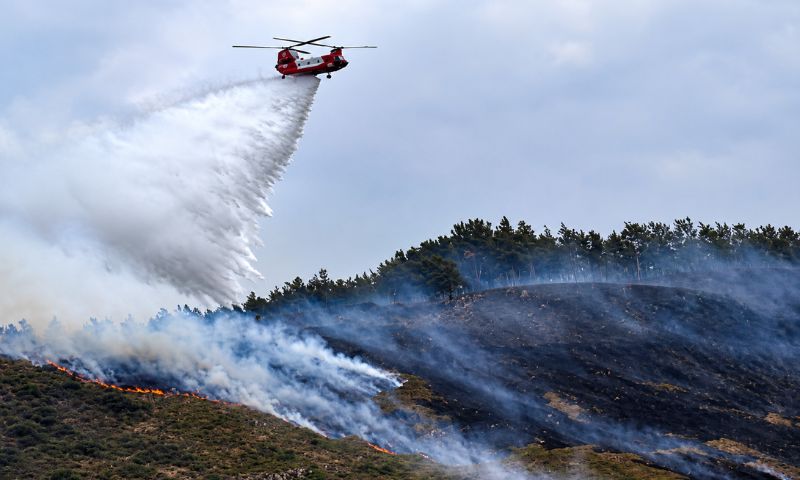
These particles are produced by a range of sources, including fossil-fuel-based industry, agriculture, domestic heating and transport, as well as wildfires and dust storms. The WMO said more comprehensive monitoring was needed for airborne pollutants, including aerosols such as black carbon and microplastics, fine particles and ground-level ozone.
Many of these pollutants remain inadequately monitored despite being widespread and potentially harmful to ecosystems, the agency said. It called for coordinated policies addressing both air quality and climate change, stressing that the two issues could not be tackled separately.
Toxic wildfire smoke
“Air quality and climate change can’t be dealt with separately. If one worsens, the other does too,” Lorenzo Labrador of the WMO’s Global Atmosphere Watch network said. He said areas affected by major forest fires often recorded high levels of fine-particle pollution.
According to Labrador, particles produced by burning vegetation can be considerably more toxic than those released by other sources, including vehicle exhaust.
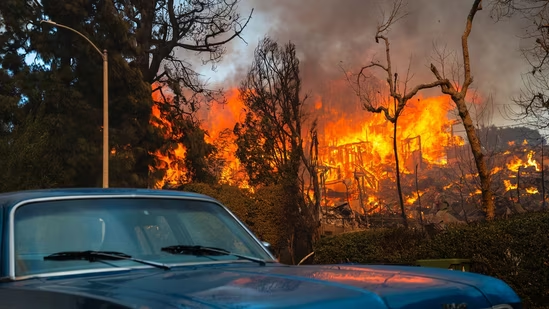
Wildfire smoke can affect people and wildlife hundreds or even thousands of kilometres from the source as pollutants are carried by winds. However, the full health impact of wildfire-related pollution is not adequately reflected in conventional air-quality assessments, he said.
The WMO warned that traditional risk models based on overall PM2.5 concentrations could underestimate deaths attributable to wildfire smoke by as much as 93%.
A study cited in the WMO bulletin found that extreme wildfire-smoke events have tripled worldwide since the 1990s. They were estimated to have contributed to almost 100,000 additional deaths annually between 2010 and 2018, although the actual figure could be higher.
Ozone and microplastics
Ground-level ozone is another major air pollutant with significant health implications. It tends to build up when temperatures are high, atmospheric conditions are stagnant, and sunlight is intense. Such conditions have been observed during recent heatwaves in parts of China, Europe and the southeastern United States.
The WMO warned that increased exposure to ozone pollution could result in tens of thousands of additional premature deaths, particularly from respiratory illnesses. The agency also highlighted growing concerns over airborne aerosol particles, which can travel vast distances across continents and oceans.
READ ALSO: Climate Change Drives Temperatures to Record High in Europe
These particles can affect how the atmosphere reflects sunlight, alter the chemical characteristics of land and water, and contaminate otherwise relatively clean environments. The WMO cited black carbon, or soot, deposited on snow and ice as one example. Such deposits reduce the amount of sunlight reflected by these surfaces, potentially accelerating melting.
Microplastics are another emerging concern. Created as plastic waste breaks down through sunlight and other processes, they have now been detected almost everywhere, including in the atmosphere, soil and oceans.
A simulation cited in the WMO bulletin estimated that around 51 million tonnes of microplastics are present on land and 22 million tonnes in the ocean, which can subsequently contribute to atmospheric microplastic pollution.
The report said continued growth in plastic production, coupled with poorly managed plastic waste, made it increasingly important to monitor how airborne microplastics travel from their sources and accumulate in remote parts of the world.