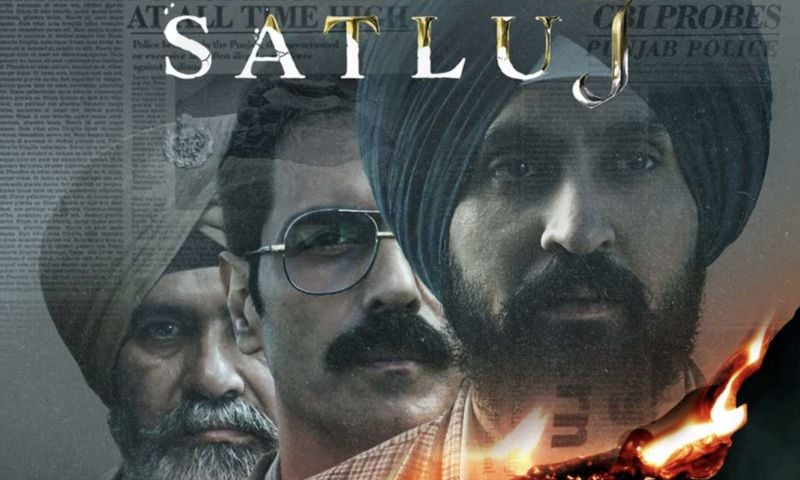
NEW DELHI: Indian film-maker Honey Trehan has criticised what he called “dystopian” censorship after his film on human rights activist Jaswant Singh Khalra and police abuses in Punjab was blocked from Indian cinemas and later banned from streaming within 48 hours.
The film, originally titled Ghallughara and later released as Satluj, depicts the story of Khalra, who exposed mass killings and illegal cremations during the crackdown on Punjab’s separatist movement in the 1980s and 1990s. Khalra was later murdered and remains a revered figure for many in Punjab.
Trehan said he had wanted to tell this story for years because he grew up in Punjab and saw the impact of that period on ordinary families.
For more than three years, India’s film certification board blocked the film’s cinema release. When the movie was finally released online, the Indian government ordered it removed, calling it a threat to national security.
Trehan rejected that argument, saying the film tells an uncomfortable but important part of India’s modern history.
“It is clear to me that there is no creative freedom in India today,” he said, accusing authorities of using censorship to control the film industry’s narrative.
According to the director, censors demanded 127 cuts and changes, including removal of references to Punjab police, killings, crematoriums, dates, the Indian flag and scenes showing police in a negative light. He said they even sought removal of Khalra’s name and a scene depicting his murder inside a police station.
Critics say the case reflects wider concerns that films addressing state violence, police brutality, caste oppression or minority issues face growing pressure in India.
Despite the ban, Satluj has been screened in villages, community halls, gurdwaras and open spaces across Punjab.
Families of victims say the film has become an archive of painful history that many fear India wants forgotten.