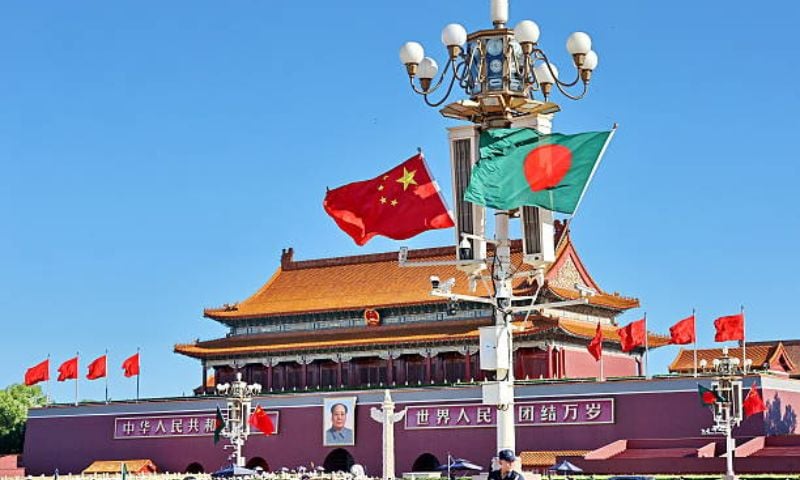
ISLAMABAD: Bangladesh is gradually drawing closer to China as it seeks to reduce its traditional reliance on India and establish greater strategic autonomy, with expanding defence, trade and investment cooperation with Beijing potentially adding fresh strains to its already complicated ties with New Delhi, analysts say.
Dhaka’s evolving foreign policy follows the fall of Sheikh Hasina’s Awami League government in August 2024 after a student-led uprising. Under the interim administration led by Nobel laureate Muhammad Yunus, and subsequently the Bangladesh Nationalist Party (BNP) government that assumed power in February, Bangladesh has accelerated efforts to deepen diplomatic, economic and strategic relations with China.
The two countries are preparing to launch a “2+2” dialogue involving diplomatic and defence officials, adding a new dimension to bilateral relations that already encompass infrastructure, trade and investment. Bangladesh’s State Minister for Foreign Affairs Humayun Kabir announced the initiative after meeting Chinese Ambassador Yao Wen on August 30.
Shafi Md Mostofa, an associate professor specialising in South Asian foreign policy at the University of Dhaka, said the proposed dialogue reflected Dhaka’s deliberate effort to diversify its international partnerships.
“China is indispensable for infrastructure, trade and defence modernisation, while Bangladesh also remains engaged with India and other partners,” Mostofa said.
He said the approach would enable Bangladesh to secure economic benefits and advanced defence technology from China while avoiding excessive dependence on a single major power.
The strengthening of Bangladesh-China relations could also have wider regional consequences, potentially altering the balance of power in South Asia and prompting India and the United States to reassess their policies, he added.
Mostofa said India remained an important partner for Bangladesh in areas including connectivity, energy and security, but Dhaka’s growing reliance on Chinese military equipment could increase sensitivities in New Delhi.
Defence ties deepen
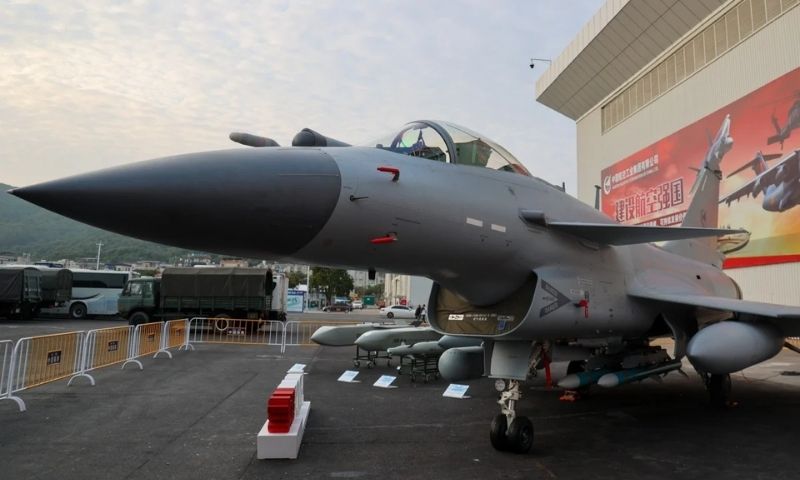
Bangladesh has finalised an agreement to purchase between 20 and 24 Chengdu J-10CE 4.5-generation multirole fighter aircraft from China in a deal reportedly worth up to $2.3 billion. Mostofa said Dhaka would nevertheless seek to maintain pragmatic relations with India while expanding its economic and defence cooperation with Beijing.
“For any Bangladeshi government, economic interests remain paramount, and China’s role in trade, investment and infrastructure makes it a critical partner,” he said. He ruled out a rupture with India, saying Bangladesh was likely to continue pursuing a “complex balancing act” between the two powers.
“Dhaka will hedge between the two, ensuring neither relationship undermines its sovereignty or development priorities,” he said. Since Hasina’s ousting, Bangladesh and China have signed at least 15 new memorandums of understanding and agreements covering trade, investment and other areas, further broadening bilateral cooperation.
During Prime Minister Tarique Rahman’s visit to Beijing in June, 11 Chinese companies proposed investments worth $9.21 billion in Bangladesh. Umer Karim, a researcher in political science and international studies at the University of Birmingham, said the expanding relationship with China showed Bangladesh’s determination to establish itself as a more independent strategic actor in South Asia.
“Dhaka is looking to assert its strategic autonomy and to emerge as an actor in its own right on the South Asian political chessboard,” Karim said. He described engagement with China as a relatively safe option for Bangladesh because it provided access to advanced defence equipment while also opening avenues for greater economic cooperation.
“The traditional reliance on India as a security provider is indeed beginning to change, and Dhaka is showcasing elements of balancing behaviour in its statecraft vis-a-vis India,” he said.
Ties with India under strain
Karim said India was likely to view the planned Bangladesh-China 2+2 dialogue with apprehension, particularly amid concerns in New Delhi over growing Chinese influence in South Asia.
Relations between Bangladesh and India deteriorated sharply after New Delhi allowed former Prime Minister Sheikh Hasina to remain in India following her departure from Bangladesh. Dhaka is seeking her extradition to face trial in the country.
Jon Danilowicz, a retired American diplomat who previously served in Bangladesh, said China had strengthened its position by cultivating ties with Bangladesh’s major political forces following Hasina’s fall.
“Throughout the interim government period, China developed closer relations with all of Bangladesh’s political stakeholders, hosting delegations from all three major parties,” he said. Danilowicz said there was now broad domestic recognition in Bangladesh of the importance of maintaining strong relations with China.
He added that under the BNP government’s “Bangladesh first” foreign policy, ties with Beijing were likely to remain an important component of Dhaka’s diversified international relations.
He said stronger Bangladesh-China relations could increase Beijing’s influence in the wider region, including developments involving Myanmar and the Indian Ocean.
Although India continued to wield considerable economic, security and geopolitical influence, Danilowicz said Bangladesh’s ability to rely on China could give Dhaka greater room to resist pressure from New Delhi.
READ ALSO: Bangladesh Urges India to Stop Hasina’s Political Activity for Better Ties
“It is up to India to decide whether it will seek to reassert its primacy in relation to Bangladesh or can accommodate itself to a more independent neighbour,” he said.
Danilowicz said Bangladesh was also seeking stronger relationships with traditional and emerging partners in the United States, Europe, Asia and the Middle East.
China’s established military role
Nilanthi Samaranayake, a security analyst and adjunct fellow at the East-West Centre in Washington, noted that China had already been Bangladesh’s principal supplier of military equipment before Hasina’s removal.
She pointed to Bangladesh’s acquisition of modern Chinese aircraft under comparatively affordable arrangements that also included training support. However, Samaranayake said antagonising India would not serve Bangladesh’s interests, adding that Dhaka’s engagement with China had long remained a concern for New Delhi, including during Hasina’s tenure.
“Yet Bangladesh needs to have as many partners as possible as it works to stabilise its economy and domestic politics after the turmoil of 2024, and to continue expanding its diplomatic and military presence in multilateral institutions,” she said.
Bangladesh’s growing engagement with China, therefore, appears less to represent a complete break with India than an attempt to widen its strategic options and reduce dependence on any single regional power.
For New Delhi, however, the emergence of a more strategically independent Bangladesh with deeper Chinese defence and economic ties could create a new and more challenging dynamic in South Asia.