


GENEVA: The World Health Organization (WHO) warned on Tuesday that reports of “black rain” and toxic air pollution in Iran following US-Israeli strikes on oil facilities could pose serious health risks, particularly respiratory problems.
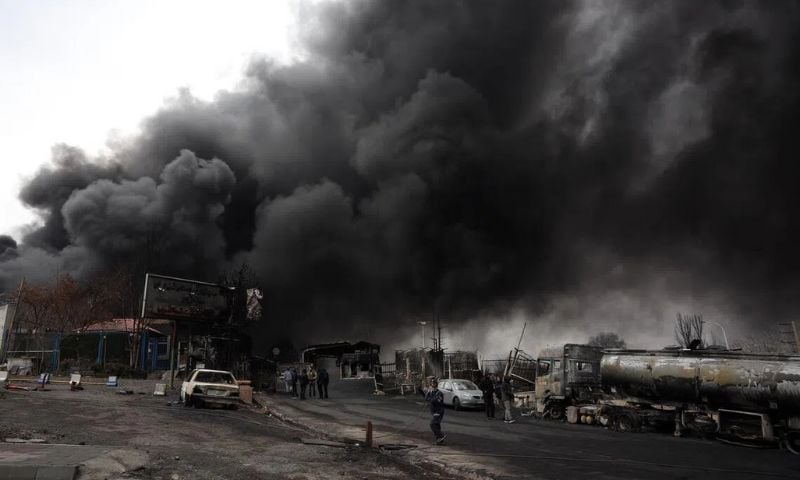
The UN health agency said it had received multiple reports this week of oil-laden rainfall in parts of Iran after attacks on energy infrastructure triggered fires and heavy pollution.
“The black rain and the acidic rain coming with it is indeed a danger for the population, respiratory mainly,” WHO spokesperson Christian Lindmeier told a press briefing in Geneva.
He said Iranian authorities had advised people to stay indoors and limit exposure to the contaminated air and rainfall.
“Given what is at risk right now — the oil storage facilities and the refineries that have been struck, triggering fires and bringing serious air quality concerns — that is definitely a good idea,” Lindmeier said.
Smoke and pollution blanket Tehran
The warning came after strikes on Iran’s domestic energy infrastructure during the ongoing US-Israeli attacks.
On Monday, a refinery near Tehran was hit, sending thick black smoke across the capital and surrounding areas.
The pollution mixed with rainfall to produce what residents and officials described as “black rain”.
According to the WHO, the strikes triggered fires that released significant quantities of toxic chemicals into the atmosphere.
Lindmeier said the attacks had caused “the massive release of toxic hydrocarbons, sulphur oxides and nitrogen compounds into the air”.
Health experts warn that such pollutants can severely degrade air quality and expose millions of people to harmful substances.
Thick black clouds and oil‑saturated rain are shrouding Iran’s capital this morning after major airstrikes hit refineries and storage sites south and west of the city. CNN’s Fred Pleitgen reports. CNN operates in Iran only with government permission. pic.twitter.com/Cv0EEHDwom
— CNN (@CNN) March 8, 2026
Health risks from toxic compounds
Scientists say inhaling the polluted air or coming into contact with contaminated rainwater can lead to a range of health problems.
Short-term exposure may cause headaches, skin irritation, eye irritation and breathing difficulties.
Prolonged exposure to certain chemicals may increase the risk of serious illnesses, including some forms of cancer.
Researchers say the phenomenon is likely the result of rainfall interacting with airborne pollution created by burning oil facilities.
Akshay Deoras, a research scientist at the University of Reading, said rain clouds moving into the area likely combined with the polluted air to produce the dark rainfall.
“The rain was an eye-opener to people,” Deoras said.
However, he said the greater risk could come from prolonged exposure to polluted air rather than the rain itself.
“Long-term exposure to toxic air is likely more of a health risk,” he said, adding that people could reduce exposure by staying indoors, wearing masks and covering their skin when outside.
Air quality
Deoras said reliable data on air quality in the affected areas remained limited, making it difficult to assess the full scale of the environmental impact.
However, weather forecasts suggested dry conditions for the rest of the week, which could help reduce the immediate effects of polluted rainfall.
Air quality may gradually improve if fires at the damaged facilities are contained and no further strikes occur, he said.
“The risk of exposure goes down provided we don’t see fresh strikes,” Deoras said. “If we get fresh strikes, that is going to be problematic.”