WASHINGTON: US Secretary of State Marco Rubio has said the United States will continue pursuing a diplomatic solution with Iran, even as he accused Tehran of attempting to use the strategically vital Strait of Hormuz as a bargaining tool amid ongoing tensions in the Middle East.
He also called on the international community to play a greater role in safeguarding one of the world’s busiest maritime trade routes.
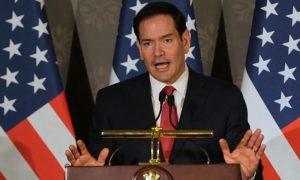
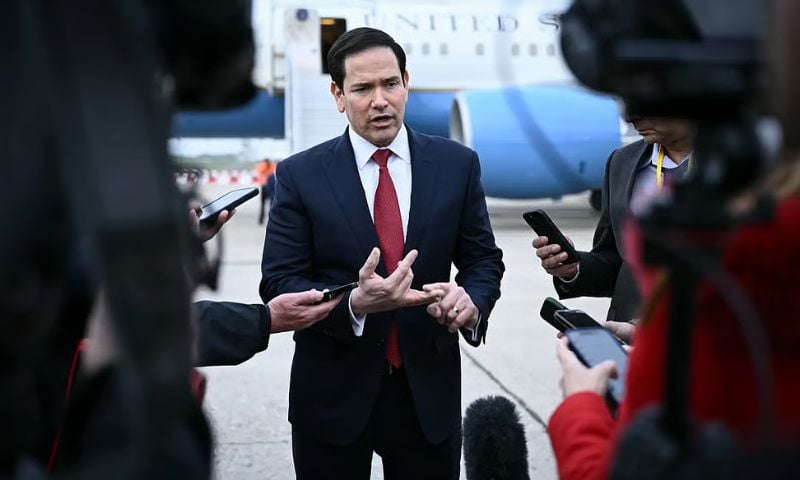
Speaking to reporters before departing for the Philippines to attend the Association of Southeast Asian Nations (ASEAN) Foreign Ministers’ Meeting, Rubio said there were clear indications that elements within Iran were seeking to use control over the waterway to exert pressure on the international community.
“It is evident that some within Iran want to use the Strait of Hormuz as leverage against the rest of the world,” Rubio said, stressing that such actions posed a serious threat to global maritime security and international trade.
The Strait of Hormuz is regarded as one of the world’s most critical shipping lanes, serving as the main transit route for a significant share of global oil and liquefied natural gas exports. Any disruption to navigation through the narrow waterway has the potential to affect international energy markets and global supply chains.
Rubio reaffirmed that the United States would continue taking the necessary measures to ensure freedom of navigation and protect commercial shipping. However, he emphasised that safeguarding the route should not remain solely a US responsibility.
“The United States will continue to do what is necessary to protect global shipping,” he said. “But other countries also need to step up, whether by providing financial support or military capabilities, to help share that responsibility.”
Responding to questions about whether there remained a diplomatic path to reduce tensions with Tehran, Rubio maintained that Washington remained committed to pursuing dialogue, provided any agreement was genuine and enforceable.
Also Read: Qatar, Jordan Call for End to US-Iran Hostilities, Return to Negotiations
“The United States is always open to diplomacy,” he said. “But it has to be meaningful, and any agreement must be one that Iran is genuinely prepared to honour.”
He added that previous diplomatic efforts had been undermined when commitments were not upheld, making compliance an essential element of any future arrangement.
“We have made several attempts to engage Iran diplomatically, and we will continue to pursue those efforts,” Rubio said. “However, any agreement must be based on mutual adherence to its terms.”
His remarks come amid heightened regional tensions and growing international concern over the security of maritime traffic through the Strait of Hormuz, a corridor widely regarded as vital to global energy supplies and international commerce.
Rubio said Iran possessed considerable national wealth but argued that the country’s economic difficulties were largely the result of the government’s spending priorities.
.@SecRubio: “Iran is a rich country. One of the reason why Iran is in shambles is because every penny that this regime ever gets — be it through sanctions relief or through the oil they’re able to get out — they invest it in Hezbollah. They invest it in Hamas… They should be… pic.twitter.com/E3OrpuBAHa
— Rapid Response 47 (@RapidResponse47) July 20, 2026
He alleged that revenue generated through sanctions relief and oil exports was being channelled towards supporting groups such as Hezbollah and Hamas rather than being invested in the country’s development.
According to Rubio, those resources should instead be used to improve infrastructure, strengthen the economy and enhance the living standards of the Iranian people, rather than funding organisations that the United States designates as terrorist groups.