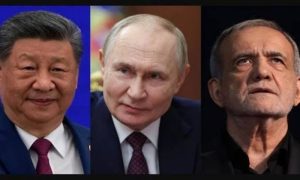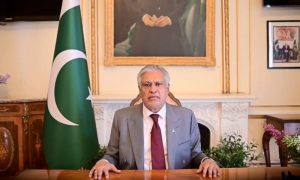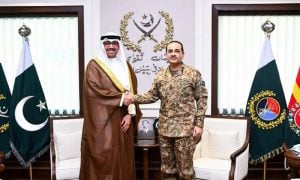
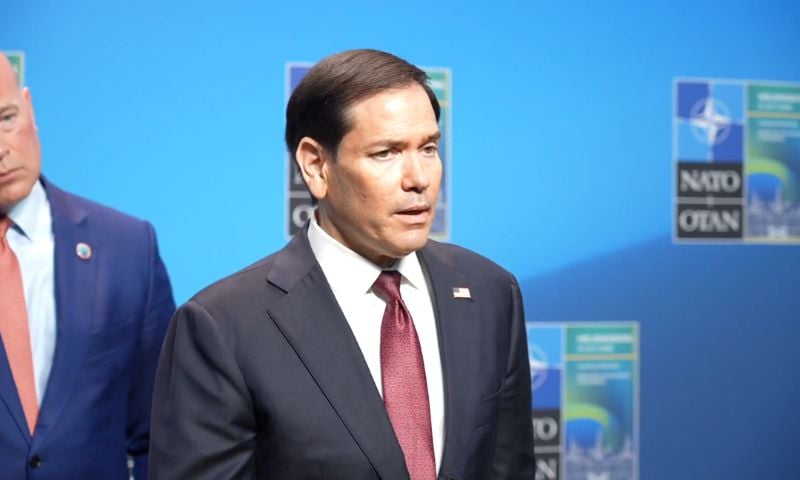



STOCKHOLM: US Secretary of State Marco Rubio has praised Pakistan’s role in ongoing efforts to facilitate a peace agreement between Washington and Tehran, saying Islamabad has done an “admirable job” as a key intermediary in the diplomatic process.
“The primary interlocutor on this has been Pakistan and continues to be and they’ve done a, you know, I think an admirable job. And that’s what we continue to work through,” he said speaking to reporters in Sweden.
“Obviously, other countries, you know, have interests because especially Gulf countries that are, you know, in the middle of all this, may have their own situation going on. We talk to all of them. But I would just say that the primary country we’ve been working with on all of this is Pakistan, and that remains the case,” he said.
He said that US administration is in constant communication with Pakistan’s Army Chief Field Marshal Syed Asim Munir and ‘the highest levels of our government are constantly talking to him.’
SECRETARY RUBIO on IRAN NEGOTIATIONS: The primary interlocutor on this has been Pakistan and they’ve done an admirable job. We’ve been working with them on all of this and that will remain the case. pic.twitter.com/5FdAcrpwvF
— Department of State (@StateDept) May 22, 2026
Plan B if Iran refuses to reopen Strait of Hormuz
Marco Rubio further said the United States and its partners must consider a “Plan B” in case Iran refuses to reopen the Strait of Hormuz.
He said the issue was raised during discussions with NATO states, stressing that while such a contingency plan would not involve NATO as a whole, it could include individual countries with strategic interests in the waterway.
Rubio added that these nations “have to start thinking” about alternative measures if Iran does not cooperate on ensuring open access to the vital shipping route.
“We all would love to see an agreement with Iran in which the straits are open and they abandon their nuclear ambitions and so forth, their nuclear weapons ambitions. That’s what we would all hope for. And that’s what we’re going to continue to work on, and that’s what work is ongoing, even as I speak to you now in that regard,” Rubio said.
“But, we also have to have a Plan B, and Plan B is — what if Iran refuses to open the straits? What if Iran decides, ‘We refuse to open the straits, we’re going to own the straits, and we’re going to charge tolls for it?’ Okay, at that point, something has to be done about it.”
He said he’d “raised that point today” and “got a lot of nods” from other NATO foreign ministers.
SECRETARY RUBIO: We would all love to see an agreement with Iran, in which the Straits are open and they abandon their nuclear ambitions.
But we also have to have a plan B. What if Iran refuses to open the Straits? At that point, something has to be done about it. pic.twitter.com/UyheAl3XTn
— Department of State (@StateDept) May 22, 2026
He reaffirmed the Trump administration’s position that the United States does not require assistance to reopen the strait or remove any sea mines, but added that support from allies would be welcomed.
“We don’t need their help, but they’re willing to do it,” he said.
So far, America’s NATO allies, led by the United Kingdom and France, have begun laying the groundwork for a multinational maritime initiative aimed at ensuring safe commercial navigation through the Strait of Hormuz.
The proposed coalition is expected to include naval assets, surveillance support and potential mine-clearing capabilities to safeguard shipping lanes once hostilities in the Iran conflict come to an end. However, officials have emphasised that any deployment would only take place after a durable ceasefire or political settlement is reached.
The initiative reflects growing concern over the security of one of the world’s most critical maritime chokepoints, which has been severely disrupted since the escalation of tensions in the region. While some planning and coordination among partner nations is already under way, there remains no agreement on active military engagement during ongoing hostilities.