



WASHINGTON: The United States on Tuesday imposed fresh sanctions on Iran’s largest cryptocurrency exchange, Nobitex, accusing the platform of facilitating financial transactions for the Iranian government and sanctioned state institutions, including the Islamic Revolutionary Guard Corps (IRGC), in an effort to bypass Western economic restrictions.
The move comes weeks after a Reuters investigation published on May 1 revealed that Nobitex had emerged as a key component of a parallel financial network allegedly used by Iranian authorities to process hundreds of millions of dollars in transactions linked to the country’s central bank and the IRGC.
According to the US Treasury Department, Nobitex played a significant role in enabling Iran to access and transfer funds despite international sanctions.
The department alleged that the exchange provided substantial support to the Iranian government and processed a considerable volume of digital asset transactions connected to entities already subject to US sanctions.
Announcing the measures, US Treasury Secretary Scott Bessent said Iran had exploited digital asset technologies to further its economic and political objectives while attempting to evade international restrictions.
“While Iran’s economy is in free fall, the regime has chosen to co-opt digital asset technologies for its own corrupt agenda, including evading sanctions and transferring wealth out of the country,” Bessent said in a statement.
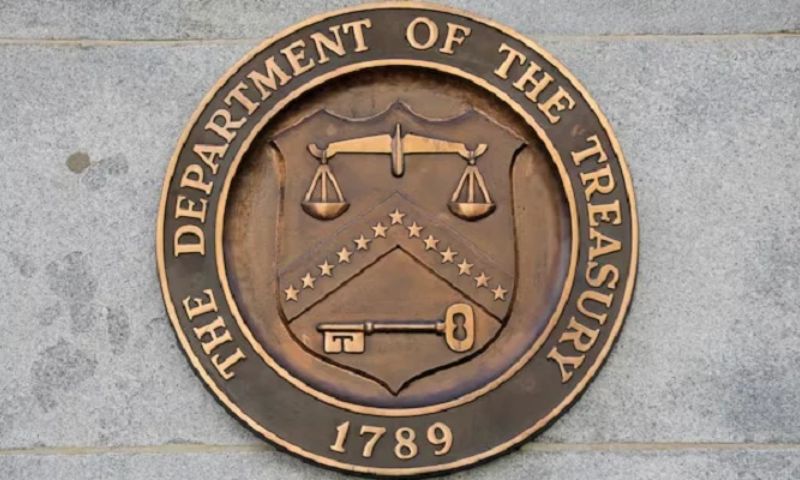
Today, Treasury’s Office of Foreign Assets Control designated Nobitex, Iran’s largest digital asset exchange, along with three other Iranian digital asset exchanges, as part of Economic Fury and the Trump Administration’s efforts to eliminate the threat posed by the Iranian…
— Treasury Department (@USTreasury) June 2, 2026
US authorities further claimed that following the commencement of American military operations against Iran, Nobitex assisted in protecting and transferring assets outside the country to shield state wealth, even during periods of internet disruption and government-imposed communication restrictions.
The sanctions also target several senior figures associated with the exchange. The Treasury Department named Nobitex Chief Executive Officer Amir Hossein Rad among those sanctioned, alongside two brothers identified as Seyed Mohammad Ali Aghamir Mohammad Ali and Seyed Mohammad Aghamir Mohammad Ali.
Reuters previously reported that the two brothers are members of the influential Kharrazi family, one of the most prominent political dynasties in the Islamic Republic.
The investigation added that the family maintains close links to Iran’s ruling establishment and that the brothers were involved in the exchange from its early stages. Corporate records cited in the report indicated that they were initially listed under a surname not commonly associated with the Kharrazi family.
The Reuters investigation also found that Nobitex continued to process transactions worth millions of dollars despite a government-imposed internet shutdown, raising concerns among Western officials over the platform’s ability to operate during periods of severe domestic restrictions.
The US Treasury said the exchange had facilitated numerous transactions involving entities connected to both the IRGC and Iran’s central bank, enabling them to conduct financial activity outside conventional banking channels.
Nobitex was not immediately available for comment following the announcement, which was made after standard business hours in Iran.
However, in an earlier statement provided to Reuters in April, the company rejected allegations of direct involvement with the Iranian government and denied knowingly assisting state institutions in circumventing sanctions.
The exchange maintained that it had no formal governmental affiliation and asserted that any illicit funds that may have passed through the platform did so without the knowledge or approval of its management.
Nobitex also denied claims that the two sanctioned brothers had ever changed their identities or operated under alternative names.
The latest sanctions form part of Washington’s broader strategy to tighten economic pressure on Tehran and restrict the use of digital financial networks that US officials believe are being employed to circumvent international sanctions and support sanctioned organisations.