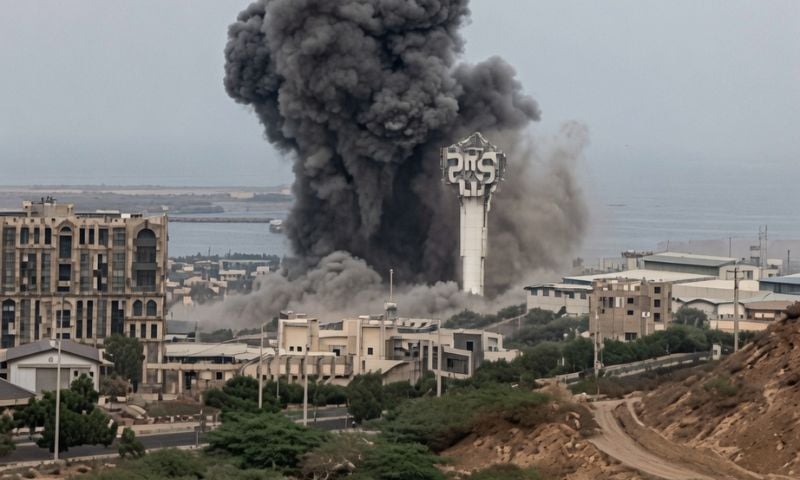
WASHINGTON: The US Central Command (CENTCOM) said its forces have destroyed a “surveillance tower” at Iran’s Chabahar Port, alleging that the facility had been used by the Islamic Revolutionary Guard Corps (IRGC) for decades to monitor and target commercial vessels passing through the Strait of Hormuz.
“The destruction of the tower directly degrades [the] IRGC’s ability to coordinate attacks on innocent civilian crew members,” Centcom adds in a statement published on X.
On July 16, U.S. forces successfully destroyed the Chah Bahar Shahid Kalantari Port surveillance tower, part of a maritime surveillance network along Iran’s Gulf of Oman coastline used for decades by the Islamic Revolutionary Guard Corps (IRGC) to track and target commercial… pic.twitter.com/CgBNvgOFf9
— U.S. Central Command (@CENTCOM) July 17, 2026
“Furthermore, the strike protects freedom of navigation in regional waters for all vessels, except for ships attempting to violate the ongoing US naval blockade against Iran.”
https://t.co/jZlSVRePRC pic.twitter.com/Nj5o0oiphH
— Pete Hegseth (@PeteHegseth) July 17, 2026
US denies Iranian claims of American deaths in Syria’s Al-Tanf strike
US Central Command (CENTCOM) has also rejected claims by the Iranian military that US personnel were killed in a strike targeting the Al-Tanf Garrison in Syria.
CENTCOM said the reports of American casualties were false, denying Iran’s assertions that the attack resulted in the deaths of US troops.
“No US troops in the region have recently been killed or captured,” Centcom says in a post on X.
🚫 CLAIM: Iranian forces claim they attacked al-Tanf Garrison in Syria and captured or killed American troops in the process. FALSE.
✅ FACT: No U.S. troops in the region have recently been killed or captured. pic.twitter.com/8TTHb7qYbT
— U.S. Central Command (@CENTCOM) July 17, 2026
IRGC designated under UK’s National Security Act: Home Office
Earlier, the British Home Office has designated the Islamic Revolutionary Guard Corps (IRGC) under the National Security (State Threats) Act, according to a statement shared on X.
The designation places the IRGC under the UK’s state threats legislation framework.
“Anyone who supports or assists the IRGC, or receives payment from it, could face 14 years in prison,” it reads. “Those who commit acts of sabotage could face life imprisonment.”
The Islamic Revolutionary Guard Corps (IRGC) has been designated under the National Security (State Threats) Act.
Anyone who supports or assists the IRGC, or receives payment from it, could face 14 years in prison.
Those who commit acts of sabotage could face life imprisonment.
— Home Office (@ukhomeoffice) July 17, 2026
Iran to continue attacks until strikes around south, Hormuz stop: IRGC
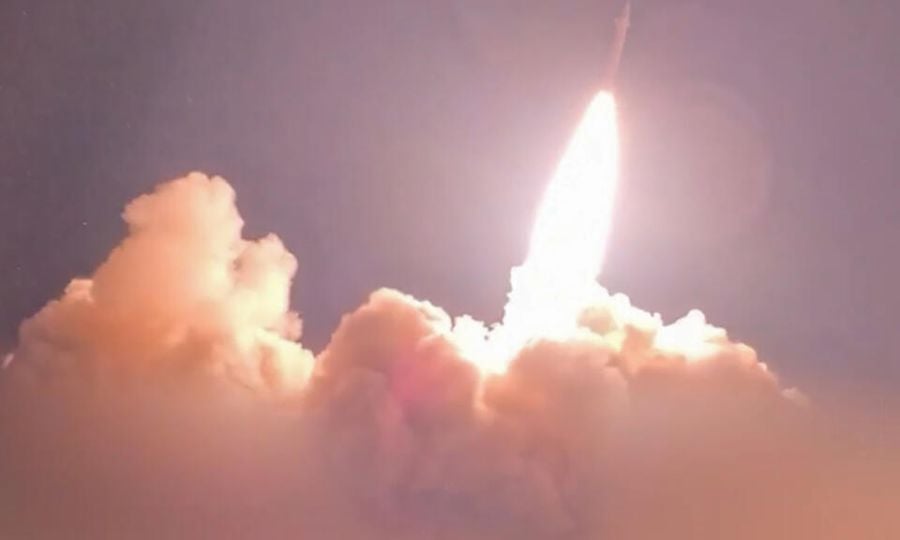
The commander of Iran’s Islamic Revolutionary Guard Corps (IRGC) Aerospace Force said on Friday that Tehran would continue its attacks in the region until the United States stops strikes on Iran’s southern coastline and the Strait of Hormuz.
In a post on social media, Majid Mousavi said Iran’s capital and southern regions were “one and indivisible,” adding that “effective and targeted strikes from across Iran against the enemy will continue” until attacks on the southern coastline and the strategic waterway come to an end.
Negotiation doors still open
Despite the continuing military campaign, the White House indicated that diplomatic channels remain open. White House Press Secretary Karoline Leavitt told reporters that President Trump remained willing to engage in negotiations if Iran demonstrated a genuine commitment to a diplomatic solution.
Also Read: Trump ‘Open to Diplomacy’ as Tehran Seeks Deal Despite Fresh US-Iran Strikes: White House
Pakistan calls for restraint
Meanwhile, mediator Pakistan urged all parties to avoid actions that could further undermine regional peace and stability.
Speaking at the Foreign Office’s weekly media briefing in Islamabad, spokesperson Tahir Andrabi said Pakistan continued to support diplomacy and the implementation of the Islamabad Memorandum of Understanding as an enduring framework for promoting peace, mutual respect and shared prosperity.
“The Islamabad MoU remains an enduring framework for promoting peace, mutual respect and shared prosperity,” Andrabi said.
He said Pakistan would continue encouraging all parties to end hostilities and resume technical-level negotiations under the Islamabad MoU and the Pakistan-Qatar Joint Statement issued on 22 June.
Andrabi said Pakistan remained actively engaged with regional and international partners to support de-escalation efforts and a peaceful resolution of the crisis.
He also warned that continued tensions around the Strait of Hormuz were affecting countries across the Global South by disrupting global energy supplies, trade and food security.
He expressed hope for the early normalisation of the security situation in the waterway and stressed the importance of ensuring the continued safety and freedom of international maritime navigation.
Islamabad MoU framework
The Islamabad MoU was signed on June 18 by US President Donald Trump, Iranian President Masoud Pezeshkian and Prime Minister Shehbaz Sharif after Pakistan brokered a ceasefire between Washington and Tehran.
Under the Islamabad MoU, the US and Iran committed to halt military operations, reopen the Strait of Hormuz to commercial shipping and negotiate a comprehensive agreement covering Iran’s nuclear programme, US sanctions and a permanent ceasefire within 60 days.
Pakistan and Qatar subsequently co-mediated the first round of high-level negotiations in Lucerne, Switzerland, on June 21.
The talks were attended by US Vice President JD Vance and Iranian Parliament Speaker Mohammad Bagher Ghalibaf.