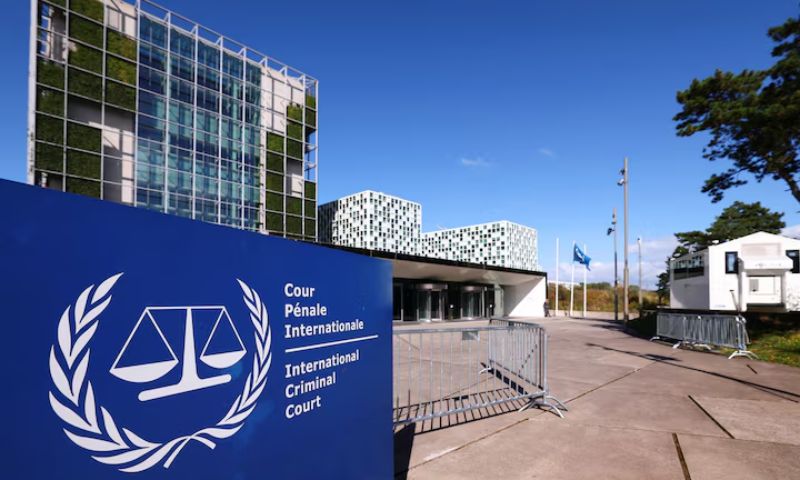
WASHINGTON: The administration of United States (US) President Donald Trump has escalated its pressure campaign against the International Criminal Court (ICC), with the US State Department vowing to mount “a whole-of-government response to systematically disable” the tribunal’s ability to operate.
The State Department campaign was announced in a news release on Monday, accompanied by a video statement from US Secretary of State Marco Rubio and an op-ed in The Wall Street Journal.
The International Criminal Court seeks to become the unaccountable arbiter of a new global law — empowered to prosecute and arrest our citizens at will and existentially threaten American sovereignty.
We will teach the ICC the full meaning of American resolve. pic.twitter.com/2egHK1jA98
— Secretary Marco Rubio (@SecRubio) July 13, 2026
US Secretary of State Marco Rubio has announced a new campaign aimed at dismantling the International Criminal Court (ICC), arguing that the tribunal poses a threat to American sovereignty by claiming authority over US military personnel, law enforcement officials and elected leaders.
In an opinion article published in The Wall Street Journal and a video message released on social media, Rubio accused the Hague-based court of attempting to exercise jurisdiction over American citizens despite the United States not being a member of the Rome Statute, the treaty that established the ICC.
He warned that US officials involved in protecting the country’s interests could face prosecution by what he described as “foreign judges,” claiming such actions would undermine America’s ability to defend itself.
According to reports, the US State Department is preparing a broader diplomatic campaign to persuade countries to distance themselves from the ICC.
Nations that continue to support the court while receiving US assistance could face increased scrutiny, with measures such as sanctions, visa restrictions and travel bans reportedly under consideration.
Legal experts, however, have strongly disputed Rubio’s claims, arguing that they misrepresent the court’s legal authority. Former Human Rights Watch Executive Director Kenneth Roth said the ICC does not claim jurisdiction over crimes committed inside the United States.
Instead, he noted, the court investigates alleged genocide, war crimes, crimes against humanity and the crime of aggression committed within the territory of countries that have accepted its jurisdiction or by their nationals.
The United States has never ratified the Rome Statute and is therefore not a member of the ICC. Nevertheless, the court has previously examined alleged crimes involving US personnel in Afghanistan because Afghanistan is a state party to the treaty.
Critics also pointed to what they described as inconsistencies in Washington’s approach to the ICC. The United States has previously welcomed the court’s investigations into alleged Russian war crimes in Ukraine while simultaneously rejecting its inquiries involving Israel and US personnel.
Earlier this year, President Donald Trump declared a national emergency over what his administration described as the ICC’s “illegitimate and baseless” actions against the United States and Israel.
His administration subsequently imposed sanctions on ICC Prosecutor Karim Khan, two deputy prosecutors and several judges linked to investigations into the conflicts in Palestine and Afghanistan.
The sanctions programme was later expanded to include UN Special Rapporteur Francesca Albanese and several Palestinian human rights organisations involved in documenting alleged war crimes.
Analysts say it remains unclear how Rubio’s latest initiative would affect the court’s operations. Some believe Washington could increase diplomatic pressure on allies to reduce cooperation with the ICC, while others speculate that broader sanctions targeting the institution itself may be considered.
If such measures are implemented, the US citizens and companies could face legal and financial consequences for engaging with the court, potentially complicating international legal cooperation.
Human rights organisations have condemned the proposed campaign, arguing that weakening the ICC could undermine global accountability efforts and erode the international legal system established after the Second World War.
Legal experts, European allies reject Washington claim that ICC threatens US sovereignty
Legal experts and European allies have rejected Washington’s claim that the International Criminal Court threatens US sovereignty. They argue the ICC only exercises jurisdiction in limited circumstances defined by the Rome Statute and warn that efforts to weaken the court could undermine global accountability for war crimes and crimes against humanity.
Kenneth Roth, former Executive Director, Human Rights Watch said the ICC is not claiming jurisdiction over conduct in the United States.
He argued that Rubio’s sovereignty argument misrepresents the court’s mandate because the ICC can only prosecute crimes committed on the territory of member states or by their nationals, unless referred by the UN Security Council.
He also said: “Rubio is dressing up his quest for impunity for American war crimes under the label of national sovereignty.” Roth contended that the campaign is intended to shield US officials from accountability rather than defend US sovereignty.
Legal scholars dispute Rubio’s assertion that the ICC threatens American sovereignty, noting that the United States is not a party to the Rome Statute, however, the ICC can investigate crimes committed within the territory of member states, even if the suspects are nationals of non-member countries. This is the legal basis for previous ICC investigations concerning Afghanistan and Palestine.
Trump administration plans to pressure allies to reduce cooperation with the ICC, impose additional sanctions, restrict entry of ICC personnel into the United States and encourage countries to distance themselves from the court. European governments, however, have publicly reaffirmed their support for the tribunal.
European Union
The European Union strongly rejected Washington’s campaign, saying the ICC does not threaten state sovereignty because it prosecutes individuals accused of genocide, war crimes and crimes against humanity—not states.
EU officials reaffirmed their “unwavering support” for the court and described US threats against the ICC as unacceptable.
Human rights organizations
Human rights groups warned that dismantling or weakening the ICC would undermine accountability for genocide and war crimes; weaken the international rules-based order; discourage victims from seeking justice; and embolden perpetrators of international crimes.
Several organizations argued the campaign appears aimed at protecting US and Israeli officials from ICC investigations rather than addressing genuine legal concerns.
Legal and political context: Why is the Trump administration targeting the ICC?
The Trump administration argues that the International Criminal Court has overstepped its mandate by claiming jurisdiction over citizens of countries that have not joined the Rome Statute, including the United States and Israel. Washington says this infringes on US sovereignty and exposes American military personnel and allied leaders to politically motivated prosecutions.
The administration’s concerns stem from several high-profile ICC investigations:
Afghanistan investigation
The ICC authorized an investigation into alleged war crimes committed in Afghanistan since 2003, including accusations against Taliban militants, Afghan security forces, and US military personnel as well as CIA officials.
Although the United States is not an ICC member, the court argues it has jurisdiction because the alleged crimes occurred on the territory of Afghanistan, a state party to the Rome Statute.
This investigation prompted the first Trump administration to sanction ICC officials in 2020 and remains one of Washington’s principal objections to the court.
Israel and the war in Gaza
A second major point of contention is the ICC’s investigation into the situation in Palestine. In November 2024, the court issued arrest warrants for Israeli Prime Minister Benjamin Netanyahu and former Defence Minister Yoav Gallant over alleged war crimes and crimes against humanity linked to the Gaza conflict.
The United States rejected the warrants, saying the ICC lacks jurisdiction because Israel is not a member of the court, and accused the tribunal of unfairly targeting a close US ally. Since returning to office, President Trump has imposed sanctions on ICC officials involved in those investigations.
Fear of future investigations
Legal experts say Washington’s latest campaign also reflects concern that future US military operations or actions by American officials in countries that recognize ICC jurisdiction could become the subject of new investigations.
Critics argue the administration’s efforts are intended to prevent future accountability for alleged war crimes involving US personnel or allies rather than respond solely to existing cases.
A long-standing US policy
US opposition to the ICC predates President Trump. Successive Republican and Democratic administrations have declined to ratify the Rome Statute over concerns that American soldiers, diplomats and officials could face politically motivated prosecutions.
However, the United States has selectively supported the court’s work, including its investigations into atrocities committed by Russia in Ukraine, while opposing cases involving US personnel and Israel. This selective approach has drawn criticism from human rights organizations and international law experts.
US Advocacy Groups Sue Trump over ICC Sanctions
Meanwhile, two American advocacy organisations on Wednesday filed a lawsuit challenging President Donald Trump’s sanctions against the International Criminal Court (ICC), arguing that the measures violate constitutional free speech protections and unlawfully restrict legitimate human rights advocacy.
The case, lodged in a federal court in New York, comes days after the Trump administration announced a broader diplomatic campaign aimed at weakening the Hague-based court, describing it as a threat to US sovereignty.
The plaintiffs — Democracy for the Arab World Now (DAWN) and the Taxpayer Alliance Against Genocide — are seeking to block an executive order signed by Trump in February 2025. The order authorised sanctions against ICC judges, prosecutors and individuals accused of assisting the court’s investigations involving the United States and Israel.
According to the complaint, the sanctions have created a chilling effect on constitutionally protected speech and advocacy. The organisations say they have refrained from submitting information to the ICC or coordinating with sanctioned individuals, including United Nations Special Rapporteur on the Occupied Palestinian Territories Francesca Albanese, out of concern that doing so could expose them to heavy financial penalties or even criminal prosecution.
“The Trump administration is using the blunt instrument of economic sanctions not only to punish human rights defenders but to police the political expression of millions of Americans,” Omar Shakir, Executive Director of Democracy for the Arab World Now, said in a statement.
The legal challenge follows the Trump administration’s announcement on Monday that it would intensify pressure on the ICC through expanded sanctions, including travel restrictions on court officials, alongside a wider diplomatic campaign intended to curb the tribunal’s activities.
Washington has long argued that the ICC has no jurisdiction over US citizens, particularly military personnel, maintaining that any attempt to investigate or prosecute Americans infringes upon US sovereignty.
The administration has also strongly opposed the court’s investigations involving Israel, particularly after the ICC issued an arrest warrant for Israeli Prime Minister Benjamin Netanyahu.
Trump first targeted the ICC during his previous presidency. In 2020, his administration imposed sanctions on senior court officials over the ICC’s investigation into alleged war crimes in Afghanistan, including possible offences involving US forces.
Those sanctions were later suspended after a federal judge ruled they were likely to violate First Amendment protections, before being formally revoked by President Joe Biden in 2021. The current sanctions regime has also prompted separate legal action by three ICC judges challenging the measures.
Although ICC prosecutors initially opened an investigation into alleged crimes committed in Afghanistan in 2020, the court shifted its priorities in 2021, focusing primarily on alleged crimes committed by the Taliban and the former Afghan government rather than US personnel. The ICC has not pursued investigations targeting American officials in recent years.
The Trump administration’s latest campaign has drawn criticism from European governments and international organisations, which have reaffirmed their support for the court.
European Commission spokesperson Anouar El Anouni said the European Union remained committed to defending the ICC and combating impunity, stressing that the court does not threaten the sovereignty of states. “Attacks or threats against the court, its elected officials, personnel or those cooperating with it are simply not acceptable,” he said.
The Dutch Foreign Ministry, whose country hosts the ICC in The Hague, also expressed concern over Washington’s increasingly confrontational rhetoric, stating that independent international courts must be allowed to carry out their mandates without external interference.
The lawsuit marks the latest legal challenge to the Trump administration’s renewed campaign against the ICC and is expected to test the constitutional limits of using economic sanctions against individuals and organisations engaged in international human rights advocacy.