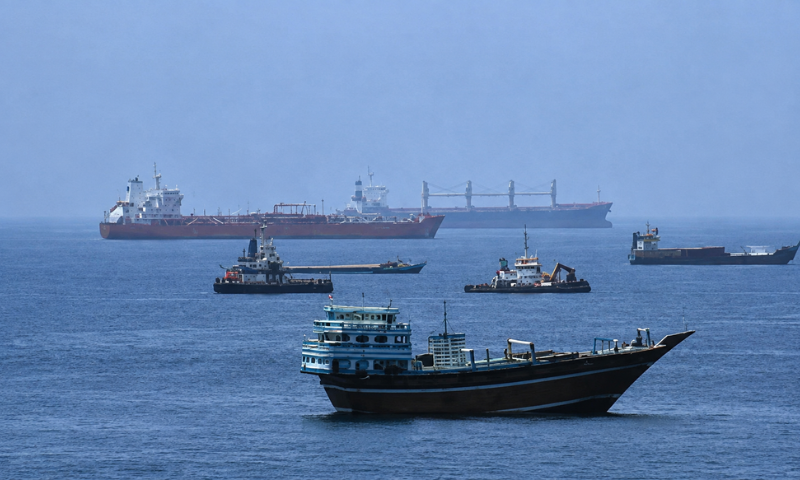
WASHINGTON: CENTCOM has said that US forces have redirected 59 commercial ships as part of its blockade against Iran, highlighting growing military pressure around the strategically vital Strait of Hormuz.
CENTCOM disclosed the latest figures in a post on X on Wednesday, saying that US forces had redirected dozens of commercial ships while also taking more direct action against others operating in the region.
An F/A-18 fighter jet launches from the flight deck of USS George H.W. Bush (CVN 77) while the ship sails in regional waters and supports enforcement of America’s 🇺🇸 steel wall blockade against Iran. As of Aug. 12, U.S. forces have redirected 59 commercial vessels, disabled 3 and… pic.twitter.com/dH4BBshoTE
— U.S. Central Command (@CENTCOM) August 12, 2026
“As of August 12, US forces have redirected 59 commercial ships, disabled three and boarded two to ensure full compliance with the blockade,” CENTCOM said.
The command also shared footage showing an F/A-18 fighter jet launching from the flight deck of the USS George H.W. Bush, a US Navy aircraft carrier operating in regional waters.
CENTCOM described the deployment as part of efforts to enforce what it called America’s “steel wall blockade against Iran”. The latest figures come amid heightened tensions between Washington and Tehran and growing concerns over maritime traffic through the Strait of Hormuz, one of the world’s most important energy shipping routes.
The waterway links the Gulf with the Gulf of Oman and the wider Arabian Sea and serves as a key transit route for a substantial share of global oil and liquefied natural gas shipments.
The US move to intercept or redirect commercial ships represents a significant escalation in efforts to restrict maritime activity linked to Iran. The actions could also raise concerns among shipping companies and energy markets over the safety and freedom of commercial navigation in the region.
READ ALSO: US Military Redirects 55 Commercial Ships amid Iran Blockade
According to CENTCOM, US forces have been enforcing the blockade after negotiations with Iran failed to produce an agreement earlier this year.
The development comes as Washington and Tehran remain locked in a wider confrontation, with the Strait of Hormuz emerging as a major focal point of the dispute because of its importance to international trade and energy supplies.
Any prolonged disruption to shipping through the waterway could have wider implications for global energy markets, given the volume of oil and other commodities transported through the strategically important maritime chokepoint.