Key Points
- The two agreed to reduce tariffs on $30 billion of non-sensitive goods in both directions.
- The agreement covers agricultural and other US exports to China and selected Chinese consumer goods entering the US market.
- Washington and Beijing will also establish new channels for trade and artificial intelligence talks.
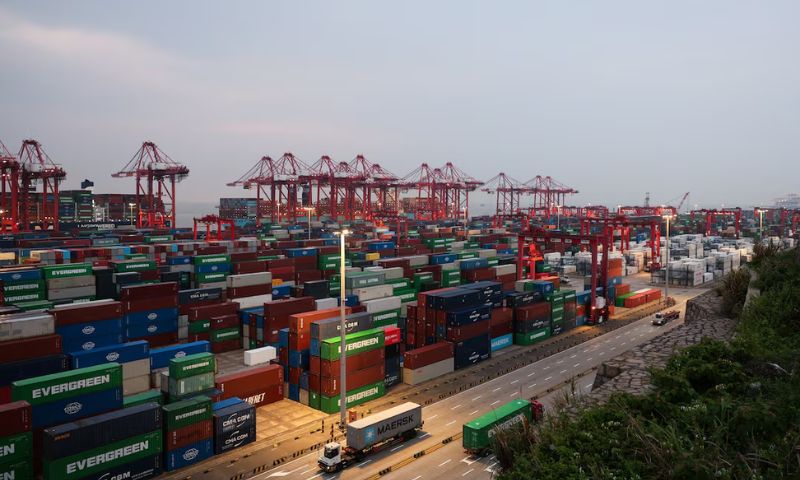
WASHINGTON: The United States and China have agreed to reduce tariffs on $30 billion of non-sensitive goods in each direction, giving the world’s two largest economies a new framework for managing trade tensions after Chinese President Xi Jinping visited Washington.
The White House said the two countries had reached consensus on more favourable tariff treatment for $30 billion of non-sensitive goods moving in each direction.
The agreement covers US exports including agricultural products, fish and seafood, logs and wood products, cosmetics and medical devices.
The White House said that Chinese exports covered by the arrangement included small appliances, toys, decorations and other non-sensitive consumer goods.
The latest understanding does not constitute a comprehensive trade agreement. The two countries still face differences over market access, technology, strategic industries and supply chains.
The tariff arrangement follows an earlier decision by Washington and Beijing to extend their existing trade truce by two months. The extension was intended to give negotiators more time to work on outstanding issues and avoid an immediate return to higher tariffs.
The two governments also agreed to establish a trade council to continue bilateral economic and trade consultations. China said the two sides would implement the outcomes of earlier negotiations in Kuala Lumpur and further strengthen mechanisms for economic and trade cooperation.
The new tariff arrangement matters to global trade because the United States and China are major trading powers and their tariff policies affect manufacturers, farmers, retailers and supply chains in many other economies.
READ ALSO: China Revives Panda Diplomacy With Two Giant Pandas for US Zoo
Lower tariffs on selected products could reduce trade costs for exporters and importers. However, the overall impact will depend on the tariff rates eventually applied and the timing of implementation.
The agreement was reached at the end of Xi’s three-day visit to the United States, during which he held talks with US President Donald Trump. Xi returned to Beijing after the visit.
The two leaders also agreed to strengthen cooperation in other areas, including artificial intelligence. Washington and Beijing will resume discussions in November on the risks and benefits of artificial intelligence and establish a communication channel for AI-related incidents.
China-US to discuss ‘super intelligence’
The White House said the leaders agreed to use the term “super intelligence” in the discussions. China said the two sides should increase exchanges and work towards greater understanding as the technology develops.
The two governments also agreed to support each other in hosting major international economic gatherings, including the Asia-Pacific Economic Cooperation (APEC) Economic Leaders’ Meeting and the Group of 20 (G20) summit.
On foreign policy, Washington and Beijing said they agreed that Iran should honour its commitment not to develop nuclear weapons. They also said no country or entity should impose tolls on international waterways.
The latest understandings leave broader US-China trade negotiations open, with the two sides expected to use the new consultation mechanisms to address remaining disputes and implement the tariff arrangements.
The US-China trade war began in 2018 when Washington imposed tariffs on hundreds of billions of dollars of Chinese imports, citing alleged unfair trade practices, intellectual property concerns and a large bilateral trade deficit.
Beijing retaliated with tariffs on US goods. The dispute later expanded into technology, investment and supply-chain restrictions, reshaping global trade and manufacturing networks.