Key points:
- TTP claimed responsibility for the August 2 attack
- UN urges states to cooperate with Pakistan
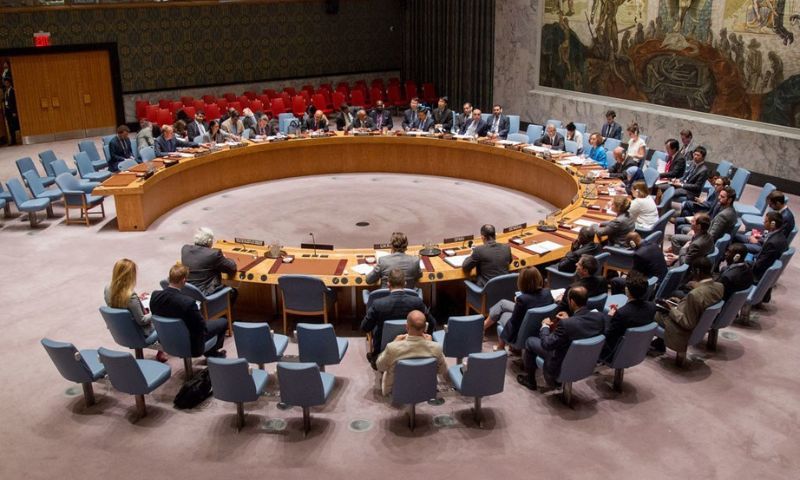
ISLAMABAD: The United Nations Security Council has strongly condemned a suicide bombing attack in Pakistan’s northwestern Swat district, describing it as a “heinous and cowardly” act of terrorism and calling for those responsible to be brought to justice.
The 15-member council issued the statement on Thursday, condemning in the strongest terms the suicide terrorist attack outside a police station in Kabal, Swat district, in Khyber Pakhtunkhwa province, on August 2.
At least 16 Pakistani nationals, mostly civilians, were killed and dozens of others injured in the attack, according to the Security Council statement. Tehrik-e-Taliban Pakistan (TTP) has claimed responsibility for the bombing.
“The members of the Security Council express their deepest sympathy and condolences to the families of the victims and to the Government and the people of Pakistan,” the council said, also wishing those injured a speedy and full recovery.
The council reaffirmed its longstanding position that terrorism in all its forms and manifestations represents one of the most serious threats to international peace and security.
It stressed that terrorist acts are criminal and unjustifiable regardless of their motivation, location, timing or perpetrators.
The Council also called for accountability beyond those who directly carried out the bombing, underlining the need to hold perpetrators, organisers, financiers and sponsors of terrorist acts accountable and bring them to justice.
ALSO READ: Seven Killed, 18 Injured in Suicide Blast Outside Police Station in Pakistan’s Swat District
It urged all UN member states to cooperate actively with the Pakistani government in bringing those responsible to justice, in accordance with their obligations under international law and relevant Security Council resolutions.
The Security Council further reaffirmed the need for all states to combat threats to international peace and security posed by terrorist acts in accordance with the UN Charter and other obligations under international law.
The statement came amid renewed international attention to terrorism emanating from Afghanistan and its implications for Pakistan and the wider region.
Earlier this week, Pakistan told a Security Council briefing that several terrorist organisations continued to operate from what it described as safe havens inside Afghanistan.
Pakistan’s Permanent Representative to the UN, Ambassador Asim Iftikhar, said the country faced a serious terrorist threat emanating from across its western border.
He identified the banned TTP, Balochistan Liberation Army (BLA) and its Majeed Brigade, Islamic State Khorasan (IS-K) and its affiliates, East Turkistan Islamic Movement (ETIM), and Al Qaeda affiliates among the organisations that Pakistan says maintain safe havens inside Afghanistan.
Pakistan has repeatedly urged the international community to press the Taliban to ensure that Afghan territory must not be used by terrorist organisations to launch attacks against neighbouring countries and has called for stronger international cooperation against cross-border terrorism.
The latest Security Council statement does not assign responsibility for the attack beyond noting that TTP claimed it. It does, however, reiterate the council’s broader position that states must cooperate in bringing terrorist perpetrators and their networks to justice.
The condemnation also comes as Pakistan continues to face a persistent terrorist threat, particularly in Khyber Pakhtunkhwa and Balochistan.
The Security Council’s call for accountability for perpetrators, organisers, financiers and sponsors underscores the international dimension of counterterrorism efforts and the importance of disrupting not only attacks but also the networks that enable them.
The council’s appeal for cooperation with Pakistan also provides diplomatic backing for Islamabad’s longstanding demand for international action against cross-border terrorism.
The Swat bombing is among the latest deadly terrorist attacks to target security installations in Khyber Pakhtunkhwa, which has experienced a renewed surge in terrorist violence in recent years.
The UN body’s statement reaffirmed that the international community considers terrorism unacceptable regardless of the cause invoked by those carrying out such attacks, and that perpetrators and those supporting them should be held accountable.