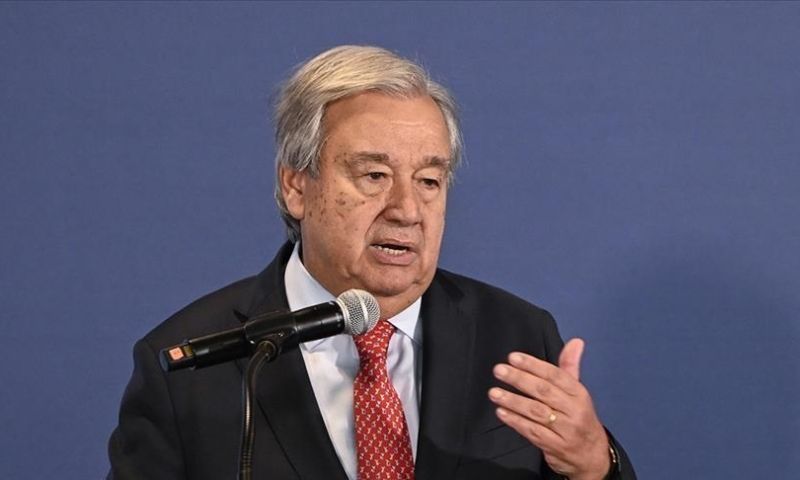
UNITED NATIONS: UN Secretary-General Antonio Guterres on Tuesday expressed deep concern over the Taliban regime’s continuing “discriminatory policies” against Afghan women and girls, saying the restrictions affect every aspect of their lives.
In a statement posted on X, Guterres said restrictions on Afghan women’s participation in public life, education and many areas of work violated their fundamental rights and remained a critical impediment to Afghanistan’s economic development, stability and reintegration into the international community.
The UN chief also raised concern over restrictions preventing Afghan women from accessing UN compounds across the country, saying it had been one year since the restrictions were imposed.
“These restrictions are contrary to international law, including the UN Charter,” Guterres said, adding that they undermined the UN’s capacity to carry out its mandate and deliver life-saving and other assistance to the Afghan people at a time when humanitarian needs remained high.
The UN Chief reiterated his call on the de facto Taliban regime to immediately reverse the ban on Afghan women working for the UN and ensure their safe and unhindered access to UN premises throughout the country.
Guterres further urged the Taliban regime to lift all restrictions imposed on women and girls and uphold their rights to full, equal and meaningful participation in all aspects of Afghan society.
I remain deeply concerned by the continuing discriminatory policies imposed by the Taliban on Afghan women & girls, which affect every aspect of their lives.
Restrictions on their full participation in public life, education & many areas of work violate their fundamental rights…
— António Guterres (@antonioguterres) September 8, 2026
The UN Chief’s remarks come as the United Nations marks the first anniversary of the ban on Afghan female employees working in its offices with symbolic protest measures aimed at expressing solidarity with Afghan women.
The Taliban regime barred Afghan female UN employees from entering the organisation’s offices in September 2025. The UN has repeatedly warned that excluding women from humanitarian and development work hampers the delivery of aid to millions of Afghans in need.
On Monday, Jorge Moreira da Silva, a UN under-secretary-general, urged the Taliban regime to unconditionally lift restrictions on Afghan female UN staff.
In a post on X, da Silva, who is also executive director of the UN Office for Project Services, said a year had passed since the Taliban regime barred Afghan female UN employees from entering the organisation’s offices and facilities across the country. He described the anniversary as a “difficult milestone” for Afghanistan.
A difficult milestone in #Afghanistan as we mark one year since the de facto authorities barred our Afghan female colleagues from entering UN premises across the country.
Our national female colleagues are indispensable to the UN’s mission, and delivering on our unwavering…
— Jorge Moreira da Silva (@UNOPS_Chief) September 7, 2026
Da Silva said Afghan female staff are indispensable to the UN’s mission and to fulfilling its commitment to support people and communities in need.
Expressing solidarity with his female colleagues, he said Afghan women and girls must be allowed to return to school and work, and help shape their country’s future.
The UN under-secretary-general said he and other senior UN officials were calling on the Taliban regime to immediately lift restrictions imposed on women and allow female employees to return to their offices.
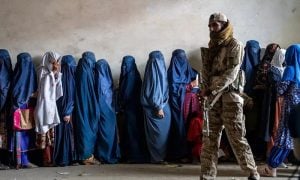
The Taliban regime has imposed severe restrictions that systematically exclude Afghan women and girls from public life and strip them of fundamental human rights.
Since seizing power in August 2021, the de facto Taliban regime has issued hundreds of edicts and decrees that severely curtail freedom, education, and employment.
Afghan girls are formally banned from attending school past the sixth grade. Afghan women are also barred from attending universities and studying medical fields like midwifery.
Afghanistan remains the only country in the world with a formal ban on secondary and higher education for females.
Women are barred from most government jobs, national and international non-governmental organizations (NGOs)—including United Nations offices—and public spaces like beauty salons, parks, and gyms.
Women hold no positions in leadership or formal political office, and their representation in public administration has been completely erased.