Key points
- Dolphin is China’s strongest tropical cyclone this year
- More than one million people evacuated across eastern China
- Heavy rain raises risks of floods and landslides
ISLAMABAD: Typhoon Dolphin, the most powerful tropical cyclone to hit China this year, made landfall on the country’s eastern coast, forcing more than one million people to evacuate.
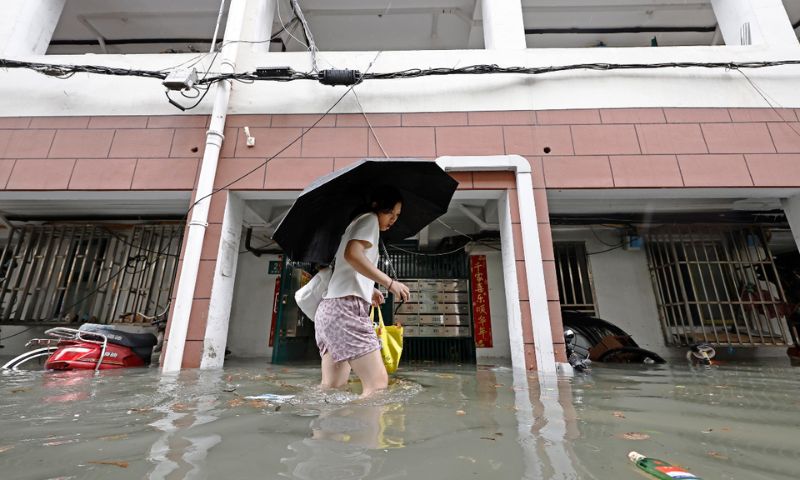
Torrential rain and strong winds disrupted transport and raised the risk of floods and landslides.
Dolphin comes ashore
The typhoon came ashore near Yuhuan in Zhejiang province on Sunday evening with sustained winds of about 151 kilometres per hour, equivalent to a Category 1 hurricane, according to meteorological authorities.
More than 900,000 residents were relocated in Wenzhou, one of the worst-hit areas of Zhejiang, with nearly 99,000 people moved from high-risk areas in neighbouring Fujian province.
Shanghai also evacuated more than 200,000 people as the storm brought heavy rain to the megacity.
Shanghai cancelled more than 1,500 flights as the storm disrupted air travel, with ferry services and other transport also suspended across affected areas.
ALSO READ: Typhoon Dolphin Heads for China’s East Coast
Schools and tourist attractions were closed in parts of Zhejiang ahead of the storm.
Forecasters warned of further heavy rainfall, with some areas expected to receive as much as 500 millimetres through Monday.
Authorities were monitoring rivers and warning of heightened risks of flooding and landslides.
The storm had already caused disruption in Japan’s southern Okinawa region before reaching China, injuring six people and causing widespread power outages.
By Monday, the storm had weakened significantly, but authorities continued to warn of heavy rain and potential flooding across parts of eastern and central China.
Shanghai recorded its highest 24-hour rainfall in more than 150 years, according to local authorities.