
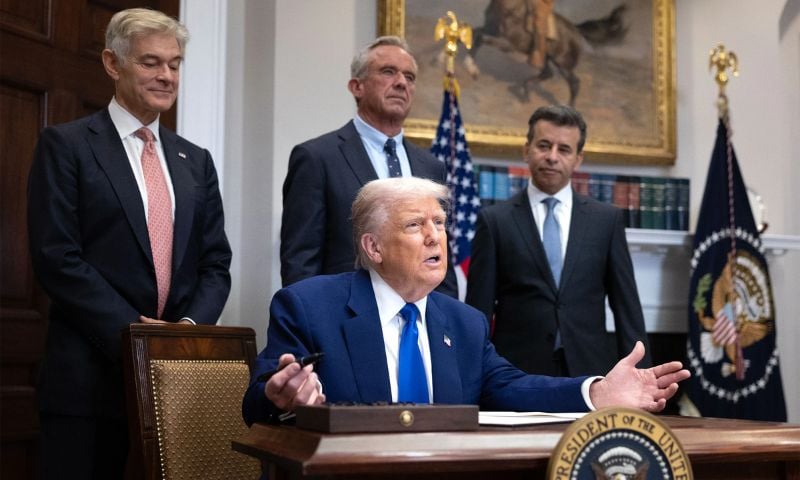
WASHINGTON, United States: The Trump administration is considering measures that could give the White House greater influence over US biomedical research funding, according to reports by US media, as officials continue a broader review of federal research programmes.
The reports said White House officials have discussed creating an external commission with the authority to veto grants awarded by the National Institutes of Health (NIH), the country’s leading agency for medical research.
NIH funding under scrutiny
Since returning to office in early 2025, President Donald Trump has significantly reduced federal research funding, with biomedical science among the areas affected.
According to reports by Politico, The New York Times and The Washington Post, White House officials have raised concerns over certain NIH-funded programmes.
ALSO READ: Trump Open to Meet Iranian President After Receiving War Termination Demands
White House budget director Russell Vought has criticised what he described as “woke” research funded by the agency, according to The Washington Post.
Supporters of tighter oversight argue that government funding should reflect broader policy priorities, while critics warn that increased political involvement could affect scientific independence.
Researchers raise concerns
Russ Paulsen, president of the non-profit alliance Research! America, criticised the reported proposal, saying additional layers of review could slow medical progress.
“Adding more bureaucrats would slow medical progress to a grinding halt,” Paulsen said in a statement.
The possible changes come as universities and research institutions face wider disputes with the administration over funding, academic policies and scientific priorities.
Harvard University and other major research institutions have been involved in disputes related to the administration’s approach to education and research.
Legal challenges continue
Last week, researchers filed a lawsuit against the NIH, accusing the agency of blocking grants based on disagreement with certain viewpoints, including issues related to diversity, gender identity and climate research.
Among those affected was Ann Cohen, a psychiatry professor at the University of Pittsburgh, whose Alzheimer’s disease research funding was cut.
The debate has highlighted broader questions over the balance between government oversight, public funding priorities and the independence of scientific research in the United States.