
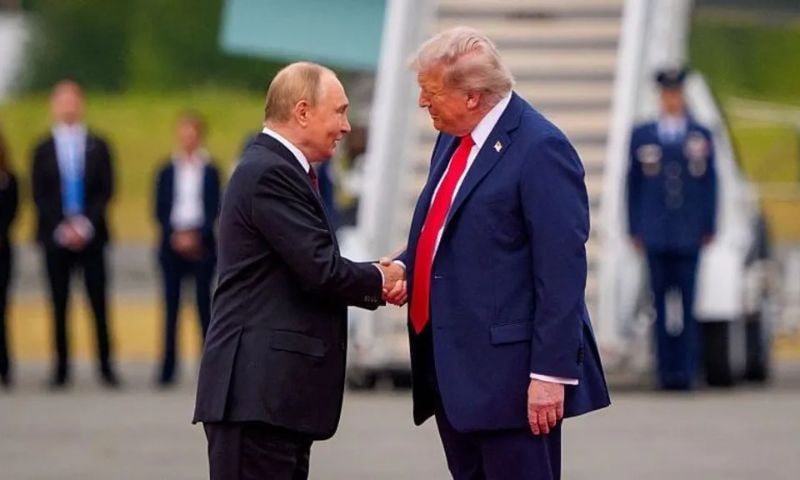
WASHINGTON, United States: US President Donald Trump has announced a deal to import Russian diesel into the American and global markets, with Moscow expected to supply hundreds of thousands of tonnes of fuel as Washington seeks to ease rising energy prices.
Trump said Russian President Vladimir Putin had agreed to release 300,000 tonnes of diesel immediately, followed by 500,000 tonnes in November and another one million tonnes later.
He also announced a further three million tonnes of potential deliveries, subject to the condition that Russian refineries are damaged by Ukrainian attacks.
The US Treasury has issued a temporary licence allowing Russian diesel imports until April 7, while other Russian assets, including funds held in American banks, remain frozen.
The agreement has raised questions over Washington’s sanctions policy towards Moscow and its efforts to support Ukraine, as the Trump administration faces pressure to bring down fuel prices.
Zelensky Condemns Deal
Ukrainian President Volodymyr Zelensky condemned the announcement, describing the arrangement as a gift to Putin and warning that it would help sustain Russia’s war against Ukraine.
He called it “an investment in a war that must be ended, not prolonged”.
In a social media post, Zelensky said Russia would repay the diesel deal with “further terror” and urged Washington to maintain strong support for Ukraine.
“We count on America’s fair support for our defence of life, for our defence of people in Ukraine – and on the United States having a correspondingly strong conversation with Russia. A strong one, not a weak one,” he wrote.
Zelensky also defended Ukrainian strikes on Russian oil refineries, saying they were a response to Moscow’s attacks on Ukraine’s energy infrastructure.
“Ukraine will not set Russian oil refineries on fire if Russia does not destroy our energy infrastructure,” he said.
Questions Over Supply
Putin confirmed Russia’s willingness to supply oil and petroleum products to the US and international markets, although his public statement did not specify quantities.
Trump’s announcement has prompted questions about whether Russia can deliver the promised volumes and whether the additional supplies would significantly reduce prices for American consumers.
Tim Armitage, an investment strategist at Quilter Cheviot, said the first tranche amounted to approximately 2.25 million barrels, compared with US daily diesel consumption of around 3.8 million barrels.
He said the initial shipment was unlikely to make a material difference to pump prices, suggesting the announcement could be an attempt to ease inflation ahead of the US midterm elections.
The White House has been asked to clarify what Russia would receive in return for the commitment.
Fuel Prices Soar
The deal comes amid rising global energy costs following the war involving Iran, which began in February. The conflict has pushed up petrol and diesel prices in the US, increasing pressure on the Trump administration to ease the financial burden on consumers.
The average US diesel price stood at $6.28 a gallon, according to the American Automobile Association, down from a record $6.53 at the end of September.
Brent crude, the global oil benchmark, remained above $103 a barrel, compared with about $73 before the Iran war.
Trump has also considered suspending the federal gasoline tax and introduced other measures aimed at reducing fuel costs. The US has supported the release of emergency oil and diesel reserves by G7 countries to address supply concerns.
Allies Maintain Pressure
The proposed deal has drawn criticism because it could provide Russia with additional export revenue while Western countries continue to impose sanctions over the war in Ukraine.
The UK government said it would continue supporting Ukraine and maintaining pressure on Russia through sanctions.
“Russia could end this war today,” a government spokesperson said, adding that Britain remained committed to working with international partners to secure a durable peace.
Putin’s envoy Kirill Dmitriev welcomed the proposed energy cooperation, saying it would benefit the world.
The impact of the agreement on fuel prices remains uncertain, as does the scale of the planned deliveries. The arrangement has also intensified debate over whether easing restrictions on Russian energy exports can help consumers without undermining efforts to limit Moscow’s ability to finance its war.