Key Points
- US Department of Agriculture to administer the $8 billion programme through its Farm Service Agency.
- Authorities to calculate payments under a uniform formula
- The announcement follows rising fuel and agricultural input costs for US farmers ahead of November midterm elections.
ISLAMABAD: President Donald Trump announced that the US will provide $8 billion in financial assistance to farmers to offset higher diesel costs during the harvest season.
Rising energy costs add pressure on agricultural producers; therefore, the US Department of Agriculture (USDA) said it would make the funds available through a new initiative called the Harvest Fuel Relief Programme.
The programme would provide one-time payments to American farmers affected by temporary market disruptions and increased production costs.
USDA’s Farm Service Agency will implement the programme. The Agency will calculate payments using a uniform formula designed to cover a portion of estimated losses during the 2026 crop year.
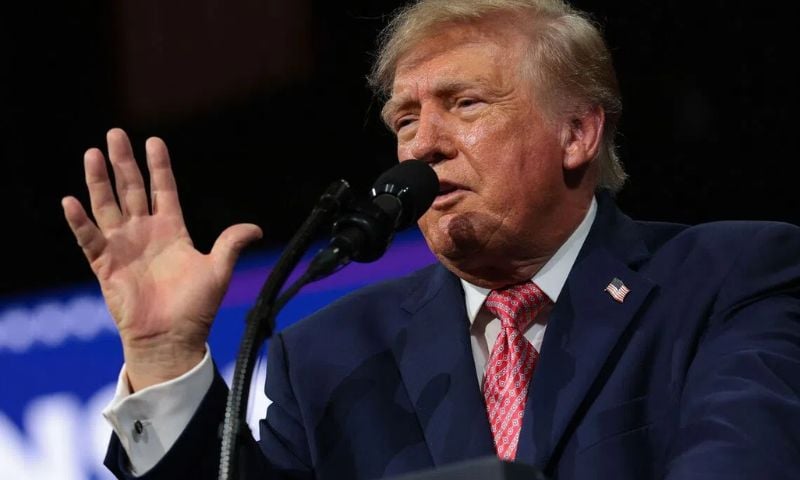
Trump announced the initiative during a campaign speech in Kansas, saying the assistance would help farmers manage diesel expenses during the critical harvest period.
Rising fuel costs squeeze farm incomes
Higher diesel prices have increased the cost of operating agricultural machinery, harvesting crops and transporting produce.
US farmers also face higher expenses for fertiliser, seeds and other essential inputs. The rising input costs have squeezed operating margins.
Diesel prices in the United States have topped $6.30 per gallon on average on Friday, more than 70 per cent above the level a year earlier, according to the American Automobile Association, as reported by The Associated Press.
The increase has been particularly difficult for farmers during the harvest season, when fuel consumption rises sharply.
The USDA’s September forecast estimated that net farm income would decline by 2.6 per cent in 2026, while production expenses would rise by 4.5 per cent.
Fuel and oil expenses alone were expected to increase by nearly 30 per cent.
The new assistance is meant to compensate producers’ part of the financial pressure rather than cover all additional expenses. The department described the payments as proportional support based on a standardised calculation of losses.
Earlier measures to ease fuel costs
The administration has already taken steps to reduce diesel expenses. On October 5, Trump signed an executive order temporarily easing restrictions on the use of tax-exempt dyed diesel fuel on public roads, subject to applicable tax rules and implementation guidance.
READ ALSO: Trump Approval Rating Hits Record Low as Democrats Lead by 12 Points Ahead of Midterms
The order was intended to give farmers and truckers greater access to lower-cost fuel. The administration said the measure would provide temporary relief while addressing supply constraints and elevated diesel prices.
The additional $8 billion programme represents a separate financial assistance measure, with payments directed at farmers facing higher input costs and temporary market disruptions during the current crop year.
Midterm elections add political significance
Trump’s announcement comes ahead of the November midterm elections, when voters will elect members of the US House of Representatives and a portion of the Senate.
Republicans currently hold narrow majorities in both chambers, making support in agricultural states politically important.
Farmers in states such as Kansas have faced higher operating costs and pressure on profits. The administration has sought to address those concerns through fuel-related relief measures and other financial commitments.
Trump has also proposed a separate $5,000 payment to adult Americans if Republicans retain control of both chambers of Congress.
That proposal is distinct from the agricultural assistance programme.
The $8 billion initiative will provide targeted assistance to eligible agricultural producers, although the amount individual farmers receive will depend on the programme’s formula and their estimated losses.
The department’s announcement did not indicate that every farmer would receive an equal payment.