Key Points
- Millions affected by disputed examination results
- Cybersecurity flaws exposed in digital marking system
- Protest calls grow amid wider examination scandals
ISLAMABAD: Indian authorities have removed the two most senior officials of the country’s school examination board after grading failures affecting nearly two million students sparked public outrage.
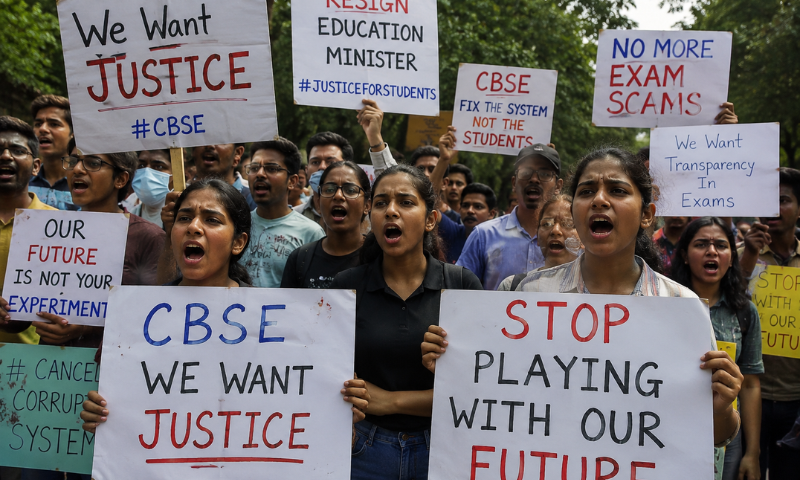
Students, parents and sympathisers demand accountability and issue calls for nationwide protests.
The leadership shake-up at the Central Board of Secondary Education follows mounting criticism over errors linked to a newly introduced digital marking system used in this year’s Grade 12 examinations, one of India’s most important academic assessments.
According to an official government order, CBSE Chairman Rahul Singh and Secretary Himanshu Gupta were transferred to other government departments following weeks of controversy over examination results.
The dispute erupted after 19-year-old cybersecurity researcher Nisarga Adhikary alleged that weaknesses in the board’s digital evaluation system could compromise the integrity of student grading.
The claims intensified scrutiny of a system introduced this year to improve the speed and accuracy of result processing.
Around 1.8 million students sat the Grade 12 examinations, the final school-level assessment before university admission.
Following the publication of results, numerous students complained of incorrect grades, discrepancies in marks and, in some cases, results allegedly being assigned to the wrong candidates.
The CBSE acknowledged cybersecurity vulnerabilities in the system, saying identified weaknesses had been contained.
The board has also opened a re-evaluation mechanism for students seeking corrections to their results.
Public anger has continued to grow despite those measures.
Students and activists have demanded the resignation of Education Minister Dharmendra Pradhan, arguing that broader accountability is needed for repeated failures in India’s examination system.
An online satirical movement known as the “Cockroach Janta Party”, which has gained millions of followers on social media, has called for peaceful protests in New Delhi on Saturday.
The group’s name is a parody of India’s ruling Bharatiya Janata Party.
The movement’s founder, Abhijeet Dipke, a graduate of Boston University, has said he will return to India to participate in the demonstration.
Prominent activist Sonam Wangchuk has also announced support for the protests.
Wangchuk spent several months in detention after being arrested following demonstrations demanding greater autonomy for the Himalayan region of Ladakh.
The controversy adds to growing concerns about the credibility of India’s examination system.
Last month, authorities cancelled the nationwide medical college entrance examination after investigators uncovered a question paper leak.
The medical entrance test, known as the National Eligibility Entrance Test, attracts millions of candidates each year and is regarded as one of the country’s most competitive examinations.
Indian media reported several student suicides linked to the fallout from the scandal.
The examination has since been rescheduled, and India’s premier investigative agency, the Central Bureau of Investigation, announced the arrest of an alleged mastermind behind the leak.
Investigators identified the suspect as a chemistry lecturer involved in examination-related work for the National Testing Agency.
The twin controversies have intensified debate over transparency, cybersecurity and governance within India’s high-stakes examination system.