
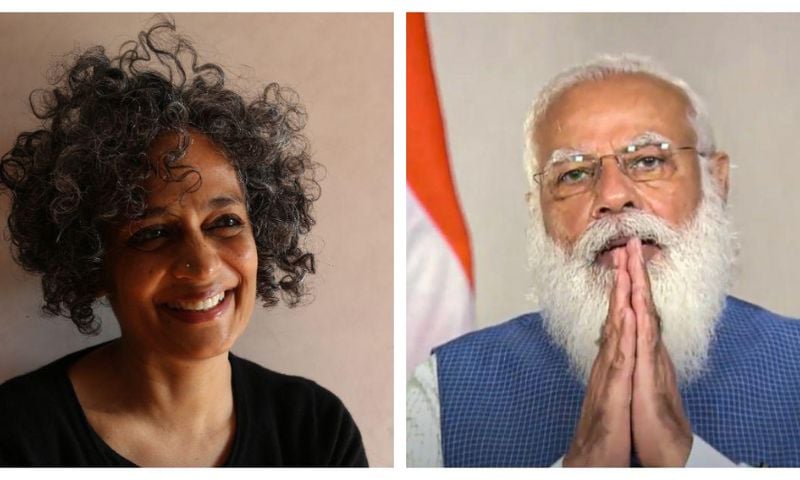



NEW DELHI: Award-winning Indian author and activist Arundhati Roy says India’s youth-led protest movement has fundamentally altered the country’s political landscape, arguing that a generation once associated with Prime Minister Narendra Modi’s support base has openly challenged his leadership.
Speaking to Democracy Now!, Roy described the recent protests as a turning point in Indian politics, saying young people had transformed a campaign over examination paper leaks into a broader challenge to the Modi government.
She said the movement demonstrated that “the emperor has no clothes,” referring to what she described as the erosion of the prime minister’s carefully cultivated public image.
The protests, organised under the banner of the Cockroach Janta Party, began after leaks of national examination papers sparked widespread anger among students.
Demonstrators initially demanded the resignation of Education Minister Dharmendra Pradhan, but Roy said the movement soon shifted its focus toward wider concerns about governance, unemployment and democratic accountability.
ALSO READ: Activist Sonam Wangchuk Announces Next Phase of India’s ‘Cockroach’ Movement
On Saturday, the movement claimed a major victory after Pradhan resigned and the government accepted key demands, including education reforms, withdrawal of cases against protesters and compensation measures for affected families.
Following the announcement, Cockroach Janta Party leaders formally ended their nationwide agitation and urged supporters to disperse peacefully.
Roy also criticised India’s mainstream media, saying that major television networks had become aligned with the ruling establishment, while independent digital creators and social media platforms had enabled young protesters to shape public opinion.
She argued that online platforms allowed the movement to bypass traditional media narratives and mobilise support across the country.
While welcoming the outcome, Roy cautioned that the movement’s long-term success would depend on whether protesters could sustain pressure for institutional reforms beyond the immediate political victory.