KABUL: Leaked documents published by an Afghan media outlet revealed that the Taliban are paying hundreds of dollars every month to analysts, journalists, academics and media activists living abroad to promote the group’s hardline policies.
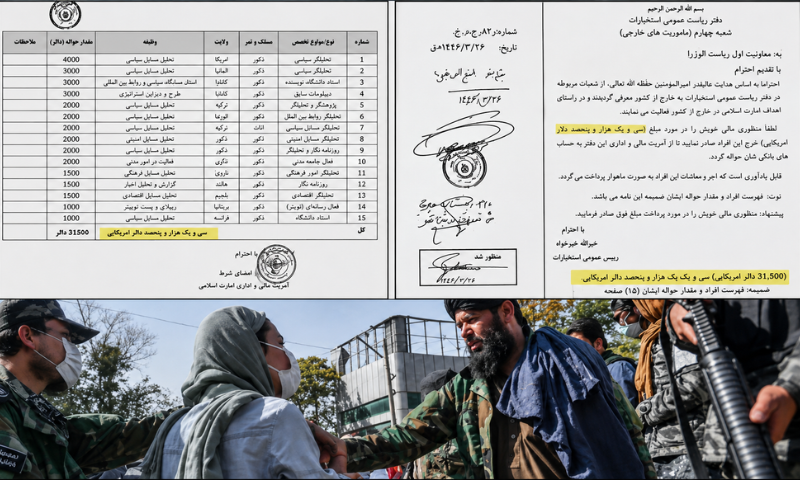
Documents published by the Afghan media outlet Kawian claimed that at least 15 individuals are being paid on a monthly sums ranging from $1,000 to $4,000.
Those listed were identified by roles including political analyst, journalist, reporter, civil society activist and university professor. The Taliban had not commented on the publications.
Media Influence Programme
A second document, also attributed to the Taliban’s General Directorate of Intelligence, describes the recipients as “colleagues” and outlines responsibilities including defending Taliban policies in the media, countering opposition narratives, producing content and engaging in social media campaigns.
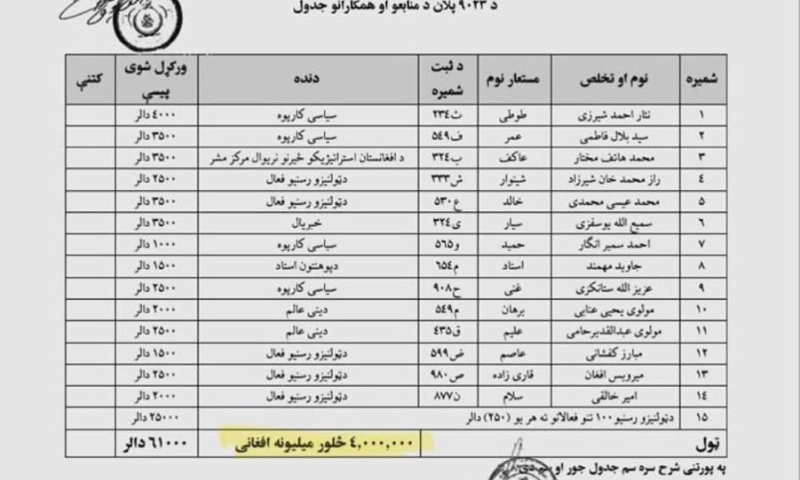
The document also refers to the allocation of approximately 40 million for implementing the programme.
It remains unclear how the alleged payments were made or whether those named received any funds.
According to Kawian, some of the individuals identified in the documents have publicly defended the Taliban through media appearances and social media posts and have been described by critics as lobbyists for the group.
A third document attributed to the Taliban’s General Directorate of Intelligence (GDI) outlines a funding structure ranging from US$250 for each social media influencer to US$4,000 for a political analyst, with a reported total allocation of US$61,000 (4 million Afghanis).
According to the document, monthly payments include US$3,500–4,000 for political analysts, US$3,500 for journalists, US$2,000–2,500 for religious scholars, US$1,000–2,500 for political activists, US$1,500 for university professors, and US$1,500–3,500 for influencers and activists, in addition to 100 social media influencers receiving US$250 each.
The document describes what it portrays as a structured funding model for a range of public-facing roles, while suggesting that not every “independent” voice is necessarily independent.
Media Invitation Claims
Sources cited by Kawian also alleged that the Taliban last year provided Afghan media organisations with a list of approved analysts and encouraged broadcasters to invite them as guests on television programmes.
The outlet said some of the names appearing in the newly leaked documents were also included on that earlier list.
Kawian said it had not been able to independently verify the authenticity of the documents or the claims contained within them.