ISLAMABAD/SYDNEY: The death toll from a mass shooting at Bondi Beach in Sydney has risen to at least 16, while around 40 injured people remain hospitalised, New South Wales (NSW) police said Monday.
The attackers were a father and son. The 50-year-old was killed in a shootout with police, while his 24-year-old son remains hospitalised. Officials have described the assault as a targeted terrorist attack against the Jewish community.
Australian Prime Minister Anthony Albanese said Australia would “never submit to division and hatred,” condemning the violence as antisemitic. Amid the chaos, bystander Ahmed al-Ahmed was hailed as a hero after a viral video showed him tackling and disarming one of the gunmen, an act widely credited with saving lives.
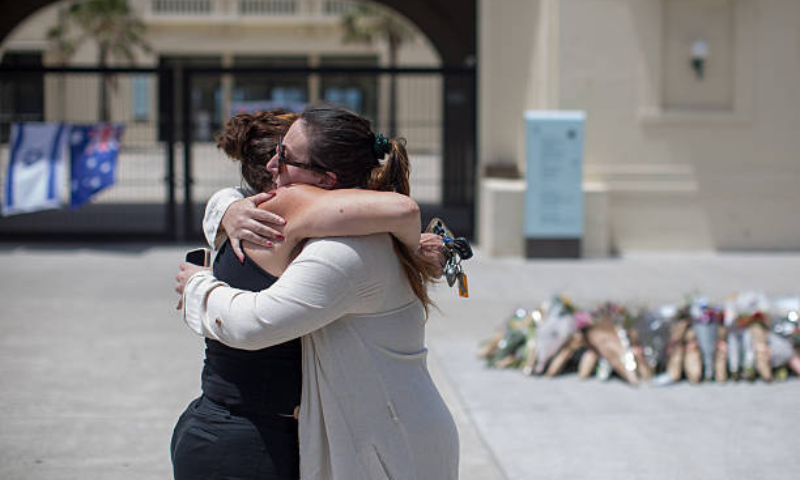
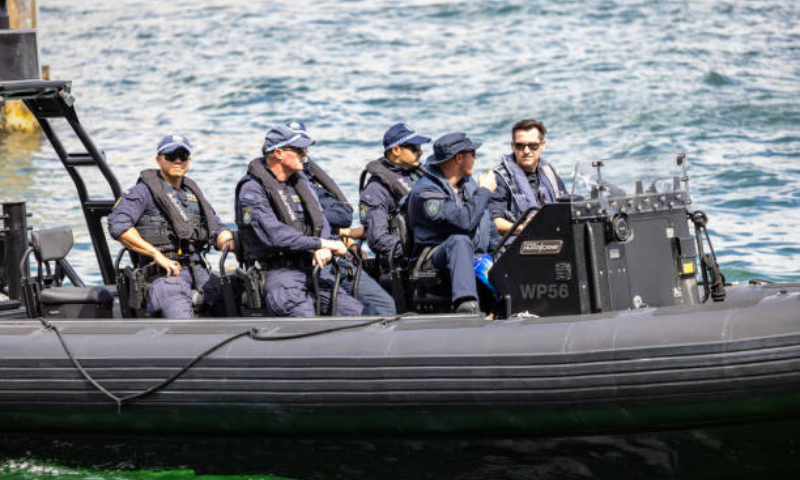
Police have also recovered explosive devices from a vehicle linked to the attackers and imposed an exclusion zone as specialist teams examine suspicious items found at the scene. Officials said there were no reports of other related incidents elsewhere in Sydney. Two police officers are among the wounded.
NSW Premier Chris Minns said the attack appeared to be “designed to target the Jewish community,” while Australian Prime Minister Anthony Albanese described it as “an act of evil antisemitism,” stressing that there was “no place for this hate, violence and terrorism” in Australia.
Reacting to the incident, Pakistan’s Prime Minister Shehbaz Sharif on Sunday expressed deep condolences to the victims and their families. Writing on X, he said Pakistan condemns terrorism “in all its forms and manifestations” and stands in solidarity with the people and government of Australia during this difficult time.
Pakistan’s President Asif Ali Zardari also condemned the attack, expressing solidarity with Australia’s Jewish community and reiterating that Pakistan stands against violence targeting innocent civilians.
Islamabad-based security and political analyst Muhammad Ali said that attempts were deliberately made to falsely link the Sydney shooting incident with Pakistan, calling it part of a coordinated disinformation campaign driven by regional and international media actors.
Speaking to WE News, Mohammad Ali said that immediately after the incident, certain circles began trying to associate the attack with Pakistan simply because of the attacker’s name, even before official investigations were completed. “There is hardly any incident in the world which they do not try to connect with Pakistan,” he said, adding that this pattern has now become predictable.
In the hours following the attack, sections of Indian, Afghan, and Israeli media were quick to push unverified claims that sought to link the violence to Pakistan falsely. Relying on names, speculation, and selective framing rather than confirmed facts, these outlets attempted to insert Pakistan into the narrative before Australian authorities had even completed their initial assessments.
The claims were later contradicted by official statements indicating that the attackers were Australian residents who had been radicalised locally. Ali said such reporting reflects a recurring pattern in which moments of global crisis are exploited to advance political agendas, deflect scrutiny from domestic issues, and reinforce existing prejudices against Pakistan, rather than contributing to an evidence-based understanding of events.
According to Ali, an unrelated Pakistani electrical engineer from Lahore, also named Naveed Akram and working in Sydney, was falsely dragged into the controversy.
“Indian media, Indian government-aligned outlets, Israel’s Jerusalem Post, and Afghan media outlets amplified this false narrative simultaneously,” he said, calling it “a coordinated effort to malign Pakistan.”
He praised the Pakistani engineer for responding promptly and responsibly. “He immediately came forward, clarified his identity, stated that his name was being misused, and urged people to report fake accounts spreading disinformation. This timely action exposed the entire propaganda network,” Muhammad Ali said.
Pakistan’s leadership reacted swiftly and unequivocally. “The prime minister, interior minister, and foreign office not only expressed condolences to Australia but also strongly condemned the attack. Pakistan itself has suffered enormously from terrorism and understands its pain better than most countries,” he said.