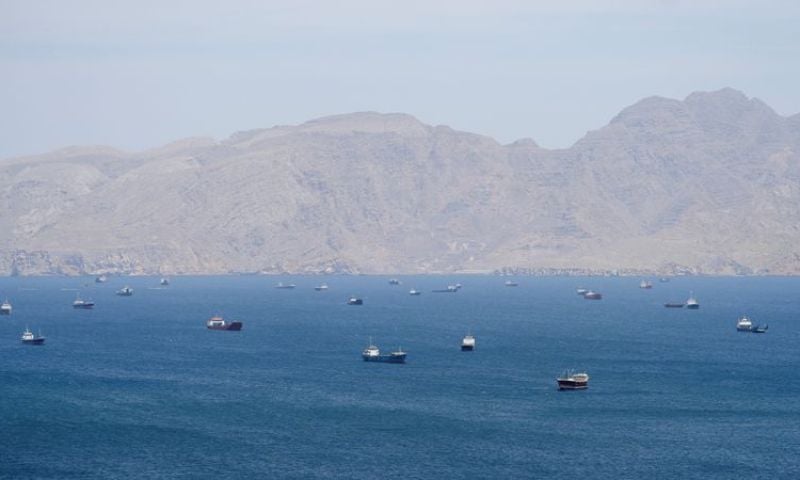



DUBAI: Shipping traffic through the Strait of Hormuz remained subdued over the past 24 hours, shipping data showed on Monday, as diplomatic efforts continue for a peace deal between the United States and Iran.
At least seven ships, mostly dry bulk carriers, transited the strategic waterway during the past 24 hours, data cited by Reuters showed, reflecting subdued movement seen in recent days.
Traffic far below pre-war levels
The vessels included ships departing Iraqi ports and one dry bulk carrier from an Iranian port, according to ship tracking data from Kpler and separate satellite analysis by data analytics firm SynMax.
Traffic through the strait — a critical chokepoint at the entrance to the Gulf — remains a fraction of pre-war levels.
Before the Iran war began on February 28, an average of around 140 vessels passed through the waterway daily.
Shipping flows have remained constrained despite a ceasefire between Washington and Tehran.
Oil shipments and US military blockade
The US Central Command said it had redirected 37 vessels since a blockade on Iranian ports was imposed on April 13.
Satellite tracking by TankerTrackers.com showed that six Iranian tankers recently returned to Iranian ports before sailing back through the strait carrying around 10.5 million barrels of oil.
In a separate analysis, the firm reported that roughly four million barrels of Iranian crude passed through the US blockade on April 24.
Disruption to global supply chains
Iran’s ability to disrupt traffic through the narrow waterway has emerged as a key strategic lever in the war with the US and Israel.
The Strait of Hormuz, which links the Arabian Gulf to global markets, is one of the world’s most important energy corridors.
Its partial closure has left tankers stranded in the Arabian Gulf and disrupted supply chains.
The United States imposed a blockade on Iranian ports in response to Iran’s closure of Hormuz, further complicating navigation and trade in the region.
Global oil prices surge
Global oil markets have reacted sharply to the disruption.
Brent crude, the international benchmark, was trading at around $108 per barrel on Monday, nearly 50% higher than levels seen at the start of the conflict.
Prices continued to rise during the day, gaining about 2.5% as markets reacted to the lack of progress in diplomatic efforts.
The absence of a breakthrough in talks between Washington and Tehran has weighed heavily on investor sentiment.
Meanwhile, Axios reported that Iran had presented a new proposal to the US to reopen the Strait of Hormuz.
Global economic impact
The disruption has had wide-ranging economic consequences.
Higher energy costs have pushed up prices of fertiliser, food and other essential goods, raising concerns about inflation and food security, particularly in developing economies.
The closure of the Strait of Hormuz has also increased pressure on US President Donald Trump domestically, as rising fuel prices come ahead of key midterm elections.
At the same time, Gulf producers — heavily reliant on the waterway to export oil and gas — have faced strain from the continued restrictions on maritime traffic.