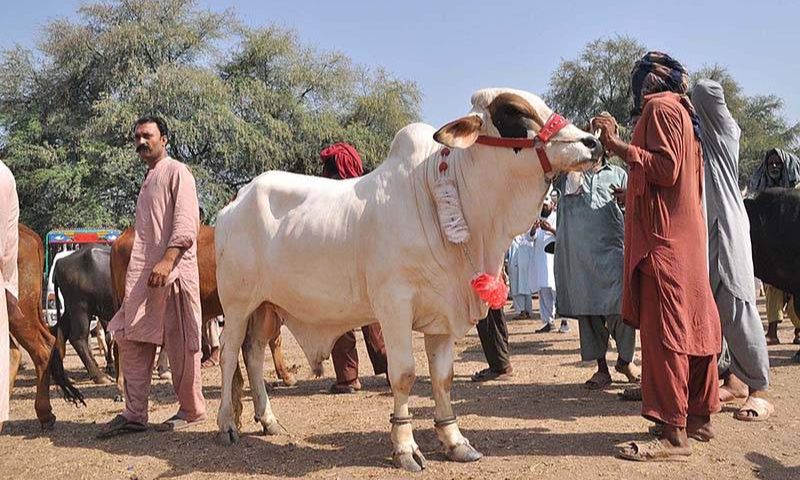



KARACHI: Rising inflation and fuel prices have significantly increased the cost of sacrificial animals ahead of Eid Al-Adha in Pakistan, with buyers and traders at Karachi’s Northern Bypass cattle market reporting weak sales and reduced consumer spending.
The annual livestock market, one of the country’s largest, has seen thousands of goats, cows and buffaloes arrive ahead of the Islamic festival, but many visitors say prices have become unaffordable.
“For animals weighing three mounds [around 112 kilograms], an animal trader has been demanding Rs550,000 ($1,964),” said Nabeel Anwar, a 29-year-old shopping mall salesman earning around Rs40,000 ($144) a month.
“Now, what will a person respond to that?” Anwar told Arab News.
Eid Al-Adha is one of the two major Islamic festivals during which Muslims who can afford it sacrifice animals and distribute meat among relatives, friends and poor families.
In Pakistan, families traditionally purchase animals days before the festival, but many buyers this year say they are turning to collective sacrifices because of rising costs.
“A person must go for a collective sacrifice,” Anwar said. “Share it with a brother or run ballot committees. That is how you can offer a sacrifice.”
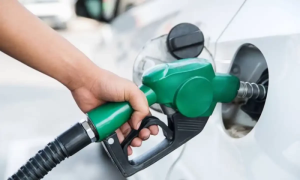
Pakistan’s government has raised petrol prices from Rs285 per litre in February to Rs414.78, an increase of roughly 45 percent, following regional tensions and conflict involving Iran and the United States that pushed up global oil prices.
The increase has also raised transportation and animal feed costs, contributing to higher livestock prices across the country.
Pakistan’s annual inflation rate rose to 10.9 percent in April, returning to double digits for the first time in nearly two years.
Muhammad Usama, who works at an investment company, said animal prices had nearly doubled compared to last year.
“I would say that if a person was doing the sacrifice alone previously, he should now also include his friends in it as well,” he said.
Usama said traders were charging between Rs90,000 and Rs95,000 per maund, equivalent to about 40 kilograms.
Traders at the market also said they were struggling because of increased costs and lower customer demand.
“We brought 40-42 animals,” said Muhammad Abid, a cattle trader from Muzaffargarh in Punjab province. “There are no buyers.”
Abid said transportation costs had increased sharply, with trucks charging up to Rs180,000 to transport livestock to Karachi.
He added that traders were also spending at least Rs3,000 per animal daily on feed and water while waiting for sales.
Another trader, Muhammad Rafique from Rahim Yar Khan district, said he had sold only one animal out of 24 after spending five days at the market.
“The buyers are not coming,” he said.
Market administrator Tariq Tanoli said approximately 150,000 sacrificial animals had arrived at the Northern Bypass market since it opened on April 4, with around 4,000 to 5,000 animals sold daily.
However, he acknowledged that inflation and fuel costs had affected consumer behaviour.
“Yes, it has a huge impact,” Tanoli said. “It has changed a lot because of the fuel prices and this war.”