
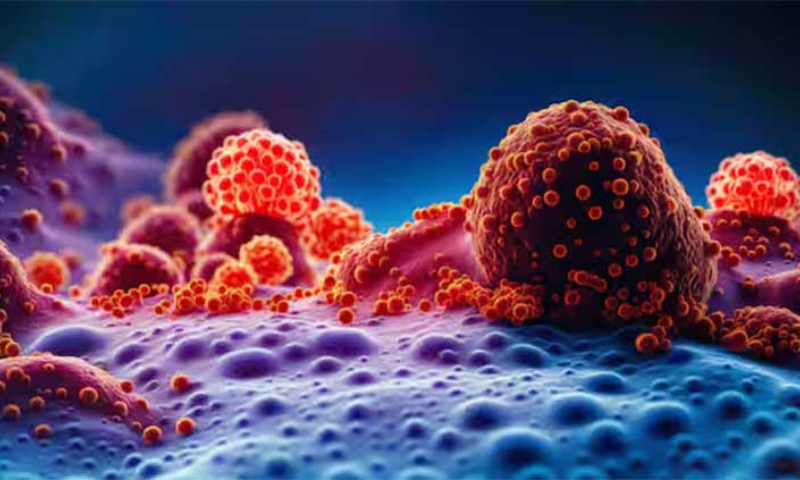
MELBOURNE, Australia: Researchers have developed a new method for cancer treatment that uses advanced nano-technology to precisely target cancer cells while minimizing damage to healthy tissue.
A research team from RMIT University in Melbourne, Australia, has discovered that extremely small metallic particles, known as “nano dots,” can identify and destroy cancer cells within the body. The technique works by exploiting the unique vulnerabilities of cancer cells, offering a potential breakthrough in targeted cancer therapy.
According to the researchers, cancer cells naturally exist under higher levels of stress than healthy cells. When exposed to these nano dots, the stress within cancer cells increases further, eventually triggering a self-destruction process, while surrounding healthy cells remain largely unaffected.
Dr. Baowei Zheng from RMIT University explained that this selective targeting could make future treatments more effective and less harmful than conventional methods such as chemotherapy and radiation, which often damage healthy tissue alongside cancerous cells.
The research is still in its early stages and has so far been tested only on laboratory-grown cells. Scientists say further studies, including animal testing and clinical trials, will be required before the method can be considered for use in human patients. However, the findings suggest a promising new direction for developing safer and more precise cancer treatments.
Cancer is one of the leading causes of death worldwide, with around 20 million new cases and nearly 10 million deaths globally each year, according to international health estimates.
The global cancer burden is expected to rise significantly, with cases projected to increase by more than 60% by 2040, driven by population growth, aging, tobacco use, unhealthy diets, physical inactivity, and environmental pollution.
Low- and middle-income countries are expected to bear the greatest impact due to limited access to early diagnosis and treatment, making cancer a growing global public health challenge.