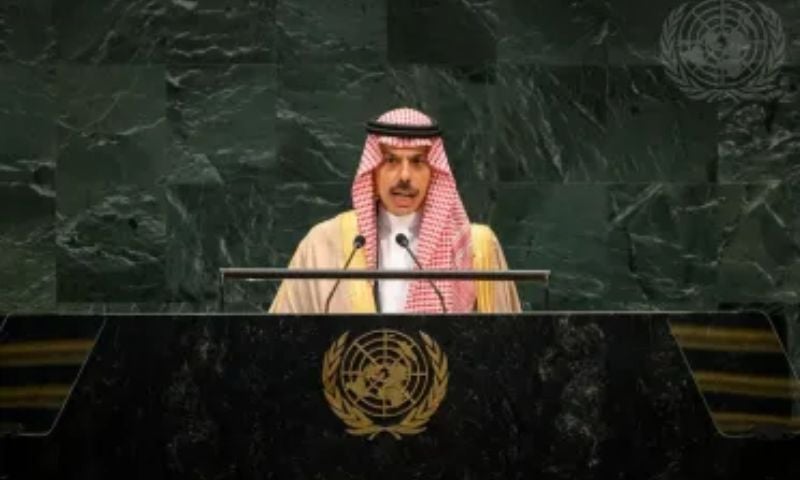
UNITED NATIONS: Saudi Foreign Minister Prince Faisal bin Farhan Al Saud has appreciated the peace and de-escalation efforts by Pakistan, Qatar and other countries, as he warned that escalating tensions in the Middle East posed risks to international peace, energy security and global trade.
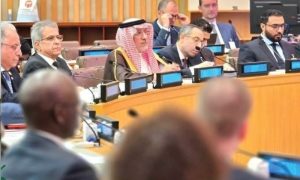
Addressing the General Debate of the 81st session of the United Nations General Assembly on Saturday, Prince Faisal said Saudi Arabia and other countries in the region had been subjected to “flagrant Iranian attacks” targeting security resources as well as civilian and economic facilities.
He reaffirmed Saudi Arabia’s right to protect its security and sovereignty, along with its citizens, residents and national resources, while urging the international community to confront threats to international peace and security.
“The security of the Gulf region is part and parcel of the security of the region and the world at large,” he said.
Protecting vital waterways
The Saudi foreign minister stressed that stability in the Gulf was directly linked to global energy security, international trade and supply chains.
He called for freedom of navigation through international waterways, including the Strait of Hormuz, Bab el-Mandeb Strait, Red Sea and Gulf of Aden, and rejected the use of these routes by any party as an instrument of pressure or threat.
He also called for the situation in the Strait of Hormuz to return to its status before 28 February, “without the imposition of any fees or restrictions”.
Despite the heightened tensions, Prince Faisal backed diplomatic efforts to de-escalate the situation, including initiatives by Pakistan, Qatar and other countries.
He advocated comprehensive and sustainable regional security arrangements aimed at addressing the underlying causes of instability.
READ ALSO: Saudi Foreign Minister Arrives in New York for 81st UN General Assembly Session
The minister also called for the entire region to be free of weapons of mass destruction and said peaceful nuclear programmes should remain subject to international oversight and safeguards.
Gaza and Yemen
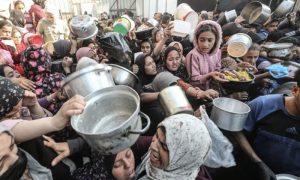
Turning to the Occupied Palestinian Territory, Prince Faisal condemned the targeting of civilians, restrictions on humanitarian assistance, attempted forced displacement and the expansion of Israeli settlements.
He said a just and lasting peace could only be achieved through a two-State solution and the establishment of an independent Palestinian state on the 1967 borders, with East Jerusalem as its capital.
On Yemen, he called for a comprehensive political solution to restore stability and alleviate the suffering of the Yemeni people. He noted that Saudi Arabia had provided more than $29 billion in humanitarian and development assistance to Yemen.
Prince Faisal also condemned missile and drone attacks by the Houthis against Saudi Arabia and commercial ships, calling on the international community to reject actions threatening navigation in the Red Sea and Bab el-Mandeb.
Energy security and AI
Addressing broader global challenges, Prince Faisal highlighted the achievements of Saudi Vision 2030 and said energy security and climate action should be mutually reinforcing rather than competing priorities.
He called for realistic energy transitions that did not exclude any source, while highlighting Saudi investments in renewable energy, clean hydrogen, carbon-capture technologies and resilient infrastructure.
On artificial intelligence, the foreign minister urged greater international cooperation to ensure the technology was developed and used responsibly and in support of sustainable development.
He highlighted Saudi initiatives aimed at strengthening AI capacity and promoting ethical standards in the sector.
Concluding his address, Prince Faisal said the challenges facing the world could not be addressed by individual countries acting alone.
He said lasting security required adherence to the UN Charter, respect for international law and international cooperation aimed at peaceful solutions, stability and sustainable development.