KEY POINTS:
- 1.1 billion women and girls could face food insecurity by 2030, while closing gender gaps in agricultural productivity could lift 45 million people out of food insecurity.
- Gender parity remains 171 years away, with no SDG 5 indicator currently on track to meet its 2030 target.
- Women remain underrepresented in political leadership, holding 27.4% of parliamentary seats, while only 28 countries are led by women.
- One in three gender equality institutions has lost institutional power over the past two years, while women face continued violence and discrimination in public and political life.
- Economic and funding gaps persist, with women holding just 5.8% of corporate CEO positions, while gender-equality ODA fell 13% and direct funding for women’s rights organisations dropped 28% between 2023 and 2024.
ISLAMABAD: Women and girls continue to face deep disparities in political power, economic opportunity and access to food, with 1.1 billion projected to remain food insecure by 2030, according to a new UN Women report that warns global progress on gender equality is slowing and, in some areas, reversing.
1.1 BILLION women and girls could face food insecurity by 2030.
Yet, food is lost and wasted every day.
We must close the gender gap in agricultural productivity, build more resilient food systems and #StopFoodLossWaste.
🔗 Learn more: https://t.co/Xfmo7w0xOq pic.twitter.com/DQoGqRklHc
— UN Women (@UN_Women) September 29, 2026
The Gender Snapshot 2026 report says gender parity remains 171 years away at the current pace of progress, meaning full equality would not be reached until around 2197. It also concludes that not a single indicator under Sustainable Development Goal 5 (SDG 5) is currently on track to be achieved by 2030.
🚨 171 YEARS 🚨
At the current pace, that’s how long gender equality will take.
See the latest #GenderData in the Gender Snapshot 2026 report, and join our call for equal power #ForAllWomenAndGirls.
🔗 https://t.co/eEu5dPmVAV
#UNGA pic.twitter.com/AaoZ5W31Gl— UN Women (@UN_Women) September 17, 2026
Women remain underrepresented in political power
Women held 27.4% of seats in national parliaments in 2026, up from 22.3% in 2015, but the pace of progress has slowed sharply, with representation increasing by only 0.2 percentage points over the past year.
Only 28 countries are currently headed by a woman, leaving six out of seven countries led by men. The report also finds that just 31 of 175 chief justices worldwide are women, while women’s representation in local governance has largely stalled at 35.6%.
Women also face violence and discrimination when seeking public office. During electoral campaigns, 80% of female parliamentary candidates and 63% of female local government candidates reported experiencing psychological, sexual, economic or physical violence.
Cities should work for everyone 🏙️
Yet 1.16 BILLION people live in slums or informal settlements.
Women and girls living in these communities face disproportionate barriers.
See more #GenderData: https://t.co/zVYcnk8UyA#UNGA pic.twitter.com/61PK19peAl
— UN DESA DISD (@UNDESASocial) September 22, 2026
Gender equality institutions losing power
The report identifies a broader institutional retreat from gender equality. One in three national gender equality mechanisms has experienced a decline in institutional power over the past two years, including through staffing reductions, lower institutional status or changes to their mandates.
Women also remain concentrated in portfolios traditionally associated with social policy. They hold only 19% of economic portfolios and 12% of energy portfolios, according to the report.
Read Also: UN Human Rights Chief Wants Greater Pressure on Taliban to Help Afghan Women
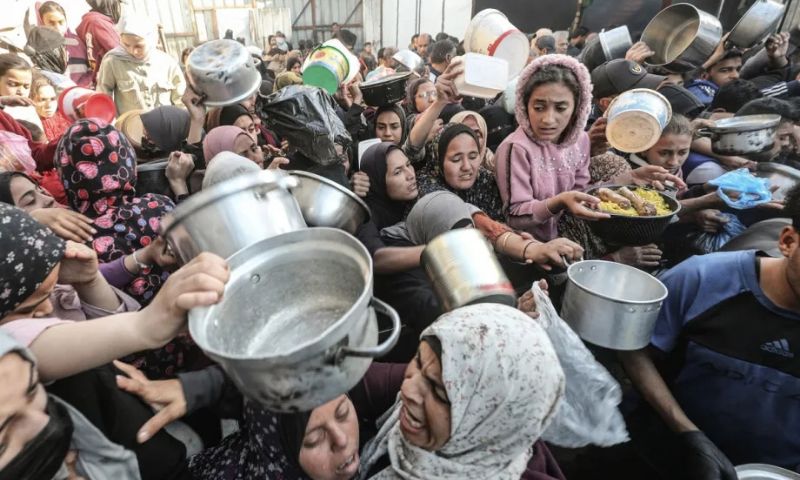
1.1 billion women and girls face food insecurity
Food insecurity represents another major gender disparity. The report projects that 1.1 billion women and girls could face food insecurity by 2030 without stronger action.
At the same time, closing gender gaps in agricultural productivity could immediately lift 45 million people out of food insecurity, highlighting the potential economic and social impact of greater equality in access to agricultural resources and opportunities.
Women also continue to carry a disproportionate share of unpaid work, spending 2.5 times more hours per day on unpaid domestic and care responsibilities than men.
1 in 3 institutions built to advance #GenderEquality have been stripped of power in just two years.
We must remember that gender equality happens by choice, not by chance.
See the latest #GenderData in the 2026 Gender Snapshot: https://t.co/eEu5dPntqt#UNGA https://t.co/tWYwAtaoLQ
— UN Women (@UN_Women) September 24, 2026
Women hold just 5.8% of corporate CEO roles
The gender gap extends into the corporate sector, where women occupy only 5.8% of CEO positions at publicly traded companies and hold 25.1% of board seats.
The report also highlights persistent economic inequality, with nearly 10% of women living in extreme poverty and the largest gender poverty gap recorded among people aged 15 to 34.
The fight for #GenderEquality means transforming economies—so women and girls are not just surviving but thriving.
In 2026, @UN_Women will continue to drive bold change to build fair economies #ForAllWomenAndGirls.
🔗 Learn more: https://t.co/dL0P6ATYBh#GlobalGoals pic.twitter.com/FHumcZxE9p
— UN Women (@UN_Women) January 17, 2026
Funding for gender equality declines
Financial support for gender equality has also weakened. Bilateral official development assistance directed towards gender equality fell by 13% between 2023 and 2024, while direct funding for women’s rights organisations dropped by 28%.
The report says only one in four countries currently meets the benchmark for gender-responsive budgeting.
Read Also: Afghan Women Recount Torture and Abuse in Taliban Regime Prisons: Report
UN Women has called for stronger political commitments, greater investment in gender equality institutions and women’s rights organisations, measures to prevent violence against women in public life and ambitious electoral quotas.
Read Also: Rampant Taliban Violence and Abuse against Afghan Women: UN Report Warns
The report says legislated electoral quotas can increase women’s parliamentary representation by 16 percentage points in countries that adopt them, underlining the role of institutional measures in accelerating progress towards gender equality.