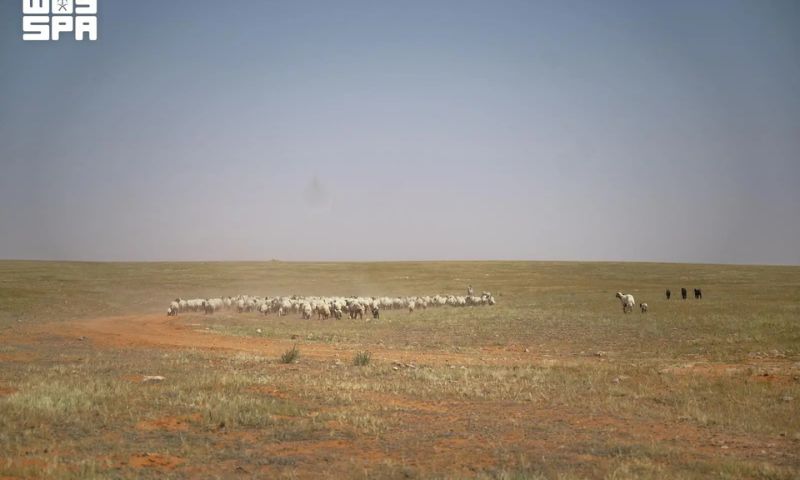
RIYADH: Saudi Arabia’s Northern Borders region has emerged as a major livestock hub, with animal numbers surpassing 7.5 million head as the Kingdom intensifies efforts to strengthen food security and modernize its agricultural sector under Vision 2030.
According to a report carried by the Saudi Press Agency (SPA), the regional branch of the Ministry of Environment, Water and Agriculture (MEWA) said the province now hosts 7,551,997 livestock, including 7,258,950 sheep, 235,814 goats, 56,925 camels and 308 cattle.
Officials said the region is playing an increasingly important role in domestic animal husbandry, particularly sheep breeding, which remains central to Saudi Arabia’s livestock economy.
Local breeders credited government-backed support programs for improving production and breeding efficiency through veterinary services, vaccination drives and technical guidance for farmers.
Authorities said livestock herding continues to be a key pillar of sustainable rural development despite growing environmental challenges, including climate change, desertification and shrinking water resources.
To address these pressures, MEWA has launched initiatives promoting sustainable grazing and modern rangeland management practices aimed at protecting biodiversity and reducing vegetation degradation.
The regional expansion reflects Saudi Arabia’s broader push to reduce dependence on imported meat while strengthening local food production capacities.
Official data from the General Authority for Statistics (GASTAT) and MEWA show Saudi Arabia’s national sheep population stands at around 22.1 million head, while goat numbers total approximately 7.3 million. The Kingdom also hosts about 2.24 million camels and nearly 516,000 cattle.
Saudi Arabia’s commercial dairy sector, largely concentrated in Riyadh and the Eastern Province, produces an estimated 2.7 billion liters of raw milk annually, highlighting the contrast between industrial-scale farming and traditional pastoralism in the Kingdom’s northern rangelands.
Environmental experts say preserving vegetation cover and regulating grazing patterns will be critical to ensuring long-term sustainability of the livestock sector while safeguarding fragile desert ecosystems.