Key Points
- Saudi Arabia says nuclear energy will form part of its national energy mix.
- Kingdom is exploring uranium resources and opportunities for their economic utilisation.
- Riyadh stresses transparency, international cooperation and IAEA oversight.
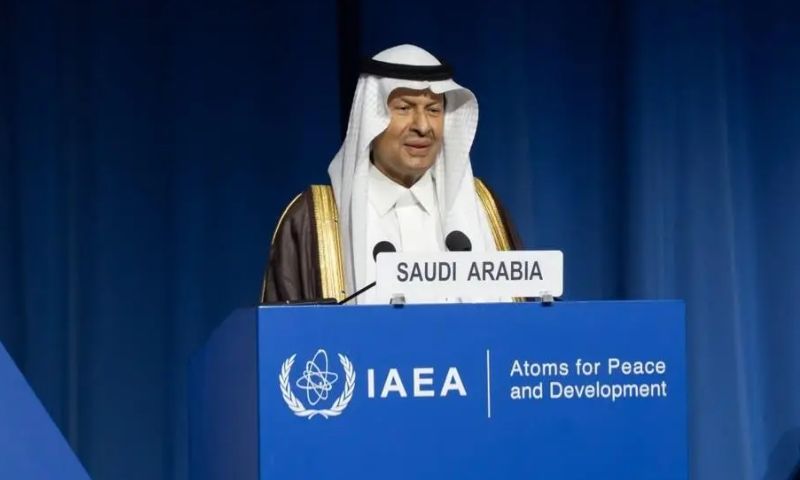
VIENNA: Saudi Arabia is moving forward with plans to introduce nuclear into its national energy mix, Energy Minister Prince Abdulaziz bin Salman said Monday, while outlining the Kingdom’s efforts to explore uranium resources and develop their economic and industrial value.
Delivering Saudi Arabia’s statement at the 70th General Conference of the International Atomic Energy Agency (IAEA) in Vienna, Prince Abdulaziz presented the Kingdom’s energy security strategy.
He said rising global energy demand, driven by economic, technological and industrial expansion, had made “diversifying energy sources and enhancing their reliability and sustainability” essential to support economic growth.
The minister said Saudi Arabia was developing “a national energy mix from different energy sources that is more diverse and sustainable.” This included “introducing nuclear energy into this mix, within a well-established regulatory framework and in accordance with the Kingdom’s international obligations.”
Prince Abdulaziz said the Kingdom was seeking to maximise the benefits of its natural resources, including uranium, by transforming them “from natural resources into sustainable economic and industrial value”.
National nuclear programme
He said the National Atomic Energy Project was advancing a programme to explore uranium resources and assess opportunities for their economic utilisation through several interconnected tracks.
The first involves recovering uranium associated with phosphoric acid produced in phosphate fertiliser operations in northern Saudi Arabia.
READ ALSO: Saudi Crown Prince, US CENTCOM Commander Discuss Regional Developments
The minister said pilot work with French company Orano yielded “promising economic indicators” for uranium recovery, followed by the signing of a memorandum of understanding during Crown Prince Mohammed bin Salman’s visit to France in August.
A second track involves the Jabal Sayid project in the Madinah region, where exploration and geological studies have identified estimated resources of approximately 114 million tonnes of ore.
It contains high concentrations of rare earth elements, particularly heavy rare earth elements, alongside promising concentrations of uranium.
Prince Abdulaziz said Saudi Arabia was also continuing efforts through its Sedimentary Cover Survey Initiative to explore for additional uranium ores from conventional sources.
He said the Kingdom’s ambition extended beyond producing raw materials or exporting concentrates to building “an integrated economic and industrial value chain.”
The value chain would cover exploration and mining, processing, separation and refining, the production of rare earth oxides, recovery and purification of associated uranium, and production of yellowcake and development of its value chain, subject to economic feasibility.
On nuclear cooperation, the minister said Saudi Arabia’s partnership with the United States covered critical minerals, supply-chain security and the peaceful uses of nuclear energy.
He said the two countries signed an agreement in July on cooperation in the peaceful uses of nuclear energy, known as the “123 Agreement”.
He said Saudi Arabia was exercising its right to the peaceful uses of nuclear energy with “transparency, openness and international cooperation” and was not developing its peaceful nuclear programme “in isolation from the international community”.
Prince Abdulaziz said Saudi Arabia would continue strengthening its national framework and regulatory ecosystems governing nuclear energy and its applications, enhancing preparedness for nuclear and radiological emergencies. He said his country would reinforce a culture of nuclear safety and security, and strengthen technical cooperation with the IAEA and international partners.
The Kingdom’s move adds nuclear energy to Saudi Arabia’s energy security strategy, helping it develop a more diversified and sustainable energy system while turning its large mineral resource base into higher-value industrial activity.