MOSCOW: Russia said on Thursday warned that the latest escalation between the United States and Iran posed serious risks to the global economy, while mediator Pakistan renewed its call for all sides to exercise maximum restraint and return to dialogue under the Islamabad Memorandum of Understanding (MoU).
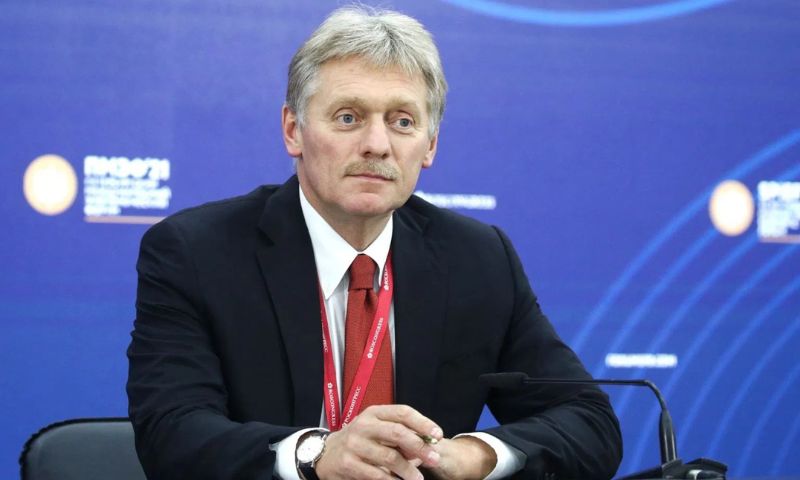
Kremlin spokesman Dmitry Peskov said Moscow viewed the latest developments with concern and had urged both Washington and Tehran to avoid further escalation.
“All of this is fraught with continuing negative consequences for the global economy, which cannot but cause concern,” Peskov told reporters, according to Reuters. He described the economic situation as “rather dire”.
Peskov said Russia remained in contact with Iranian officials. He added that Iranian authorities had not requested a telephone conversation with President Vladimir Putin.
Russia has repeatedly called on both Iran and the United States to refrain from further military escalation.
US, Iran exchange fresh strikes
The Russian comments came as the United States and Iran exchanged another round of military strikes, extending a confrontation that has raised concerns over regional stability and global energy supplies.
The US military said it had completed another wave of precision strikes against military targets in Iran, with the Pentagon saying the operation was intended to further degrade Tehran’s ability to threaten international shipping through the Strait of Hormuz.
According to the US Central Command (CENTCOM), the latest operation concluded at 9 p.m. Eastern Time on Wednesday after coordinated strikes authorised by President Donald Trump.
CENTCOM said American forces targeted Iranian command and control centres, air defence systems, missile and drone capabilities, and coastal surveillance facilities.
The US military said the operation aimed to reduce Iran’s ability to threaten commercial shipping through one of the world’s busiest maritime routes.
The military said the strikes included attacks on multiple sites, including the southern port city of Bandar Abbas, a key centre for Iran’s naval and military operations.
Earlier on Thursday, US forces also carried out a separate 90-minute strike operation against Iranian coastal defence and cruise missile positions on Greater Tunb Island, near the entrance to the Strait of Hormuz.
In a statement, CENTCOM said the operation formed part of continuing efforts to counter what Washington described as threats to regional security and freedom of maritime navigation.
The US military did not disclose the extent of the damage or whether there were casualties. Iranian authorities did not immediately comment on the latest US strikes.
Iran’s Islamic Revolutionary Guard Corps (IRGC) said it launched missile and drone attacks against a US military base in Kuwait, while the Iranian army claimed it had also targeted American military facilities in neighbouring Jordan.
According to Iranian state media, the IRGC said it carried out a combined missile and drone strike on Ali Al Salem Air Base in Kuwait during the eighth phase of its “Nasr 2” operation.
In a statement broadcast by the Islamic Republic of Iran Broadcasting (IRIB), the Guard claimed it had struck a C-RAM early-warning radar system and an assembly point used by US military personnel at the base.
Pakistan calls for restraint
Meanwhile, mediator Pakistan urged all parties to avoid actions that could further undermine regional peace and stability.
Speaking at the Foreign Office’s weekly media briefing in Islamabad, spokesperson Tahir Andrabi said Pakistan continued to support diplomacy and the implementation of the Islamabad Memorandum of Understanding as an enduring framework for promoting peace, mutual respect and shared prosperity.
“The Islamabad MoU remains an enduring framework for promoting peace, mutual respect and shared prosperity,” Andrabi said.
He said Pakistan would continue encouraging all parties to end hostilities and resume technical-level negotiations under the Islamabad MoU and the Pakistan-Qatar Joint Statement issued on 22 June.
Andrabi said Pakistan remained actively engaged with regional and international partners to support de-escalation efforts and a peaceful resolution of the crisis.
He also warned that continued tensions around the Strait of Hormuz were affecting countries across the Global South by disrupting global energy supplies, trade and food security.
He expressed hope for the early normalisation of the security situation in the waterway and stressed the importance of ensuring the continued safety and freedom of international maritime navigation.
Islamabad MoU framework
The Islamabad MoU was signed on June 18 by US President Donald Trump, Iranian President Masoud Pezeshkian and Prime Minister Shehbaz Sharif after Pakistan brokered a ceasefire between Washington and Tehran.
Under the Islamabad MoU, the US and Iran committed to halt military operations, reopen the Strait of Hormuz to commercial shipping and negotiate a comprehensive agreement covering Iran’s nuclear programme, US sanctions and a permanent ceasefire within 60 days.
Pakistan and Qatar subsequently co-mediated the first round of high-level negotiations in Lucerne, Switzerland, on June 21.
The talks were attended by US Vice President JD Vance and Iranian Parliament Speaker Mohammad Bagher Ghalibaf.
Pakistan’s diplomatic efforts
Pakistan is the principal mediator between the US and Iran after it secured a ceasefire on April 08 and hosted the highest level of talks between the two nations on April 12 and 13 in Islamabad.
Pakistan, which brokered the ceasefire and has continued to mediate between Washington and Tehran, has urged all parties to honour the agreement.
The first round of Pakistan and Qatar mediated US-Iran talks, led by US Vice President JD Vance and Iran’s Parliament Speaker Mohammad Baqer Ghalibaf, was held in Switzerland a week ago, and Washington waived sanctions on Tehran.
After the talks, Pakistan and Qatar announced significant progress in diplomatic efforts between the US and Iran following the conclusion of the first round of high-level talks in Switzerland.