
Key Points
- LNG cargo reaches Pakistan after weeks of disruption
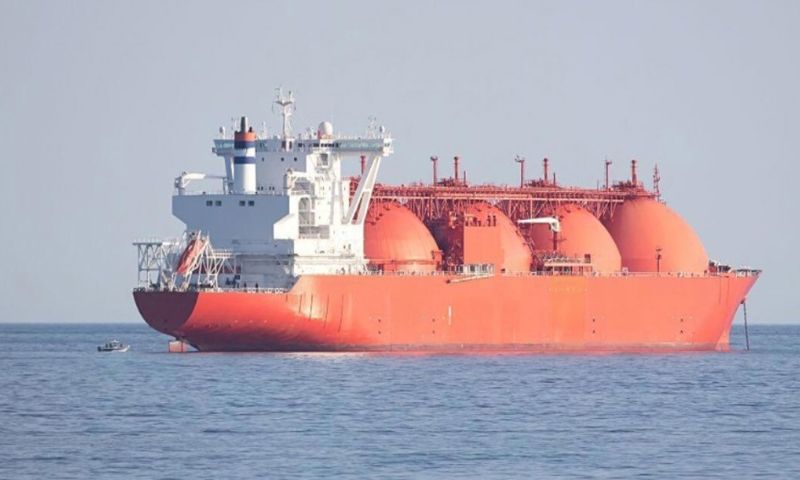
- Al-Areesh carries 141,550 cubic metres of LNG
- Pakistan remains exposed to Hormuz shipping risks
ISLAMABAD: A liquefied natural gas (LNG) tanker from Qatar has arrived in Pakistan despite continued tensions around the Strait of Hormuz, providing some relief to the country’s strained energy supply chain.
The QatarEnergy-controlled Al-Areesh berthed at the Pakistan GasPort Limited terminal at Port Qasim at 11:30 a.m. on Monday, according to Asad Warsi, spokesperson for the Port Qasim Authority.
The shipment contains 141,550 cubic metres of LNG under Pakistan’s government-to-government agreement with Qatar.
The vessel’s arrival is significant because its journey was disrupted by the continuing instability around the Strait of Hormuz, a critical maritime chokepoint linking the Arabian Gulf with the Gulf of Oman.
Al-Areesh exited the strait on July 30, becoming the first LNG carrier visible on ship-tracking data to leave the waterway since July 11.
Disruptions divert Qatari ship
It was subsequently diverted from the maritime route on July 31 as regional tensions intensified and fighting between Iran and the United States resumed, according to Arab News.
The tanker eventually reached Pakistan as efforts continued to secure the movement of essential energy supplies through the region.
The cargo is particularly valuable for Pakistan because it is priced at 13.37 per cent of Brent crude under the long-term government-to-government arrangement.
ALSO READ: Pakistan Ends Month-Long Loadshedding After LNG Cargo Arrives
That makes it considerably cheaper than buying LNG on the spot market, where prices have risen above $21.12 per million British thermal units (MMBtu) and could exceed $23 per MMBtu if Pakistan needs to secure additional supplies.
Pakistan had last received an LNG cargo from Qatar on June 22. The latest shipment therefore comes after a prolonged interruption to regular supplies.
The disruption has exposed Pakistan’s dependence on Middle Eastern energy imports.
About 17 per cent of the country’s electricity generation comes from gas, with imported LNG accounting for roughly 6 per cent of total power generation.
Pakistan normally needs four to five LNG cargoes a month between April and August to operate its approximately 5,000-megawatt LNG-fired power plants.
The supply disruption has also raised concerns over the cost of replacing Qatari LNG with spot-market cargoes.
Pakistan has already had to turn to alternative supplies to partly cover shortages, increasing the risk of higher electricity-generation costs.
The latest delivery also underscores the importance of the Strait of Hormuz to Pakistan’s energy security.
Before the current conflict, nearly one-fifth of global oil and gas supplies moved through the waterway. Its disruption has therefore affected not only Pakistan but international energy markets and shipping routes.
For Pakistan, the arrival of Al-Areesh provides temporary relief but does not remove the underlying risk.
Continued uncertainty over commercial shipping through Hormuz could again disrupt LNG deliveries, particularly if regular Middle East cargoes cannot resume on a predictable schedule.