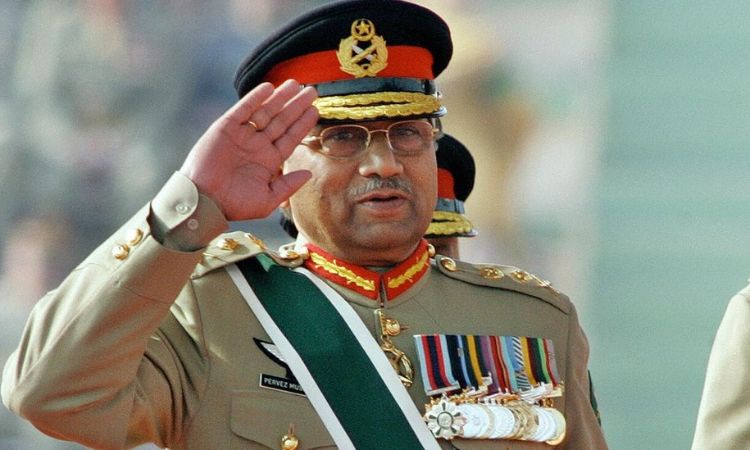
ISLAMABAD: The last military ruler of Pakistan, Pervez Musharraf, who served as a vital ally to the United States during its “war on terror” died in exile in Dubai at the age of 79 on Sunday.
The four-star general grabbed power in 1999 in a bloodless coup before becoming an ally to Washington during its military intervention in the neighbouring Afghanistan after the 9/11 incident. In nearly nine years of his rule in the country, Pervez Musharraf enjoyed a stint of economic betterment while surviving at least three Al-Qaeda assassination attempts.
‘Forceful moderate’
Musharraf was born in Old Delhi on 11 August 1943. Later, his family moved to Pakistan shortly after independence in 1947. Musharraf once said he had his first brush with death falling from a mango tree when he was a boy. He joined the Pakistan Military Academy at the age 18 and matured to be a commando around five years later, rising through the ranks to reach the top when then PM Nawaz Sharif appointed him chief of the army staff in 1998.
Musharraf as army chief, orchestrated the high-altitude but brief “Kargil conflict” in Kashmir that almost took the country to war with its nuclear rival India. When he ousted Nawaz Sharif in a bloodless coup in 1999, majority of the Pakistanis distributed sweets to celebrate the demise of an economically disastrous and corrupt administration.
Musharraf won a five-year term as president of the country in a 2002 referendum, but didn’t quit as army chief until late 2007.
He aligned with the US after the September 11, 2001 attacks in the US, earning international praise for trying to tackle Al-Qaeda and Taliban militants.
George W Bush, the then-US president, called him a forceful, strong leader who became a target of those who couldn’t stand the thought of moderation prevailing.
The most serious challenge for former military ruler
The most serious challenge Musharraf faced was when he tried to sack country’s chief justice in March 2007, sparking nationwide protests that leading to months of turmoil. He then imposed a state of emergency.
After the assassination of opposition leader Benazir Bhutto in December 2007, the national mood soured even more and significant losses suffered by his allies in the 2008 elections left him isolated.
Ignominious return
He eventually resigned in the face of impeachment proceedings by the then ruling coalition and entered exile. However, he returned to Pakistan in 2013, apparently to run for election and “save” the country from economic ruin and militancy. However, he was met not with a hero’s welcome and a barrage of criminal cases. — AFP