KEY POINTS
- Consultative meeting reviews inflationary pressures alongside energy and food security.
- Authorities confirm stable fuel supplies, adequate stocks, and management of essential commodities.
- Govt maintains austerity stance, with rejected fuel price increases and redirected savings toward public relief.
- Deputy PM outlines diplomatic outreach to key regional partners amid evolving geopolitical tensions.
ISLAMABAD: Pakistan’s President Asif Ali Zardari has directed authorities to shield the public from rising oil and essential goods prices, amid continued energy market pressures and a challenging regional environment.
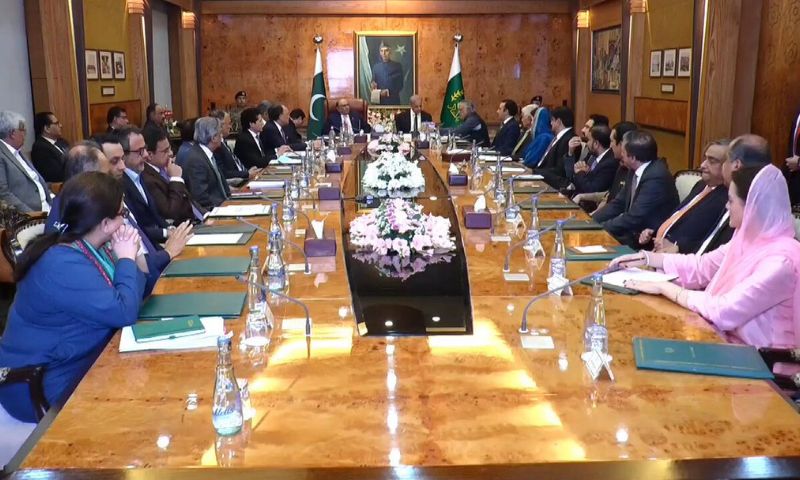
Chairing an expanded consultative meeting in Islamabad on Monday, attended by Prime Minister Shehbaz Sharif and the leadership of all four provinces, as well as Gilgit-Baltistan and Azad Jammu and Kashmir, President Zardari called for coordinated economic and policy responses to protect vulnerable segments of society.
The meeting came at a time of rising oil and gas supply pressures, elevated energy costs, and broader regional instability with implications for Pakistan’s economic and security outlook.
President Zardari holds consultative meeting with PM @CMShehbaz, federal and provincial leadership to review economic, energy and regional situation, focusing on coordination, fuel conservation, public relief and mitigating impact on the common man. pic.twitter.com/BdW0vQ6ry4
— The President of Pakistan (@PresOfPakistan) March 30, 2026
President Asif Ali Zardari reiterated that economically vulnerable communities would not be left to bear the brunt of the crisis.
He stressed that decision-making across economic management, energy planning, food security, and national preparedness must remain closely aligned to ensure policy coherence.
He also underlined the importance of public awareness campaigns aimed at reducing fuel consumption, encouraging greater use of public transport, and promoting shared mobility as part of a wider demand-management strategy.
Officials briefed the meeting on provincial and regional government efforts to manage inflationary pressures, ensure the steady availability of essential commodities, and mitigate the impact on households.
The discussion focused on strengthening coordination to support a unified national response.
The participants also reviewed the evolving regional situation and its potential implications for Pakistan’s security environment, economic stability, and food security outlook.
The meeting was informed that, despite global uncertainty, timely policy interventions had ensured an uninterrupted fuel supply, with sufficient stocks available and contingency arrangements in place to meet future demand.
Deputy Prime Minister Ishaq Dar briefed the participants on Pakistan’s diplomatic outreach, including recent engagements with the leadership of Türkiye, Saudi Arabia and Egypt, as well as other stakeholders linked to regional tensions. He also informed the meeting about his upcoming visit to Beijing.
Officials further said that proposals for increases in oil prices had been repeatedly rejected by the prime minister, with savings from austerity measures redirected toward public relief initiatives.
The meeting noted that fiscal restraint had begun at the government level, including reductions in development expenditure and the grounding of a significant portion of official vehicles as part of cost-cutting efforts.
The meeting concluded with a renewed emphasis on maintaining policy coordination across federal and provincial tiers, ensuring stability in essential supplies, and shielding vulnerable populations from the impact of global economic shocks.