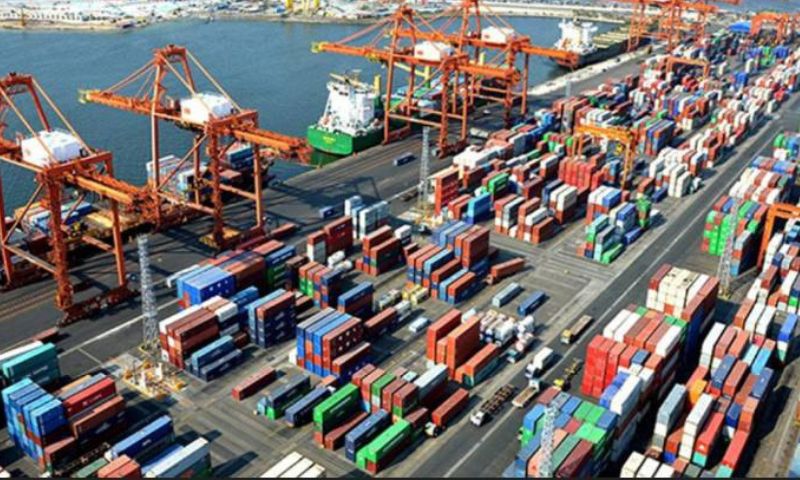
ISLAMABAD: Pakistan is accelerating its transformation into a regional maritime powerhouse as Port Qasim Authority (PQA) strengthens transshipment operations, enhances capacity, and introduces investor-friendly incentives, boosting efficiency, reducing costs, and attracting global shipping lines.
Amid Middle East conflict, shifting global trade routes, and increasing competition among regional ports, Pakistan is strategically upgrading its maritime infrastructure and policy framework to capture transshipment traffic.
With strong operational performance at Qasim International Container Terminal (QICT), expanded yard capacity, and aggressive tariff incentives, Port Qasim, alongside Karachi Portis positioning itself as a cost-effective, high-efficiency gateway connecting South Asia, the Middle East, and beyond.
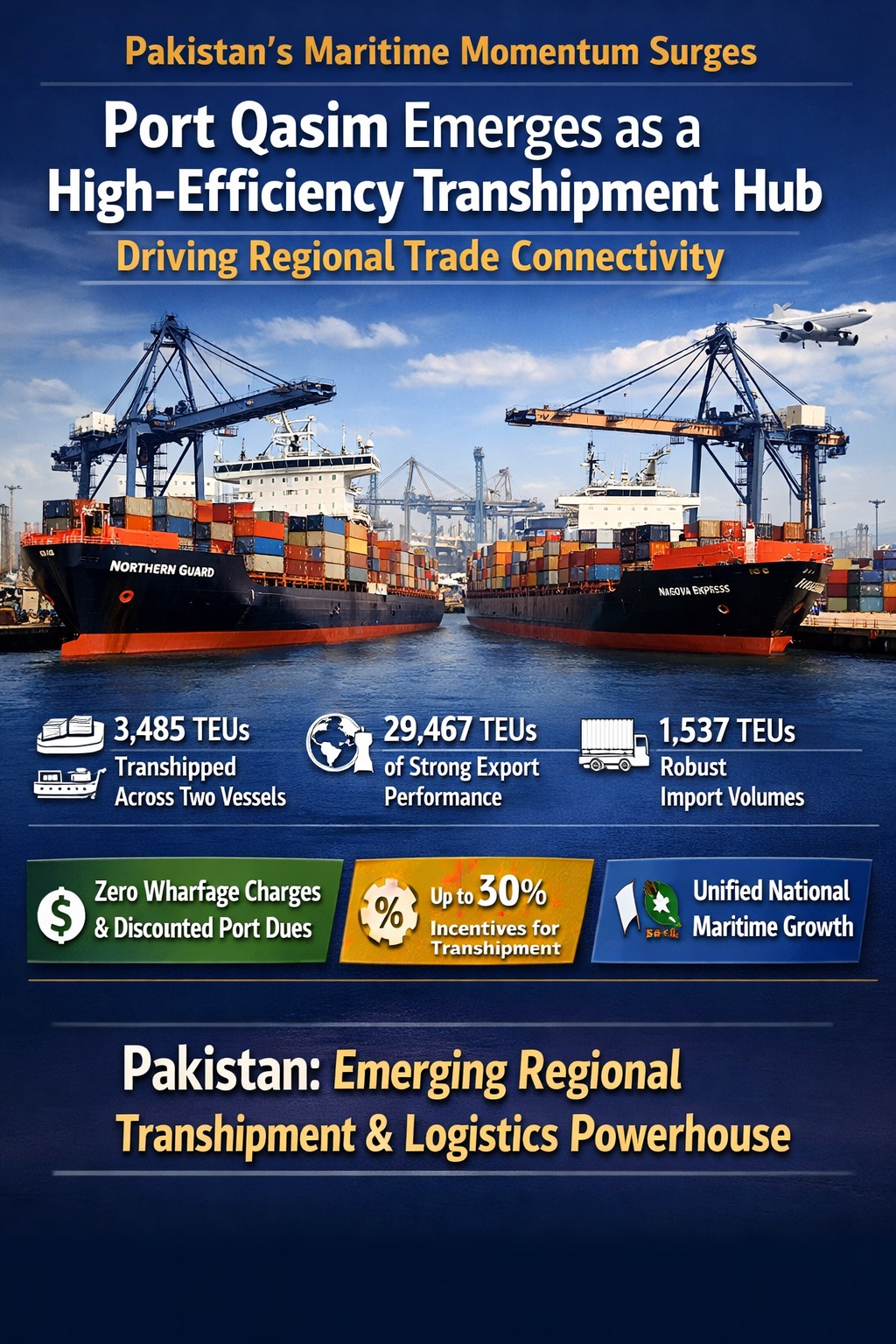
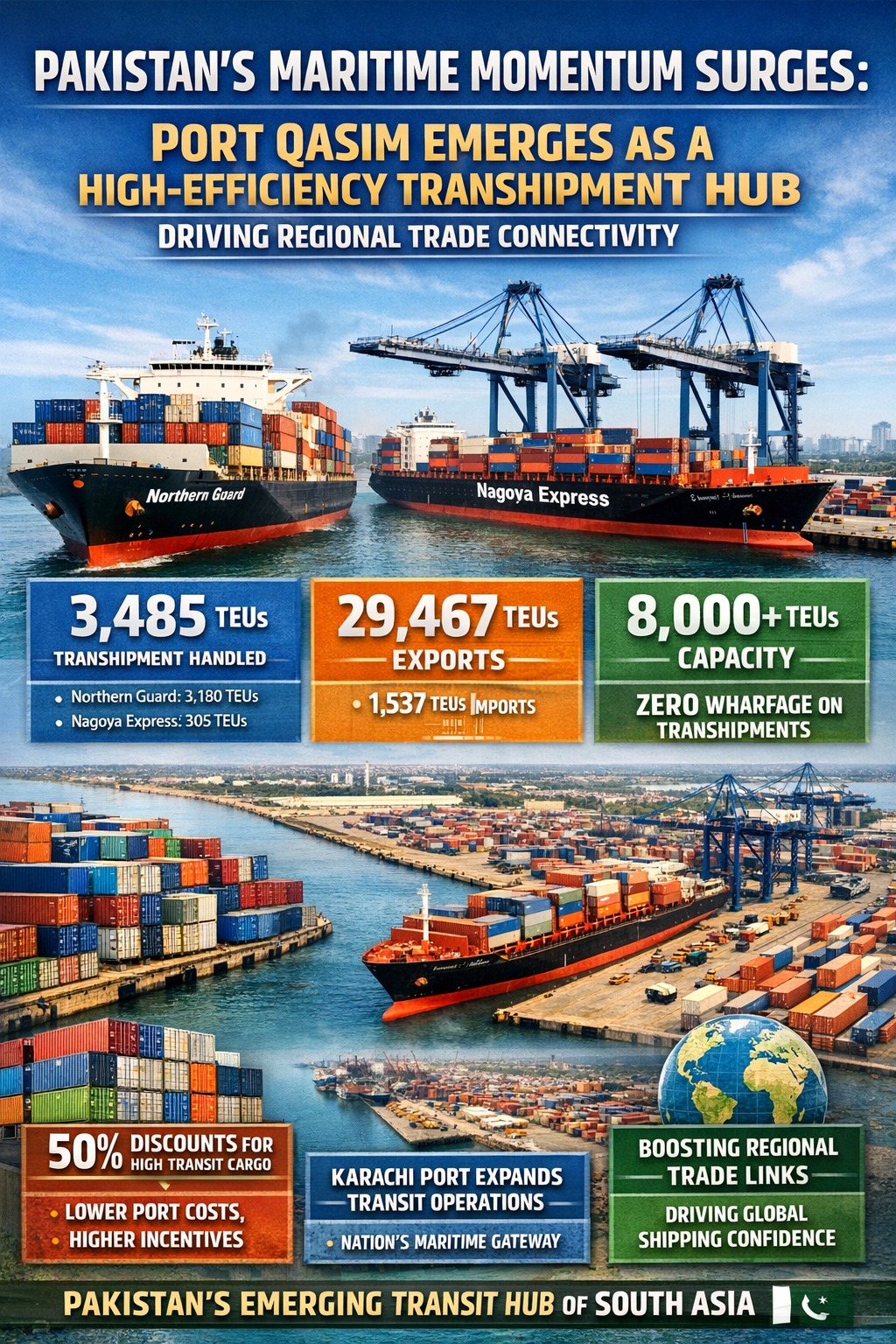
Port Qasim handles 3,485 TEUs of transshipment cargo across two vessels, showcasing rising operational efficiency and growing global trust.
The successful processing of 3,180 TEUs by Northern Guard highlights Pakistan’s ability to manage high-volume container traffic with precision.
An additional 305 TEUs handled by Nagoya Express reflects consistent throughput and strengthening maritime activity.
Strong export performance with 29,467 TEUs underlines Pakistan’s expanding footprint in global trade markets.
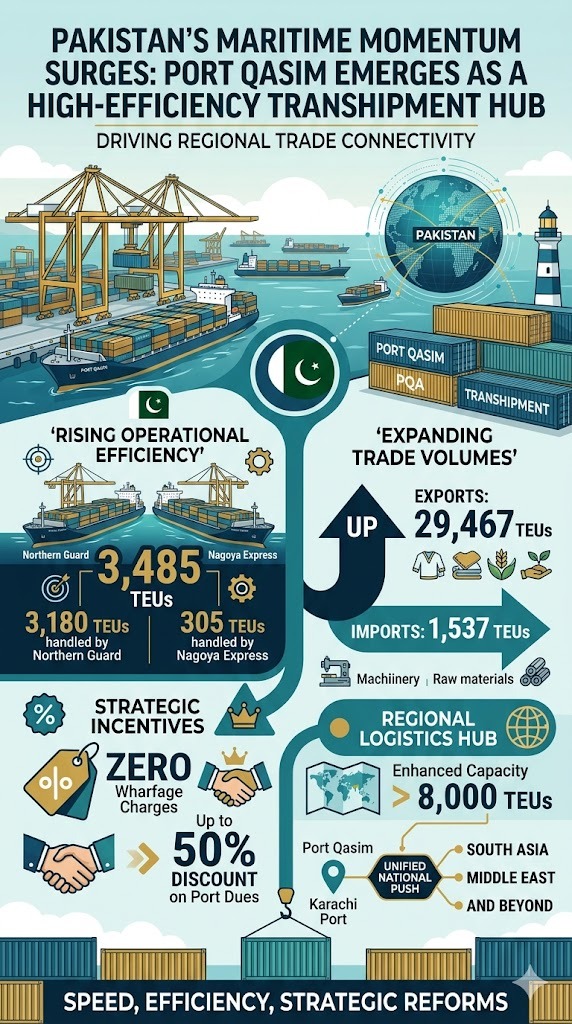
Robust import volumes of 1,537 TEUs demonstrate sustained domestic demand and supply chain stability.
PQA’s expanded capacity of over 8,000 TEUs ensures readiness to accommodate rising transshipment volumes.
Zero wharfage charges and discounted port dues position Pakistan as a highly competitive destination for global shipping lines.
Incentive-driven policies offering up to 50% discounts are attracting increased transshipment traffic and investor confidence.
Karachi Port’s parallel performance through KGTL reinforces a unified national push toward maritime excellence.
With speed, efficiency, and strategic reforms, Pakistan is rapidly emerging as a key regional transshipment and logistics hub.