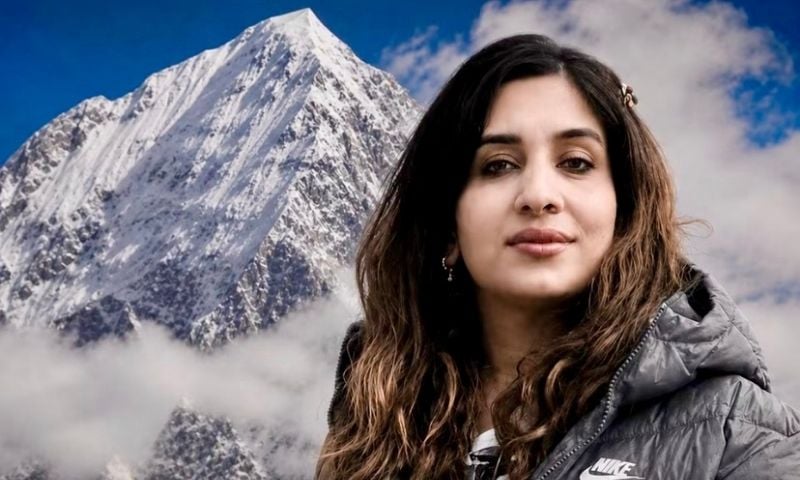
GILGIT: In a painstaking rescue operation high in the Karakoram range, a ground team has finally recovered the body of Pakistani mountaineer Asma Mushtaq from Gilgit-Baltistan’s Spantik Peak, nearly ten days after the 34-year-old lost her life on the 7,027-metre-tall mountain.
The grim recovery brings closure to a desperate search that began after Mushtaq succumbed to high-altitude sickness on August 20 while descending from the summit she had successfully conquered just hours earlier.
The Heroes of Shigar Are No Less Than Anyone Mehboob Ali and His Team Recover Dr. Asma Mushtaq’s Body
The mountains of Shigar have produced yet another story of courage humanity and extraordinary determination.
Renowned mountaineer Mehboob Ali from Bashe… pic.twitter.com/oD2v6JbfgM— Broad Peak (@GashabrumII) August 31, 2026
Self-funded volunteers’ brave treacherous conditions
A five-member team of high-altitude mountaineers from Shigar launched a new recovery mission on Friday after earlier attempts were thwarted by heavy snowfall, according to Alpine Club of Pakistan (ACP) Secretary General Ayaz Shigri.
The volunteers, Mehboob, Hussain Ali, Mazahir Hussain, Mehboob Ali, Muhammad Abidin, and Abbas Ali, undertook the operation as a self-funded mission from Arundu in Shigar, demonstrating remarkable courage in the face of extreme risk.
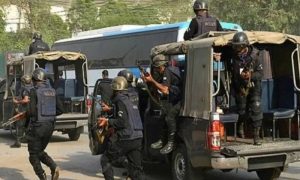
The team began their search at 3am on Monday and located Mushtaq’s body near Camp 3 at approximately 6,250 metres after eight grueling hours of searching.
Army helicopters to airlift body to Skardu
Shigri confirmed that the body would be transported to Camp 2 today before being airlifted by Pakistan Army helicopters to Skardu once it reaches the base camp.
Mushtaq was part of a five-member Pakistani women’s expedition team that successfully summited Spantik, alongside climbers Zoni Aslam, Zaba Shigri, Shama, and Sohana.
A search team from Shigar voluntarily recovered the body of Dr Asma Mushtaq from Spantik Peak. The body is being shifted to the base camp. Stay tuned for further updates pic.twitter.com/odTwlgv87P
— Jamil Nagri (@jamilnagri) August 31, 2026
The ACP had earlier reported that Mushtaq was in good health upon reaching the summit but developed a serious high-altitude medical emergency at around 6,400 metres during her descent.
Extreme risks of high-altitude mountaineering
High-altitude sickness encompasses pulmonary and cerebral conditions caused by hypoxia, oxygen deprivation, due to rapid ascent and inadequate acclimatisation. Climate change-induced weather shifts have further exacerbated conditions on Karakoram peaks, creating additional hazards for climbers.
Read Also: Pakistani Mountaineer Asma Mushtaq Dies During Descent from Spantik Peak
Experts emphasise that recovering a body from above 6,000 metres remains one of mountaineering’s most perilous tasks. Many such recoveries are deemed impossible, with bodies often left buried under snow.
In 2021, renowned mountaineer Sajid Sadpara made the heart-wrenching decision to bury his father Ali Sadpara’s body at approximately 8,000 metres on K2, underscoring the immense challenges of high-altitude recoveries.