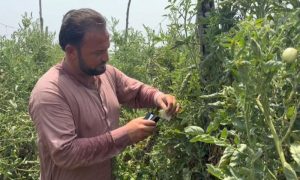
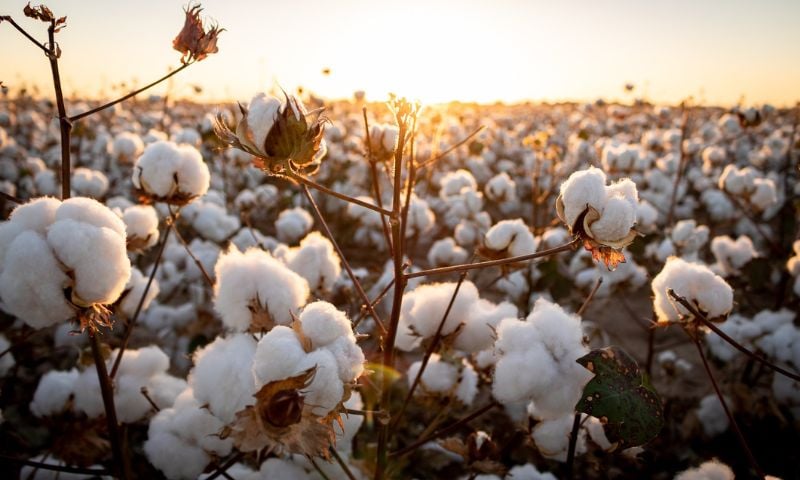



ANYANG: A Balochistan-born scientist working in China is developing salt-tolerant cotton varieties that could help Pakistan cultivate marginal land, expand organic cotton production and strengthen climate resilience in its agriculture sector.
Dr Noor Muhammad, a postdoctoral scientist at the Institute of Cotton Research of the Chinese Academy of Agricultural Sciences in Anyang, Henan province, has spent four years studying how cotton plants respond to salt stress.
His work is especially relevant for Pakistan, where salinity, water scarcity and climate change pose growing challenges to farmers.
Cotton remains one of the country’s most important crops, supporting millions of farming families and contributing significantly to export earnings.
Researchers believe salt-tolerant cotton could help unlock the potential of land currently considered unsuitable for cultivation.
Dr Noor’s research uses advanced scientific methods, including gene expression analysis, enzymatic studies and bioinformatics, to understand plant stress responses and develop more resilient crop varieties.
His academic journey in China began in 2017, when he moved to Southwest University of Science and Technology in Sichuan for a master’s degree in Life Sciences, followed by a PhD in Plant Biology and Agronomy.
Dr Noor says Chinese agricultural innovation offers practical lessons for Pakistan, particularly in water management, mechanisation, climate-smart farming and digital agriculture. He pointed to China’s drip irrigation under plastic mulch, which saves water and has transformed cotton production in Xinjiang.
He also sees CPEC 2.0 as an important opportunity to transfer knowledge, technology and germplasm to Balochistan.
His long-term goal is to promote food security, reduce poverty and support sustainable rural development through evidence-based farming practices.