ISLAMABAD: Pakistan views the continued presence of militant safe havens in Afghanistan as a central driver of the region’s worsening security situation, with security officials warning that the threat posed by ISKP and other militant groups cannot be understood through ideology, propaganda and recruitment networks alone.
A recent report by the Usanas Foundation examines the evolution, operational strategies and regional ambitions of the Islamic State-Khorasan Province (ISKP), describing it as one of the Islamic State’s most active affiliates.
The report traces ISKP’s emergence in Afghanistan in 2015 and examines how the group has adapted its organisational structure, recruitment methods and propaganda networks to survive military setbacks and pursue its wider transnational ambitions.
Pakistani security officials say any assessment of the regional terrorist threat must account for what Islamabad describes as the ability of militant groups to operate from Afghan territory, maintain cross-border networks and plan and launch attacks against Pakistan.
They argue that overlooking these operational sanctuaries risks presenting an incomplete picture of the forces driving instability across the region.
Against this backdrop, officials say the recent assessment of ISKP does not give sufficient weight to the Afghan safe-haven issue, despite extensively examining the group’s evolution, recruitment strategy, propaganda machinery and transnational ambitions.
The report says Afghanistan’s geography and governance conditions were among the factors that made the country attractive to ISKP. It points to the combination of rugged mountainous terrain, weak governance and widespread lawlessness, which created large ungoverned spaces that the group could exploit to establish a foothold.
The report also highlights Afghanistan’s strategic location, saying this allowed ISKP to extend its sphere of influence beyond the country into both Central and South Asia.
Pakistani officials argue that the report’s analysis should be considered alongside the cross-border dimension of terrorism confronting Pakistan.
Focus On Afghan Safe Havens
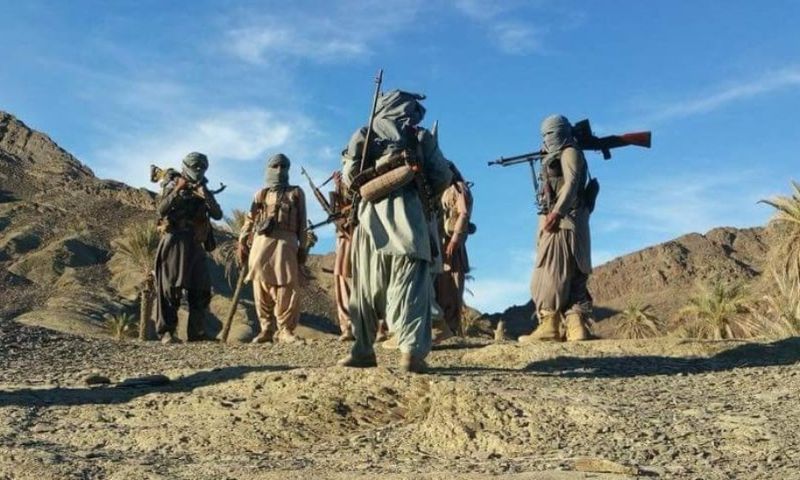
Islamabad has repeatedly said that militant organisations, particularly Tehreek-e-Taliban Pakistan (TTP), are operating from Afghan territory and using bases there to plan attacks inside Pakistan.
Pakistan’s Foreign Office said earlier this month that progress in engagement over Afghanistan would depend on the Taliban administration taking “concrete and verifiable action” against TTP, Balochistan Liberation Army (BLA) and other organisations operating from Afghan soil against Pakistan.
The issue has gained greater urgency following a series of attacks in Khyber Pakhtunkhwa. Pakistani authorities said that militant sanctuaries across the border are used for attacks against Pakistan.
Pakistan’s military has also repeatedly called for Afghan territory not to be used for attacks against Pakistan. Director General Inter-Services Public Relations Lieutenant General Ahmed Sharif Chaudhry said on 19 September that this remained Pakistan’s “firm and principled demand” from the Taliban authorities.
Islamabad Points To External Support
Pakistani officials also argue that the regional security picture involves actors beyond Afghanistan-based militant organisations.
Islamabad has accused India of providing political, financial and logistical support to militant groups, including the BLA and TTP, allegations that India rejects.
Pakistan’s Foreign Office said in September that it regarded support from elements in Afghanistan, as well as alleged involvement by India, as part of the external dimension of the terrorism threat facing Khyber Pakhtunkhwa and Balochistan.
The Foreign Office also called on the international community to help stop what it described as Indian-backed terrorism emanating from Afghan territory.
ISKP Part Of Wider Threat
The Usanas Foundation study itself identifies ISKP’s ability to exploit instability and divisions among militant groups as a major element of its strategy. It says the organisation has sought to attract dissatisfied fighters from groups including the Taliban and TTP and establish relationships with militant organisations possessing local networks and operational experience.
At its peak in late 2015, ISKP was estimated to have between 3,750 and 4,000 fighters, most of them concentrated in Nangarhar. Although the group sought to expand into other provinces, it suffered an early setback in Helmand after its deputy leader Abdul Rauf Khadim was killed. Despite such losses, ISKP gradually strengthened its presence in eastern Afghanistan and had established a secure foothold in Nangarhar by July 2016.
The report also describes ISKP as a transnational organisation whose fighters and networks extend beyond Afghanistan and Pakistan. Its analysis covers the group’s activities in Pakistan, its ambitions in South Asia and its focus on India and Kashmir, as well as its propaganda and recruitment networks.
For Pakistani officials, however, these ideological and organisational factors cannot be separated from the question of where militant groups can operate.
Pakistan’s Position
Islamabad’s position is that lasting regional stability requires action against all terrorist organisations without distinction and an end to the use of Afghan territory for attacks against neighbouring states.
Pakistani officials say counterterrorism efforts therefore need to address both the ideological and operational networks described in the ISKP report and what Islamabad identifies as the physical infrastructure that enables cross-border attacks.
Pakistan therefore calls for action against all terrorist organisations without distinction and insists that Afghan territory should not be used for attacks against neighbouring countries.