
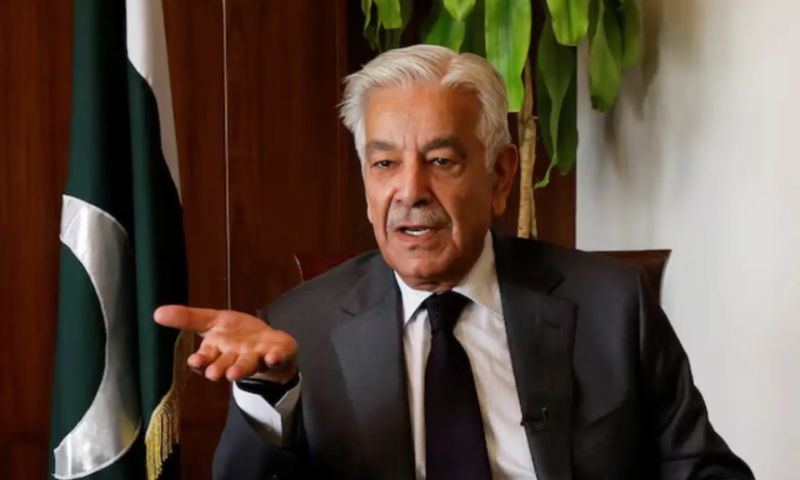



ISLAMABAD: Pakistan’s Defence Minister Khawaja Muhammad Asif on Thursday warned India against “threat-mongering” and manufacturing crises for political purposes, cautioning that any miscalculation between the two nuclear-armed neighbours would carry “drastic consequences”.
In a post on X, Defence Minister Asif said Pakistan remained committed to peace and regional stability but would respond “swiftly, calibrated, and decisively” to any threat to its sovereignty.
“Repeated rhetoric reflects not strength, but visible strategic anxiety as the anniversary of the staged False Flag Operation in Pahalgam approaches – an episode that failed to withstand international scrutiny and exposed New Delhi’s reliance on manufactured crises,” he said.
He added that such rhetoric is not new; it reflects a recurring pattern of deflecting internal challenges while attempting to provoke escalation through unverified allegations for political gain.
Repeated rhetoric reflects not strength, but visible strategic anxiety as the anniversary of the staged False Flag Operation in Pahlgam approaches – an episode that failed to withstand international scrutiny and exposed New Delhi’s reliance on manufactured crises.
Such…
— Khawaja M. Asif (@KhawajaMAsif) April 2, 2026
Khawaja Muhammad Asif added that history offers a clear warning that miscalculations carry serious consequences. The memory of past confrontations remains vivid, and any future response would be firm and decisive.
He noted there should be no ambiguity that Pakistan remains committed to peace and regional stability, but its resolve to safeguard its sovereignty is unwavering. Its preparedness is complete, and any response will be measured, swift, and resolute.
“Let me remind Raj Nath Singh that illusion of space for war between two nuclear states is inconceivable and has drastic consequences, India would be better served by confronting the growing unease within its own strategic and diplomatic space,” he said.
Pahalgam Incident
The tensions between India and Pakistan escalated after a deadly attack in the Pahalgam area of Indian Illegally Occupied Jammu and Kashmir in April last year, which claimed the lives of 26 people.
India swiftly blamed Pakistan for the attack without presenting any credible evidence. Pakistan condemned the attack and strongly rejected the Indian government’s baseless accusations.
Pakistan also offered a neutral and transparent international investigation into the incident; however, India failed to respond to Islamabad’s offer and continued with its aggressive posture, jeopardising regional peace and security.
The four-day war between the two nuclear-armed neighbours began after India conducted missile strikes inside Pakistani territory, resulting in the deaths of multiple civilians and security personnel.
Pakistan gave a swift, strong and decisive response to India. The Pakistan Air Force (PAF) shot down seven Indian aircraft, including Rafale jets, and successfully neutralised an S-400 air-defence system.
The conflict ended on May 10 when both countries agreed to a ceasefire mediated by the United States.