Key Points
- Pakistan rejects the Indian Army chief’s remarks as provocative and dangerous
- ISPR says threats against a nuclear state reflect “warmongering” and strategic irresponsibility
- Military warns that any aggression against Pakistan would trigger far-reaching consequences
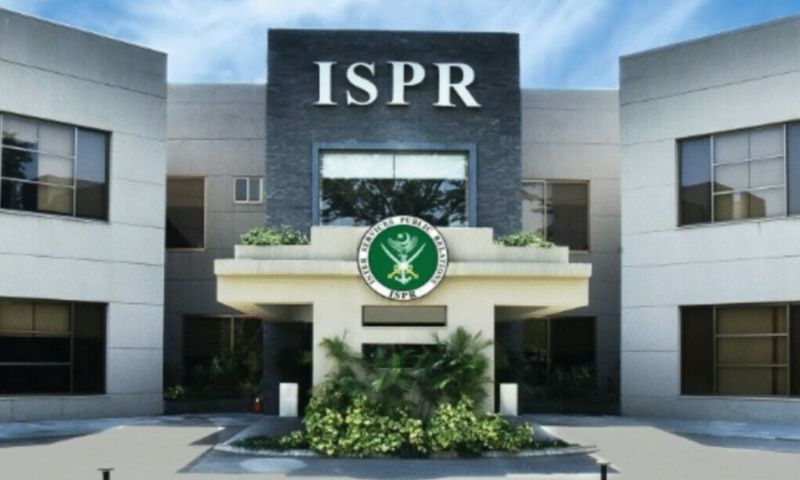
ISLAMABAD: Pakistan’s armed forces on Sunday issued a strong response to recent remarks by the Indian army chief, warning New Delhi against a dangerous escalation and irresponsible rhetoric directed at a sovereign nuclear state.
In a statement released by the Inter-Services Public Relations (ISPR), Pakistan rejected the Indian army chief’s delusional threat that Pakistan should decide whether it wished “to be part of geography and history.”
The ISPR termed the comments provocative, hostile and reflective of a deeply entrenched anti-Pakistan mindset within India’s leadership.
“Contrary to the delusional and hallucinational belief system and despite the omnipresent ill wishes that prevail in Hindutva-led India, Pakistan is already a country of consequence at the global level, a declared nuclear power and an indelible part of South Asia’s geography and history,” stated the ISPR.
According to the statement, India’s Hindutva-driven leadership failed to reconcile with the existence of Pakistan even after nearly eight decades.
“Hubristic, jingoistic and myopic thinking” had repeatedly pushed the region towards wars and major crises, it added.
“Such an irresponsible and ill-mannered statement from the Indian side is not a first experience,” said national security expert Syed Muhammad Ali.
“After a miserable defeat at the hands of Pakistan last year, the Indian army chief felt a need to make such a provocative statement as an effort to boost his army’s morale and convince the political leadership to continue the defence budget support,” he added.
He said the Indian army chief fears that in a scenario of low morale in the nation and army, it could draw Indian youngsters away from the army, and they would hesitate to join.
“Such a scenario could have a bad impact on the Indian defence cooperation with other countries, including Russia and the US,” he added.
“Therefore, I think it is a failed effort at morale boosting,” he said, adding, “India is responsible for escalating tensions in the region, whenever they were heightened throughout the last nearly eight decades after independence (in 1947).”
The expert said India is increasingly backing terrorism, because they (Indians) know that they cannot stand eye to eye in traditional warfare with Pakistan, thus they resort to destabilising Pakistan through terrorism.
At the same time, he said, India is also involved in the target killings of political opponents at the international level in Canada and Australia.
According to Syed Muhammad Ali, India is also propagating a false narrative to divert the international community from the atrocities it continues to commit in Kashmir.
The world has already had a fact-based, realistic view of India’s negative agenda and miserably failed hegemonic designs.
As referring to the Indian army chief’s talk of history and geography, he said, both have witnessed that Pakistan is the only responsible nuclear power in the Muslim world and a messenger of peace.
Whereas India has proven to be an irresponsible state and a growing, destabilising threat to world peace, he added.
He said India has lost respect and trust in the world, and Pakistan is enjoying both in an unprecedented way. “Pakistan is enjoying global trust and respect because of its armed forces, national unity and collective faith,” he maintained.
“And in case under such allegations, India chooses to do some misadventure of aggression, Pakistan has the capability of changing India’s history and geography,” he concluded.
The ISPR said threatening the elimination of a sovereign nuclear neighbour was not strategic signalling but evidence of “bankruptcy of cognitive capacities, madness and warmongering.”
It stressed that any attempt at some geographic obliteration in South Asia would inevitably have “mutual and comprehensive” consequences.
The ISPR further stated that responsible nuclear powers exercise restraint, maturity and strategic sobriety rather than indulging in rhetoric based on civilisational supremacy or national erasure.
According to the ISPR, India is pursuing destabilising policies across the region. New Delhi has a documented history of sponsoring terrorism, conducting transnational assassinations and orchestrating disinformation campaigns, it added.
According to the statement, India’s increasingly aggressive posture reflected frustration over its inability to undermine Pakistan, particularly after Pakistan’s successful exposure of Indian intentions during “Marka-e-Haq.”
The ISPR warned India against pushing South Asia towards another conflict, saying any future war would have devastating consequences not only for the region but beyond.
Pakistan reiterated that peaceful coexistence remained the only viable path forward and urged India to recognise Pakistan’s strategic importance and regional standing rather than pursuing confrontation.
“India needs to reconcile with Pakistan’s salience and learn to co-exist peacefully with it. Otherwise, any attempt to target Pakistan can trigger consequences that shall neither be geographically confined nor strategically or politically palatable for India,” the ISPR concluded.