ISLAMABAD: Mediator Pakistan has reaffirmed its commitment to continue diplomatic efforts to end the conflict between the United States and Iran through dialogue and diplomacy despite a recent escalation between the two countries.
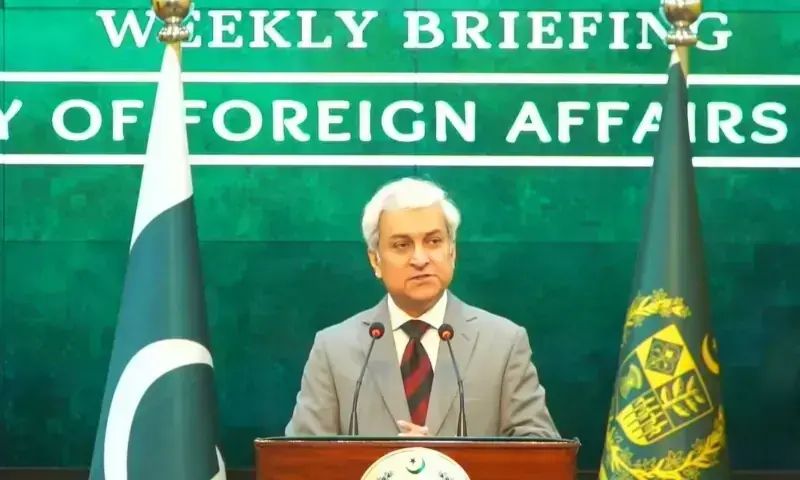
Speaking at the weekly press briefing on Wednesday, Foreign Office spokesperson Tahir Andrabi said Islamabad remained hopeful that dialogue and diplomacy could help resolve the conflict.
“Despite recent escalations, we remain hopeful, and we will continue to strive for dialogue and diplomacy,” Andrabi said.
The latest exchange of strikes has ended a period of relative calm that had prevailed since July, when Washington and Tehran largely refrained from military action but made little progress toward reviving negotiations.
Andrabi said Pakistan was closely monitoring the situation and noted that conflicts often move through stages of escalation, de-escalation, calm, ceasefire and, eventually, a return to negotiations.
🔴LIVE: Spokesperson’s Weekly Press Briefing 02-09-2026 at Ministry of Foreign Affairs, Islamabad https://t.co/KYEjSC3PXe
— Ministry of Foreign Affairs – Pakistan (@ForeignOfficePk) September 2, 2026
The spokesperson described the latest escalation as “concerning and undesirable” but rejected the suggestion that it represented a failure of Pakistan’s diplomatic efforts. He stressed that Islamabad was pursuing the peace process with “complete sincerity” and would continue efforts to facilitate dialogue between the two sides.
The spokesperson said the Islamabad Memorandum of Understanding (MoU), agreed between Tehran and Washington on June 18, remained a viable framework for restarting negotiations. The 14-point interim framework provides for the resumption of political and technical-level talks aimed at achieving a long-term and sustainable settlement.
Andrabi said there was no question of declaring the Islamabad MoU ineffective or dead, adding that strong statements from both sides were not unusual during periods of heightened tensions.
He also highlighted Chief of Defence Forces and Chief of Army Staff Field Marshal Syed Asim Munir’s recent visit to Tehran, saying it formed an important part of Pakistan’s diplomatic efforts to reduce regional tensions and create momentum for negotiations.
According to Andrabi, subsequent visits by the leadership of Oman and Qatar to the region further demonstrated momentum toward a diplomatic resolution.
Pakistan, he said, would continue to pursue dialogue and diplomacy in the interest of regional peace and stability.
Pakistan welcomes Arbitration Court ruling on Indus Waters Treaty
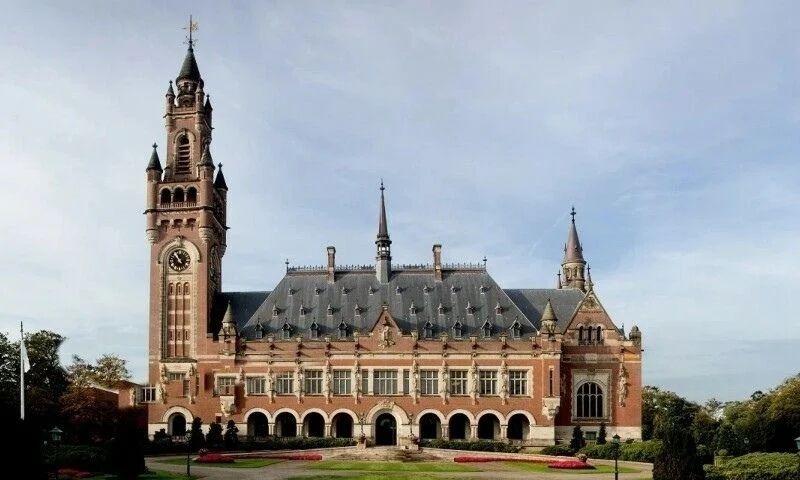
On the Indus Waters Treaty (IWT), Andrabi welcomed a recent ruling by the Permanent Court of Arbitration at The Hague, which directed India to uphold the Indus Waters Treaty (IWT) with Pakistan and suspend work on a hydro project in occupied Kashmir.
The court rejected India’s unilateral attempt to place the treaty in “abeyance”, stating that India had no justification for suspending or ending its obligations under the agreement.
🔸 #PCA Press Release | The Indus Waters Western Rivers Arbitration (Islamic Republic of Pakistan v. Republic of India) 🔸
𝗧𝗵𝗲 𝗖𝗼𝘂𝗿𝘁 𝗼𝗳 𝗔𝗿𝗯𝗶𝘁𝗿𝗮𝘁𝗶𝗼𝗻 𝗜𝘀𝘀𝘂𝗲𝘀 𝗔𝘄𝗮𝗿𝗱 𝗼𝗻 𝘁𝗵𝗲 𝗦𝘁𝗮𝘁𝘂𝘀 𝗼𝗳 𝘁𝗵𝗲 𝗜𝗻𝗱𝘂𝘀 𝗪𝗮𝘁𝗲𝗿𝘀 𝗧𝗿𝗲𝗮𝘁𝘆 𝗮𝗻𝗱… pic.twitter.com/0QWASt85Cw
— Permanent Court of Arbitration (@PCA_CPA) August 31, 2026
The ruling also confirmed that the treaty’s dispute-settlement mechanism remains operational. A neutral expert appointed by the World Bank is expected to determine by July 2027 whether certain hydroelectric projects in the Himalayan region comply with the treaty.
Andrabi described the unanimous court ruling as an important reaffirmation of the sanctity of the Indus Waters Treaty and the principle of international law.
“The court had confirmed that India’s purported decision to place the treaty in abeyance does not relieve it of its obligations under the treaty and the treaty’s dispute settlement mechanism remained operative,” he said.
The spokesperson also pointed to an interim measure concerning the Ratle Hydroelectric Power Project, saying it further demonstrated that rights and obligations under the treaty could not be changed or displaced through unilateral action.
Makkah Joint Defence Agreement
On the Makkah Joint Defence Agreement, the spokesperson said its Strategic Political and Defence Committee held its inaugural meeting in Istanbul on August 31.
Pakistan, Saudi Arabia and Turkiye agreed to institutionalise cooperation under the agreement, strengthen collective defence and enhance joint security, he said.
The three countries also reaffirmed their commitment to regional peace and stability through the resolution of crises and reduction of tensions.
A secretariat for the agreement would be established in Saudi Arabia, while its secretary-general would initially be appointed from Pakistan for a three-year term, he added.
The three sides would further expand cooperation in defence industries, joint technology development and enhancing the capabilities of their armed forces.
Pakistan assumes SCO chairmanship
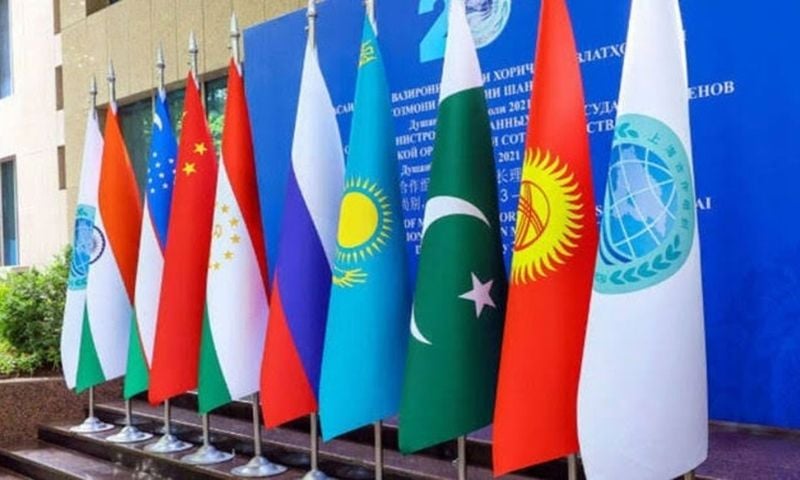
On Pakistan’s assumption of the Shanghai Cooperation Organisation (SCO) chairmanship, Foreign Office spokesperson Tahir Andrabi said Islamabad’s theme would focus on turning vision into action through connectivity, innovation and shared prosperity.
He said Pakistan would work closely with SCO member states to advance regional peace and stability, strengthen economic cooperation and improve regional connectivity.
ALSO READ: Pakistan Assumes SCO Chairmanship for Next Year
Andrabi said Pakistan had assumed the SCO chairmanship for a one-year term and would host the organisation’s summit next year.
PM Shehbaz Sharif’s Kyrgyzstan visit
Commenting on Prime Minister Shehbaz Sharif’s visit to Kyrgyzstan, Andrabi said the premier was in Bishkek, where he held a meeting with Kyrgyz President Sadyr Nurgozhoevich Japarov.
The two countries signed several agreements and memoranda of understanding covering trade, economic cooperation, investment and other areas, he said.
The leaders also held a joint press conference, where they discussed various aspects of bilateral relations.
Before the bilateral talks, Prime Minister Shehbaz attended the SCO Council of Heads of State meeting and the SCO Plus summit. He also held meetings with his counterparts and other world leaders, the spokesperson said.
Deputy Prime Minister and Foreign Minister Ishaq Dar also met the SCO secretary-general and the United Nations secretary-general, Andrabi added.
Pakistan rejects Kashmiri leader Yasin Malik’s conviction
He said Pakistan completely rejects the proceedings against the Kashmiri leader Yasin Malik, adding that the case as contrary to fundamental principles of justice.
He said Malik’s trial and conviction were politically motivated.
Pakistan would continue raising Malik’s case at international and multilateral forums and would urge the international community to take notice of the matter, he said.
The spokesperson also expressed prayers for Malik’s health and long life.
Paying tribute to veteran Kashmiri leader Syed Ali Geelani, Andrabi said he remained in Pakistan’s prayers.
China’s diplomatic efforts on Afghan issue
The spokesperson also said China’s special representative for Afghanistan had visited Pakistan from August 31 to September 1 and held discussions with Pakistan’s Special Representative for Afghanistan, Mohammad Sadiq.
Pakistan, he said, appreciated China’s constructive and sustained diplomatic efforts on the Afghanistan issue and had consistently remained positively engaged in efforts to promote constructive dialogue.
Andrabi reiterated that Pakistan’s position on Afghanistan remained unchanged, stressing that Afghan territory must not be used for terrorism against Pakistan.
He said the Taliban regime would need to take concrete and verifiable steps to eliminate terrorism emanating from Afghan soil.
This included action against the proscribed Tehreek-e-Taliban Pakistan (TTP), Balochistan Liberation Army (BLA) and other terrorist organisations operating against Pakistan, he added.
Pakistan’s decision on talks and engagement with Afghanistan, Andrabi said, remained conditional on the Taliban regime providing guarantees that Afghan territory would not be used for terrorist activities against Pakistan.
Asked about the possibility of a second phase of talks with Afghanistan, the spokesperson said there was currently no information available on the matter.